



Bor, a land underwater
In South Sudan, flooding compounds decades of conflict and displacement
Debora Anai Akar, 33, takes a break from washing clothes by hand in a flood-affected area of her community in Achiengdiir, in the city of Bor, Jonglei State, South Sudan. Behind her, the rooftops of houses submerged by previous floods remain visible, as prolonged seasonal flooding continues to reshape daily life in the area. © Santi Palacios/Sonda Internacional
Project summary
#Bor, a land underwater
Bor, a land underwater
A non-profit media outlet
Visual journalism on human ecology and the climate crisis
Become a member
3 November 2026
On an increasingly warmer planet, the water cycle is intensifying rising global temperatures are leading to more frequent and extreme rainfall, as well as longer-lasting floods that the land can no longer absorb. Sub-Saharan Africa is one of the regions most exposed to these changes, which threaten the livelihoods of millions of people who depend on agriculture and pastoralism.
As with other impacts of the climate crisis, flooding does not affect everyone equally. South Sudan, the world’s youngest country, has endured decades of war, forced displacement and instability. Since 2019, exceptional rainfall has caused recurrent flooding that destroys crops, decimates livestock and forces hundreds of thousands of people — many of whom were already displaced by violence — to flee their homes once again, highlighting how extreme weather exacerbates pre-existing vulnerabilities and increases protection needs.
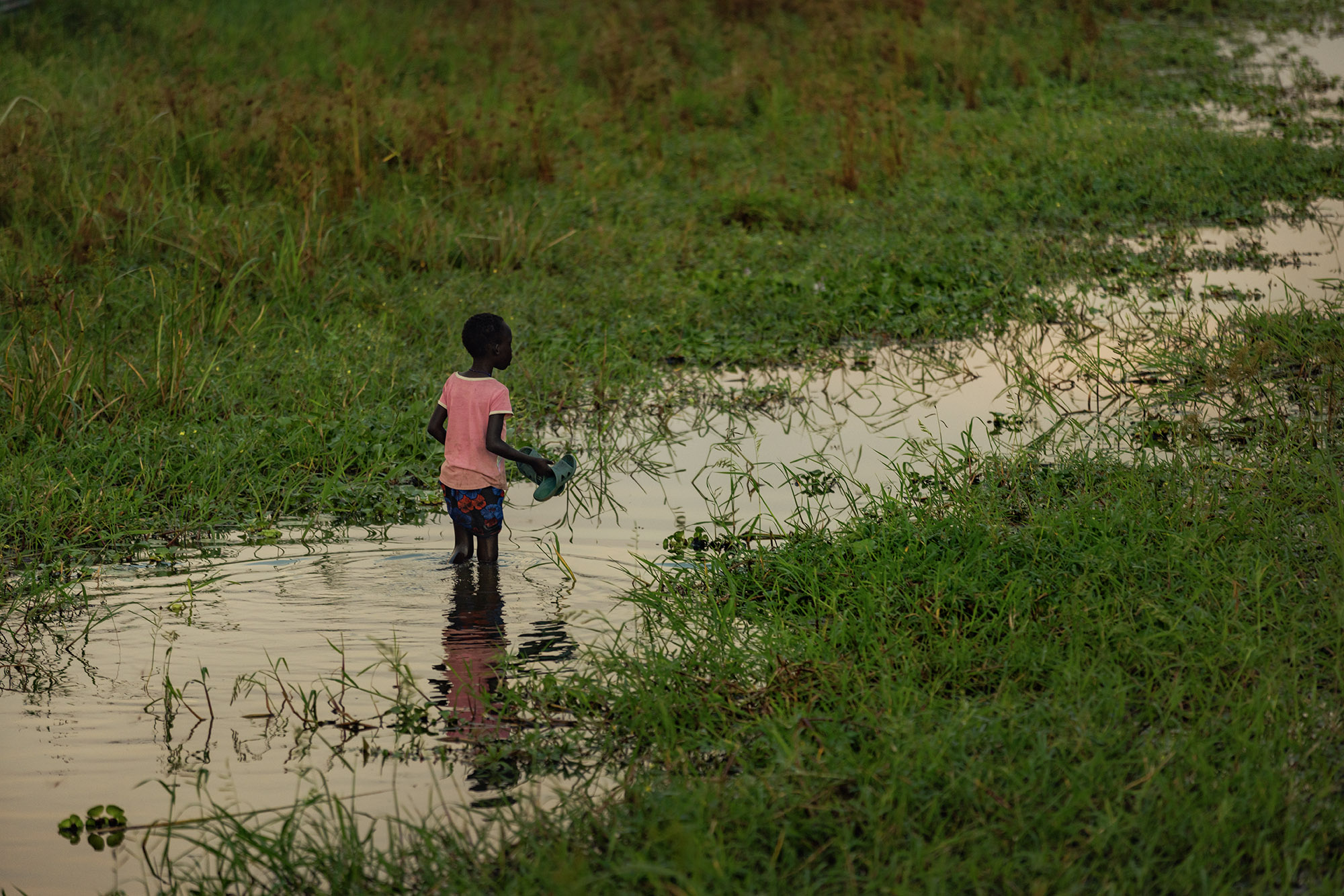
A boy looks out over a flooded field he must cross in his community on the outskirts of Bor. Prolonged seasonal flooding has transformed vast areas of the region, forcing residents to navigate submerged terrain as part of their daily lives. © Santi Palacios/Sonda Internacional
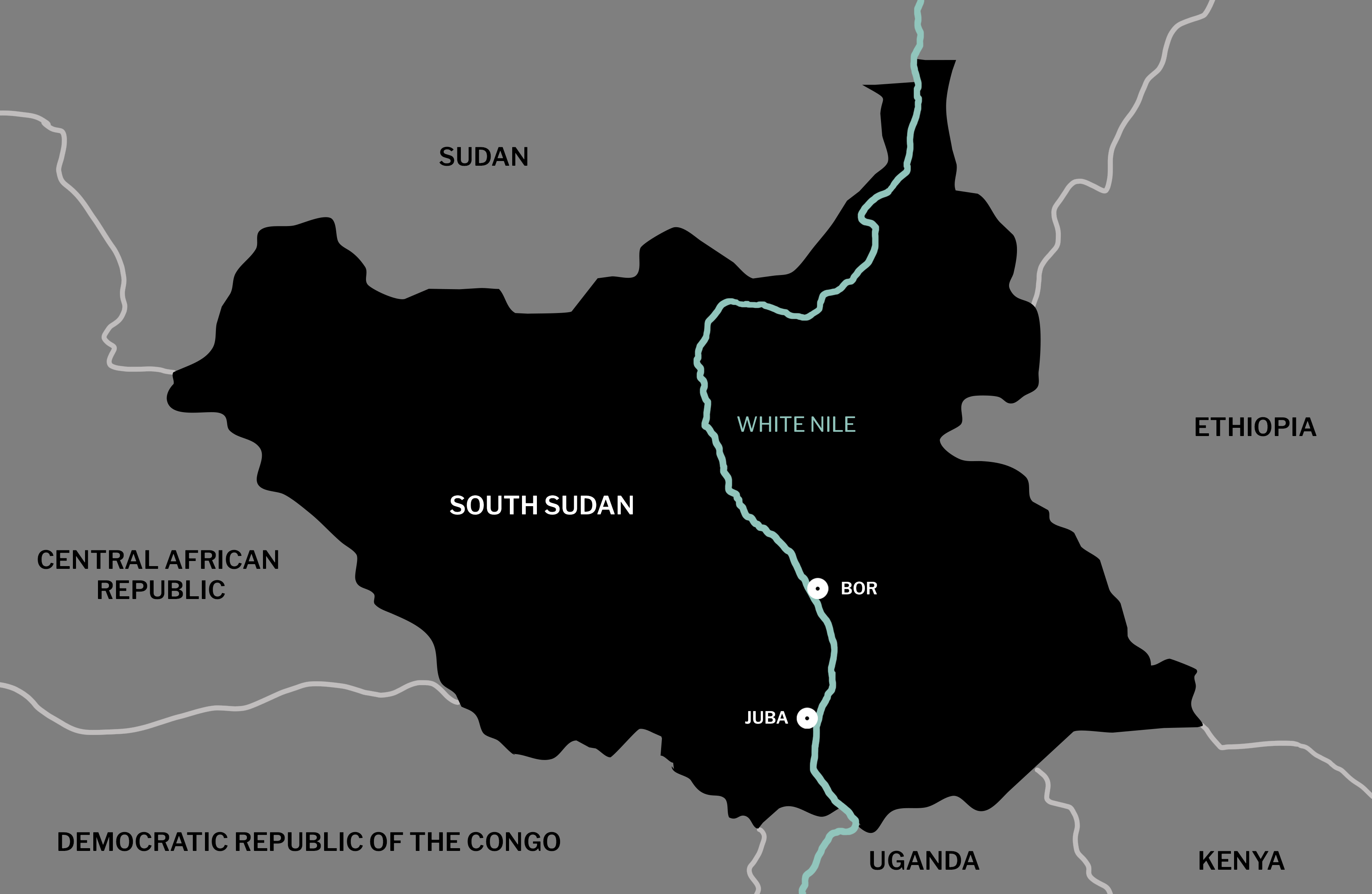
Bor, the capital of Jonglei State, lies at the epicenter of this crisis. Situated on a vast plain crossed by the White Nile, the town remains submerged for months, whilst the surrounding villages and fields are transformed into a flooded landscape. For a predominantly pastoral and agricultural population, the floods mean the loss of food, shelter and livelihoods, which exacerbates the humanitarian crisis. In this vicious circle, climate change does not act as an isolated cause, but as a factor that increases existing fragility and hinders the chances of recovery for the affected communities.
Flooded area in the settlement for displaced people in Jalle, near Bor, in South Sudan. © Santi Palacios/Sonda Internacional
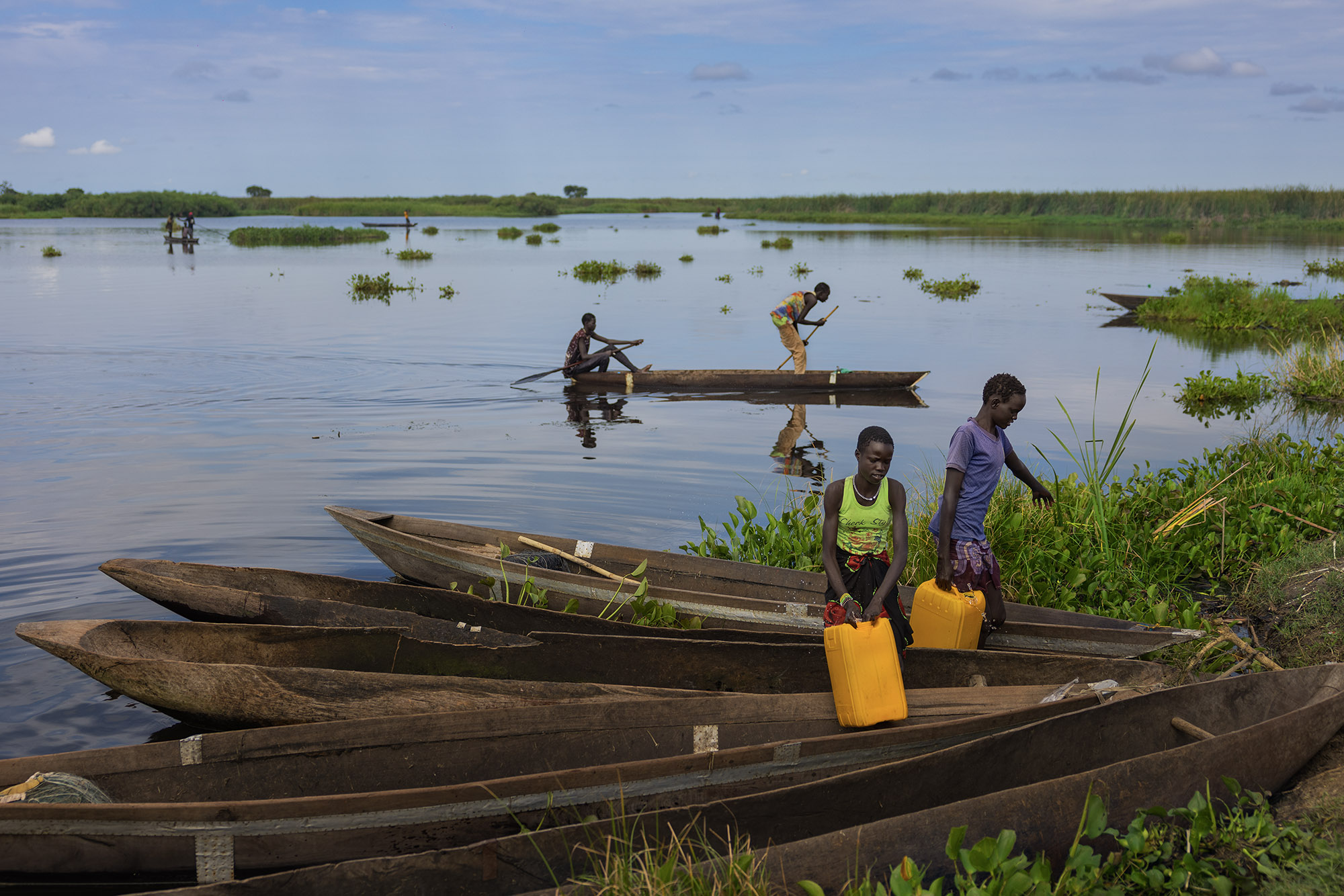
Flooded area at the Jalle displacement settlement, near Bor, South Sudan. © Santi Palacios/Sonda Internacional
The world’s youngest country
South Sudan became the world’s youngest country in 2011, gaining independence from Sudan after decades of war. Despite high hopes, the new state was born into instability. There was virtually no infrastructure, institutions were extremely weak and the economy was very fragile. Barely two years later, a new war plunged the country back into violence, causing mass displacement and a humanitarian crisis whose consequences persist to this day.
Today, a large part of the population relies on subsistence farming, pastoralism and, in riverine areas, fishing as well. Access to basic services such as healthcare, education and drinking water is very limited. There are hardly any roads, and those that do exist are impassable for long periods of the year. Communities face multiple forms of vulnerability simultaneously. Insecurity, structural poverty and a lack of opportunities have made displacement a recurring experience for millions of people.
Against this backdrop of prolonged fragility, the floods that hit South Sudan year after year are making the situation even worse. When the water submerges villages and farmland, it does not strike a stable situation, but instead inundates communities already worn down by years of conflict and scarcity. Here, the impact of climate change exacerbates existing risks, increases food insecurity and undermines the resilience of displaced families.
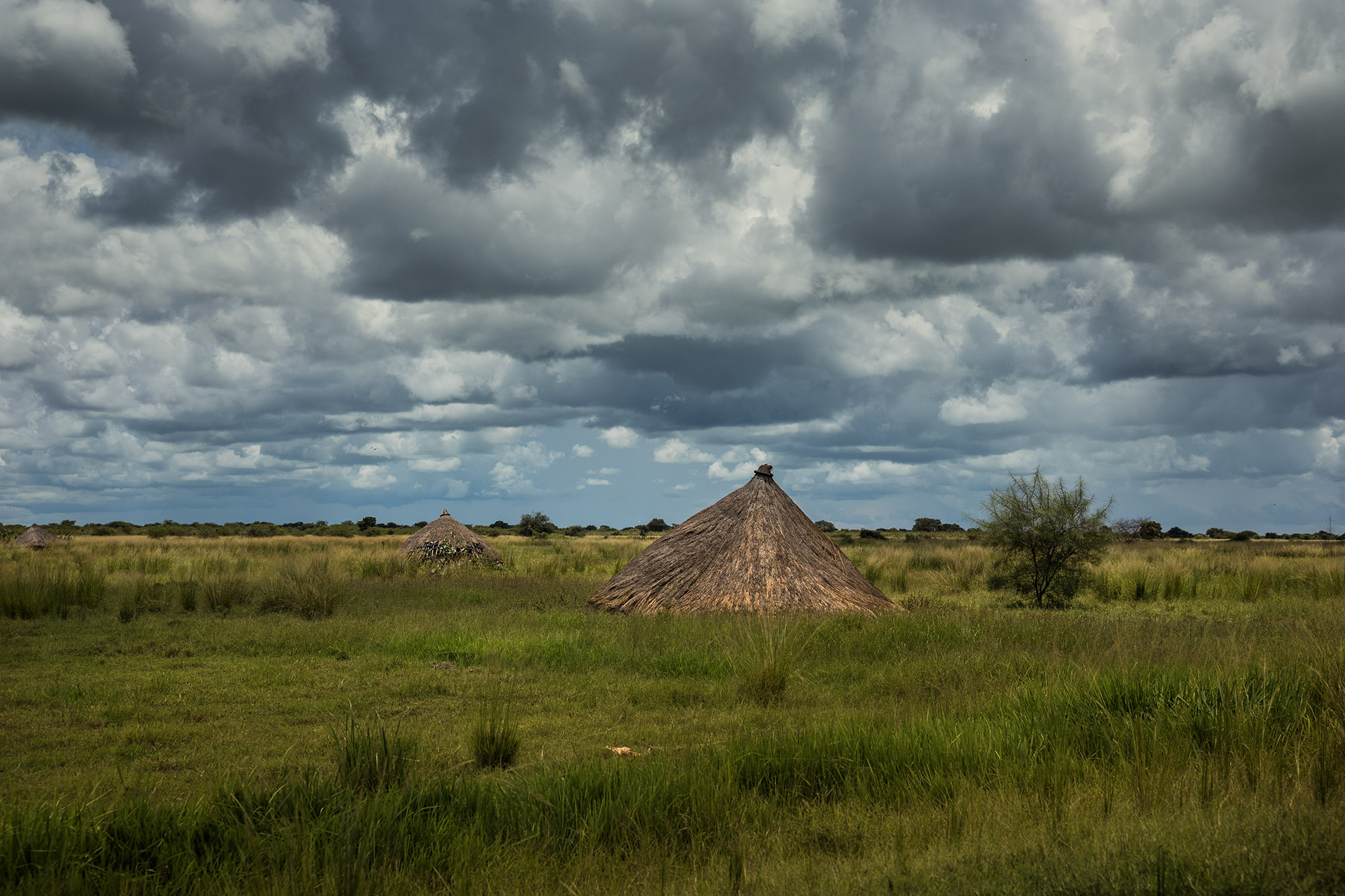
Abandoned huts stand in a partially flooded area on the outskirts of Bor, South Sudan. © Santi Palacios/Sonda Internacional
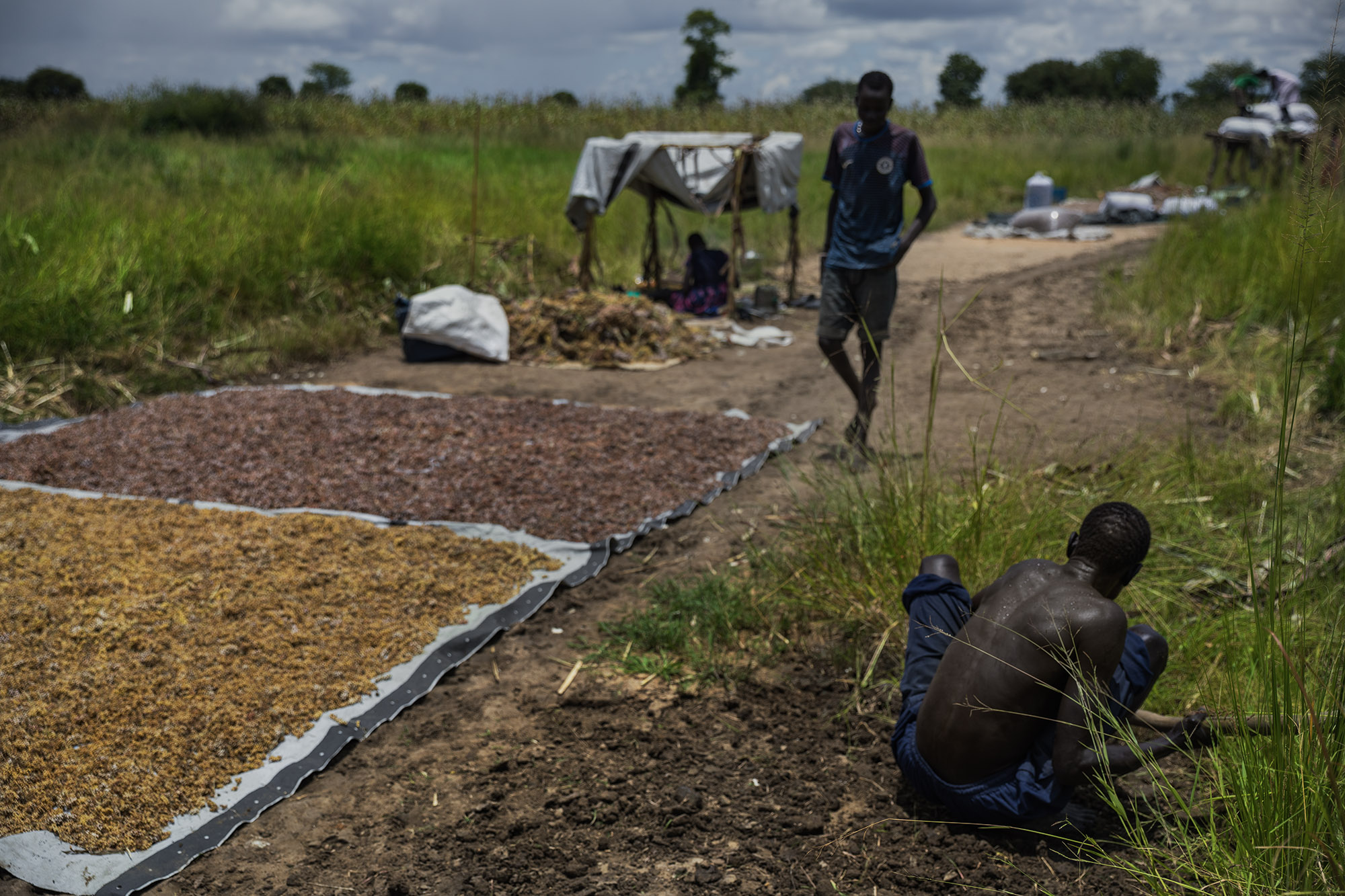
Men work in a sorghum field in Baidit, near the city of Bor. © Santi Palacios/Sonda Internacional
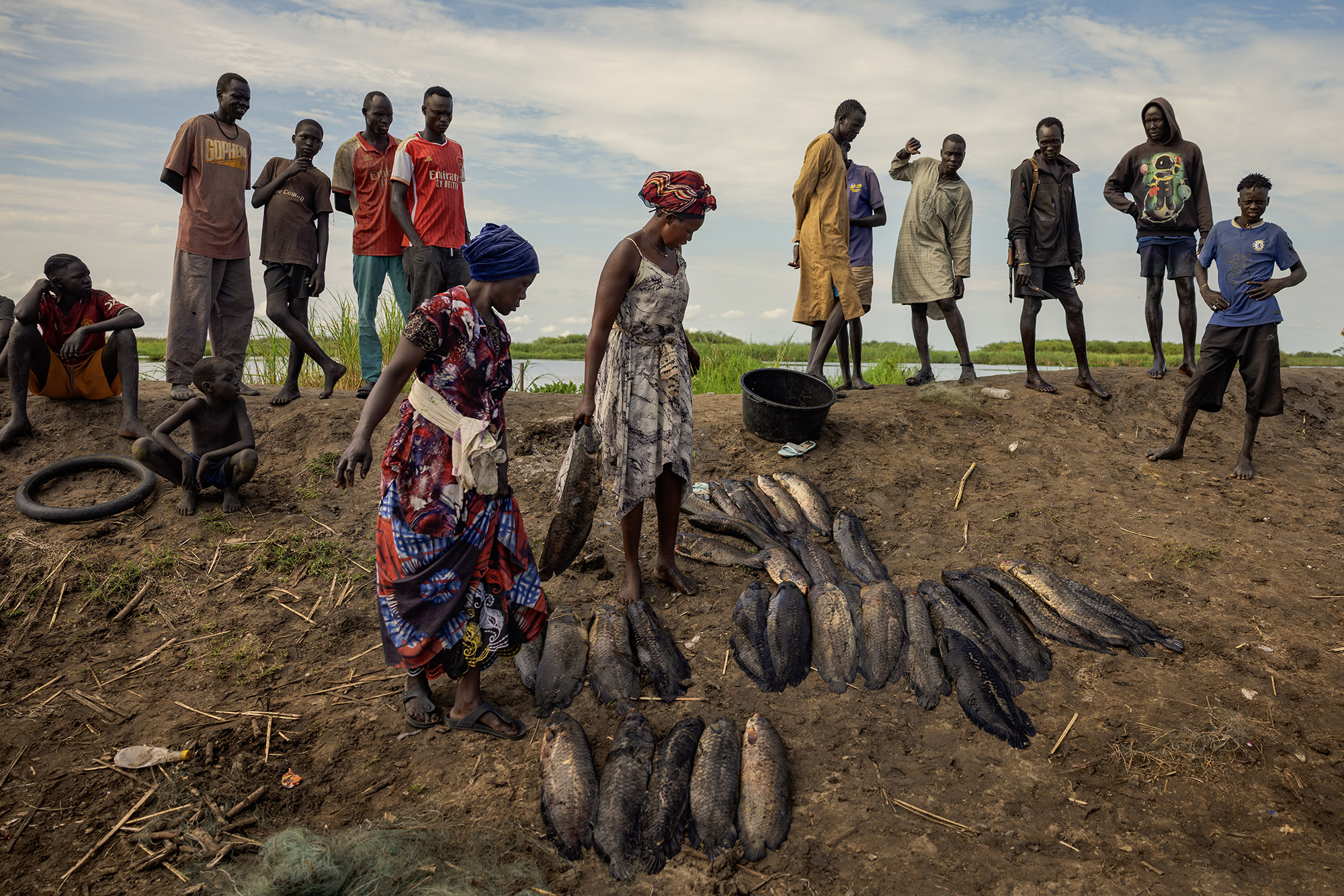
Two women prepare fish for sale at a settlement for internally displaced people in Jalle, near the city of Bor. © Santi Palacios/Sonda Internacional
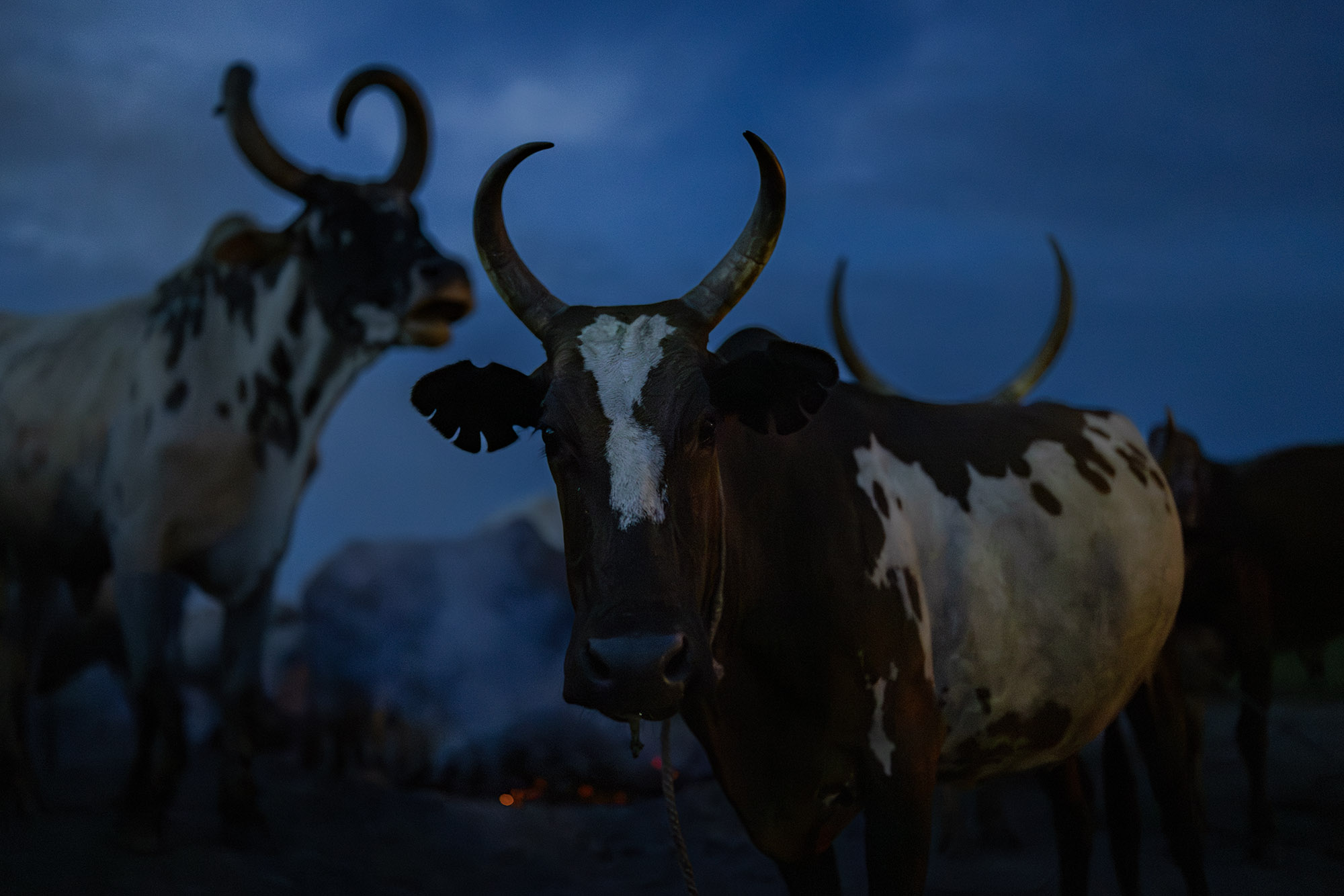
Dozens of cows gather beside small fires lit by their owner, whose smoke protects them from insect bites, on the outskirts of Bor. © Santi Palacios/Sonda Internacional
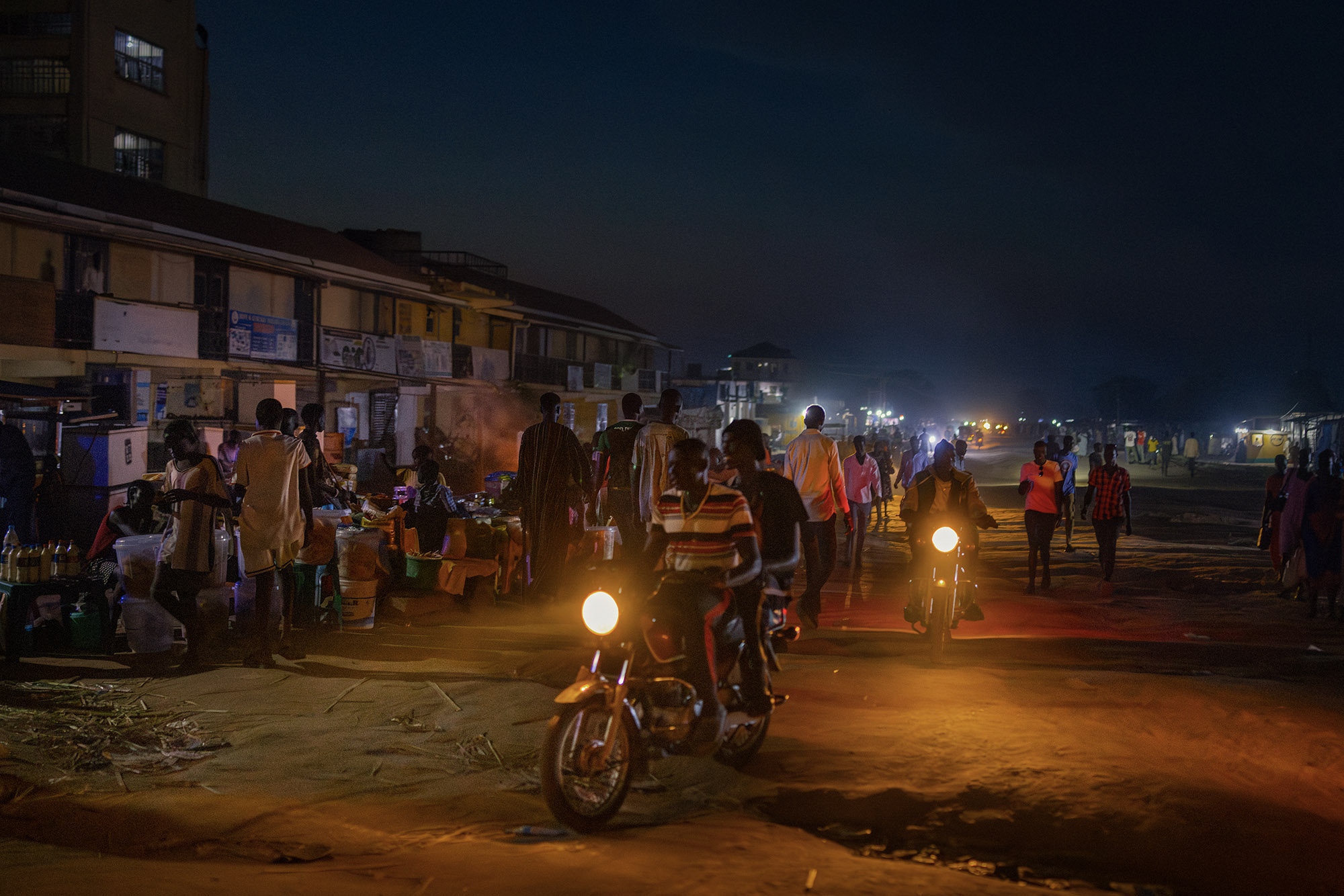
Hundreds of people walk through the streets of Bor’s market at dusk. © Santi Palacios/Sonda Internacional
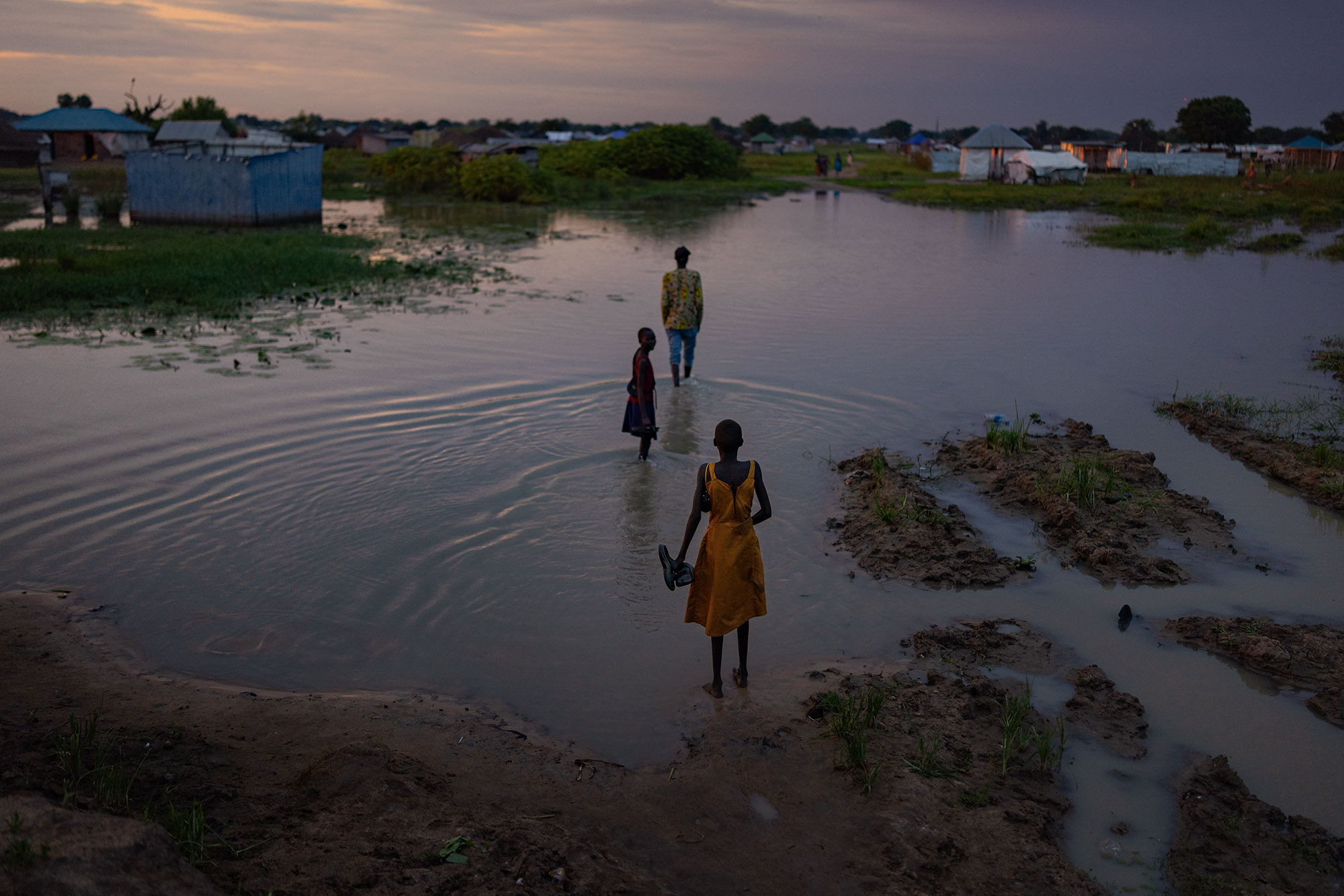
Several people cross an area flooded by recent rainfall in the city of Bor, South Sudan. © Santi Palacios/Sonda Internacional
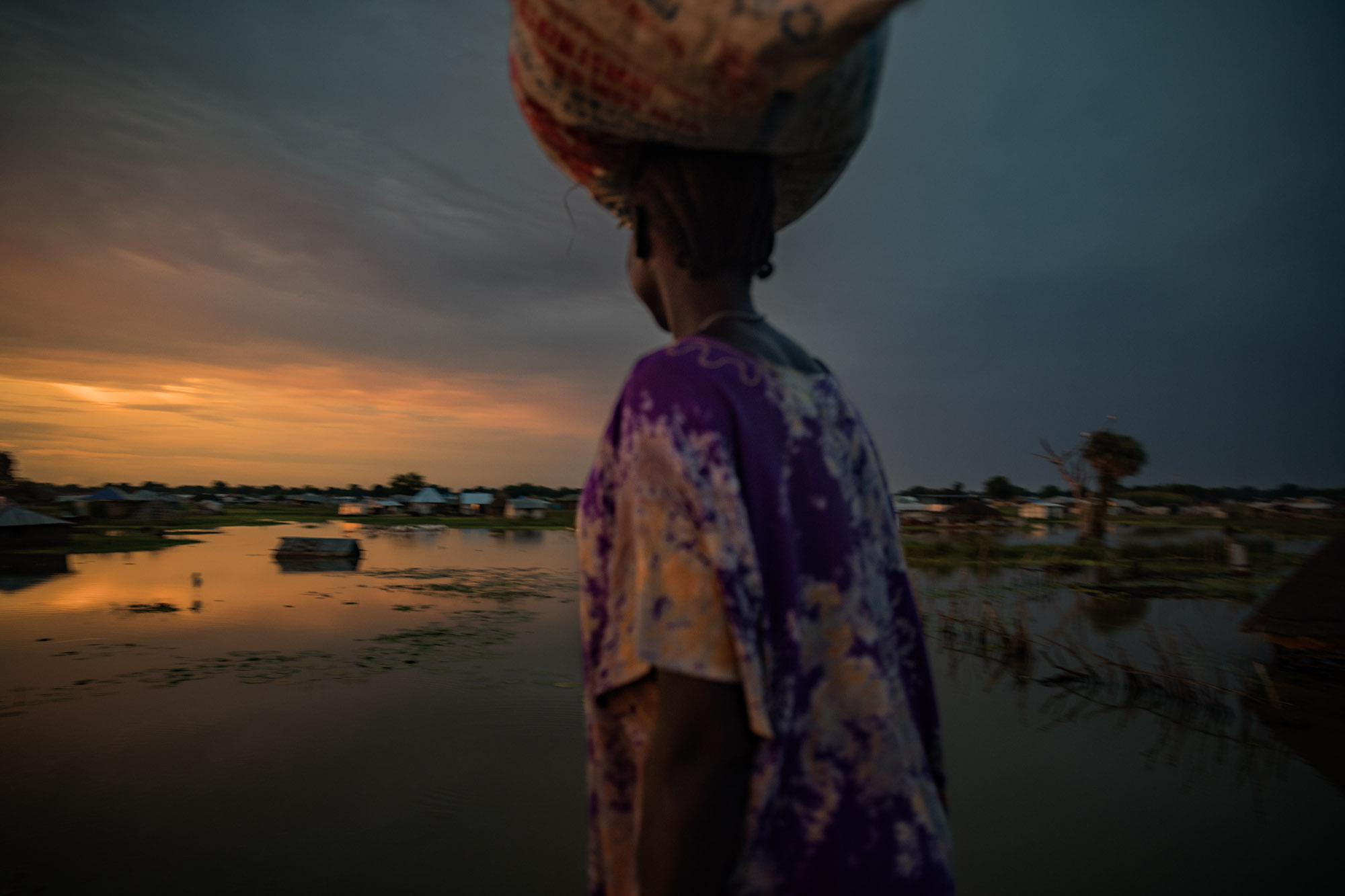
A woman looks out over floodwaters in the community of Achiengdiir, in the city of Bor. Water from previous years’ floods has yet to recede, a situation compounded by heavy rainfall in recent months. © Santi Palacios/Sonda Internacional
Floods
Since 2019, South Sudan has experienced some of the heaviest rainfall in its recent history, which has increased the vulnerability of communities already battered by years of conflict and hardship. One of the affected regions is Bor, the capital of Jonglei State, which has historically coexisted with the flooding of the White Nile. This is a predictable phenomenon to which communities had adapted but in recent years that balance has been disrupted: floods are becoming more frequent, more prolonged and more widespread.
Water levels begin to rise during the rainy season, between June and October. Some areas can remain flooded for months, even well into the following year. Communities are cut off and villages, roads and fields are transformed into a continuous expanse of water that prevents access to basic services. Jacob Yuang, head of a health centre in Baidit, a few kilometres from Bor, explains from the flooded clinic premises that many of his patients’ illnesses are linked to stagnant water.
Without effective drainage systems or river defenses, the region is particularly vulnerable to these prolonged floods, which overwhelm local response capacities. For a population reliant on pastoralism and agriculture, the impact is devastating. The water destroys crops, decimates livestock and forces families to move to higher ground or makeshift settlements. This leads to food insecurity, dependence on humanitarian aid and greater exposure to disease. The floods in Bor are not a one-off event, but a recurring crisis that erodes the resilience of communities and exacerbates an already extremely fragile humanitarian situation.
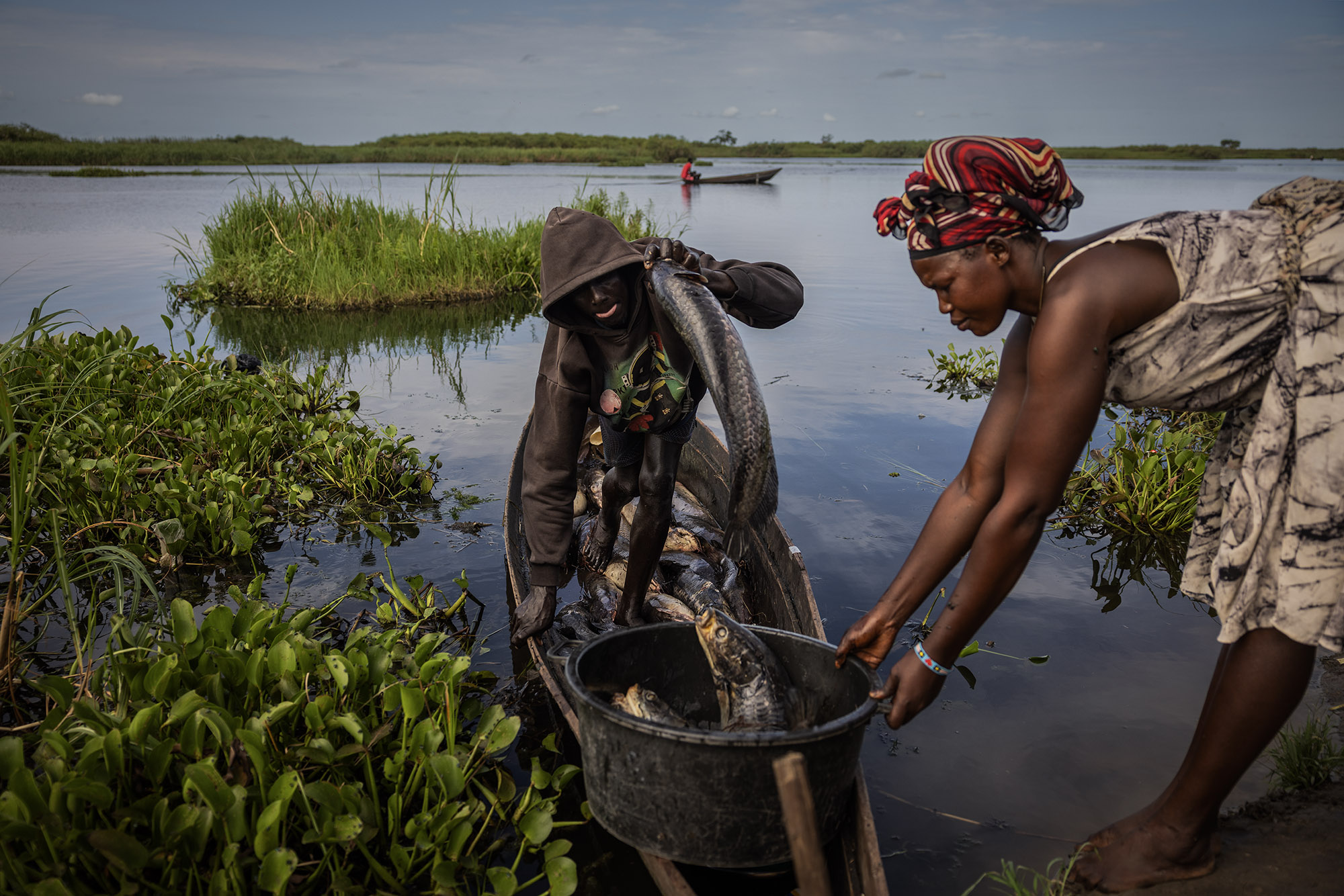
A woman receives fish from a young man in a canoe in a flooded area beside a settlement for internally displaced people in Jalle, north of the city of Bor, South Sudan. © Santi Palacios/Sonda Internacional
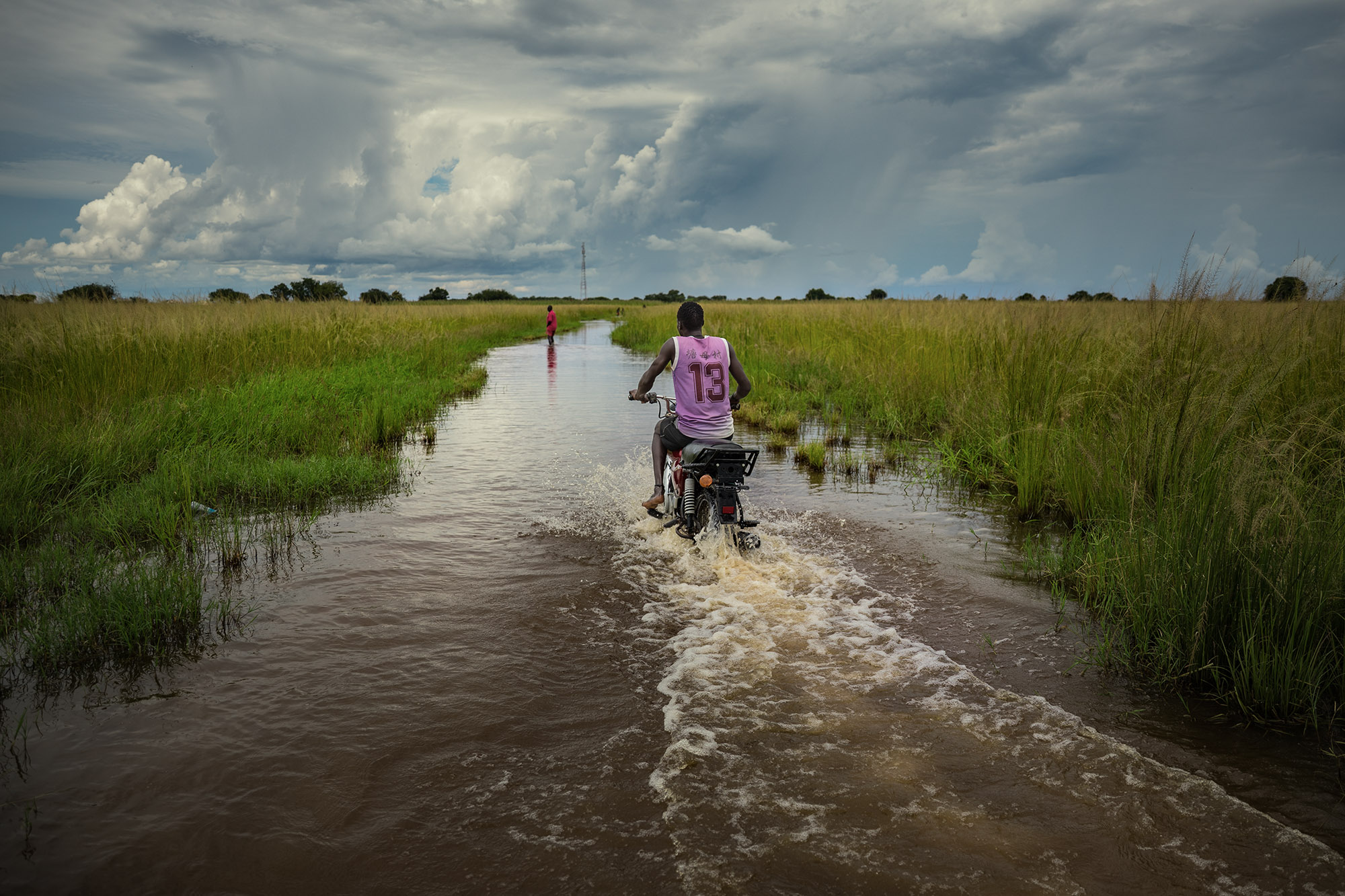
A man rides a motorcycle through floodwaters in Baidit, near the city of Bor. © Santi Palacios/Sonda Internacional
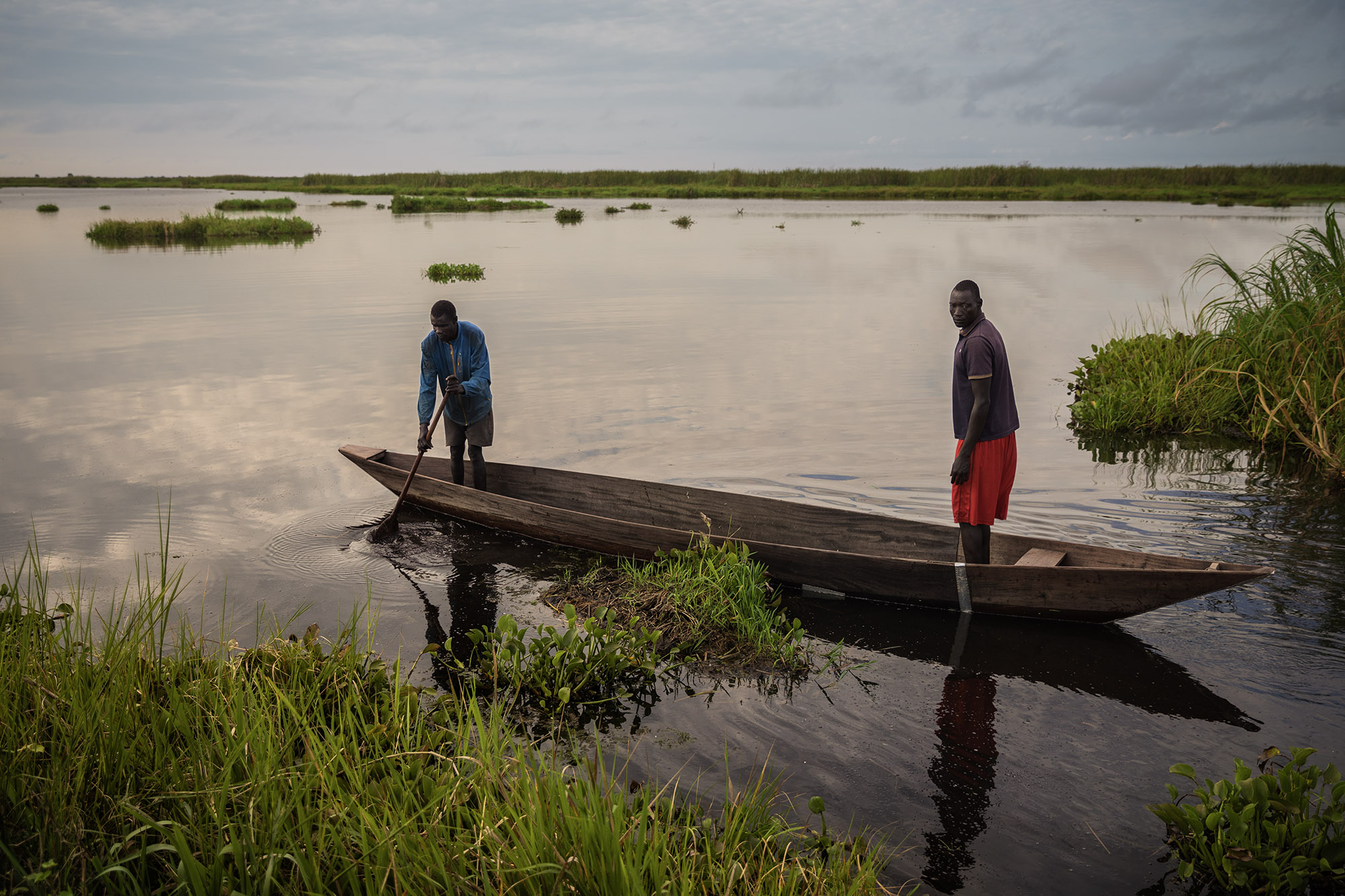
Jong Nhialic (left) and Mayok Agang head out to fish by canoe in floodwaters beside the dyke that protects a displacement settlement from rising waters, in Jalle, near the city of Bor. © Santi Palacios/Sonda Internacional
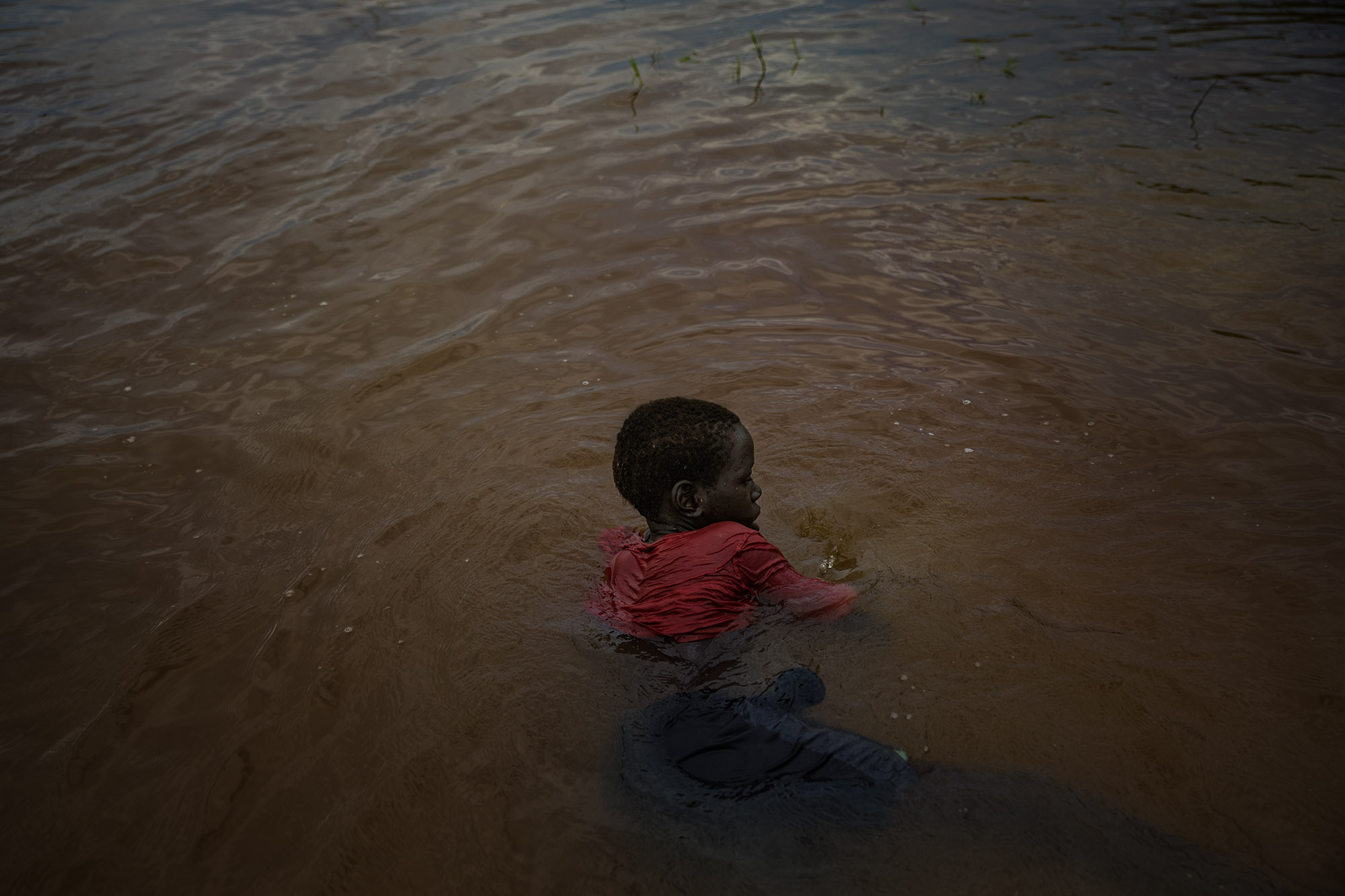
A boy bathes in floodwaters covering a road in Baidit, near the city of Bor. © Santi Palacios/Sonda Internacional
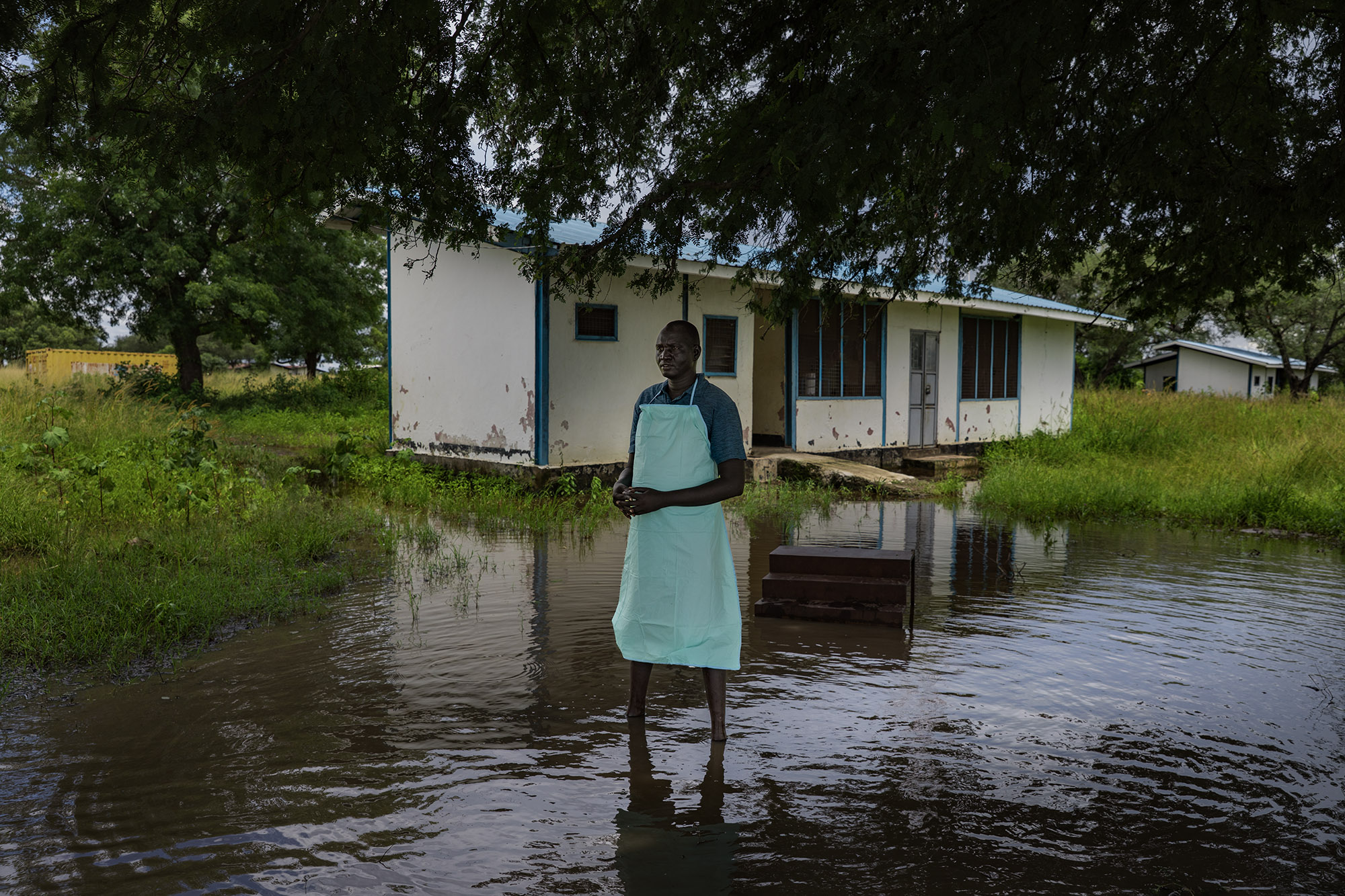
Jacob Yuang, 41, the health officer in charge of a health centre, poses for a portrait in the clinic compound, which has been inundated by floodwaters, in Baidit, near the city of Bor. © Santi Palacios/Sonda Internacional
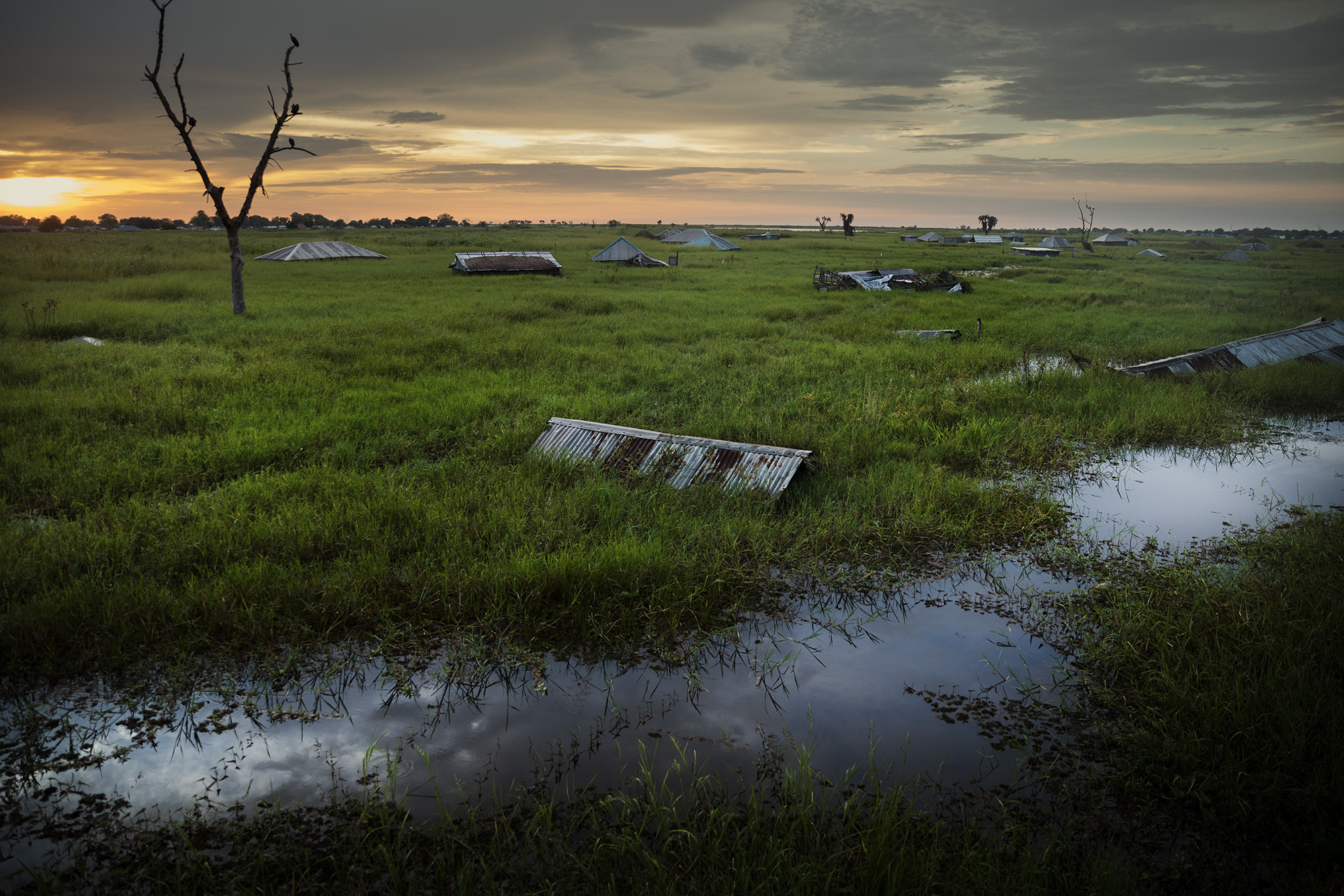
Hundreds of homes and shelters remain partially or completely submerged in the Achiengdiir community, in the city of Bor. Floodwaters from previous years have yet to recede, leaving much of the community permanently underwater. © Santi Palacios/Sonda Internacional
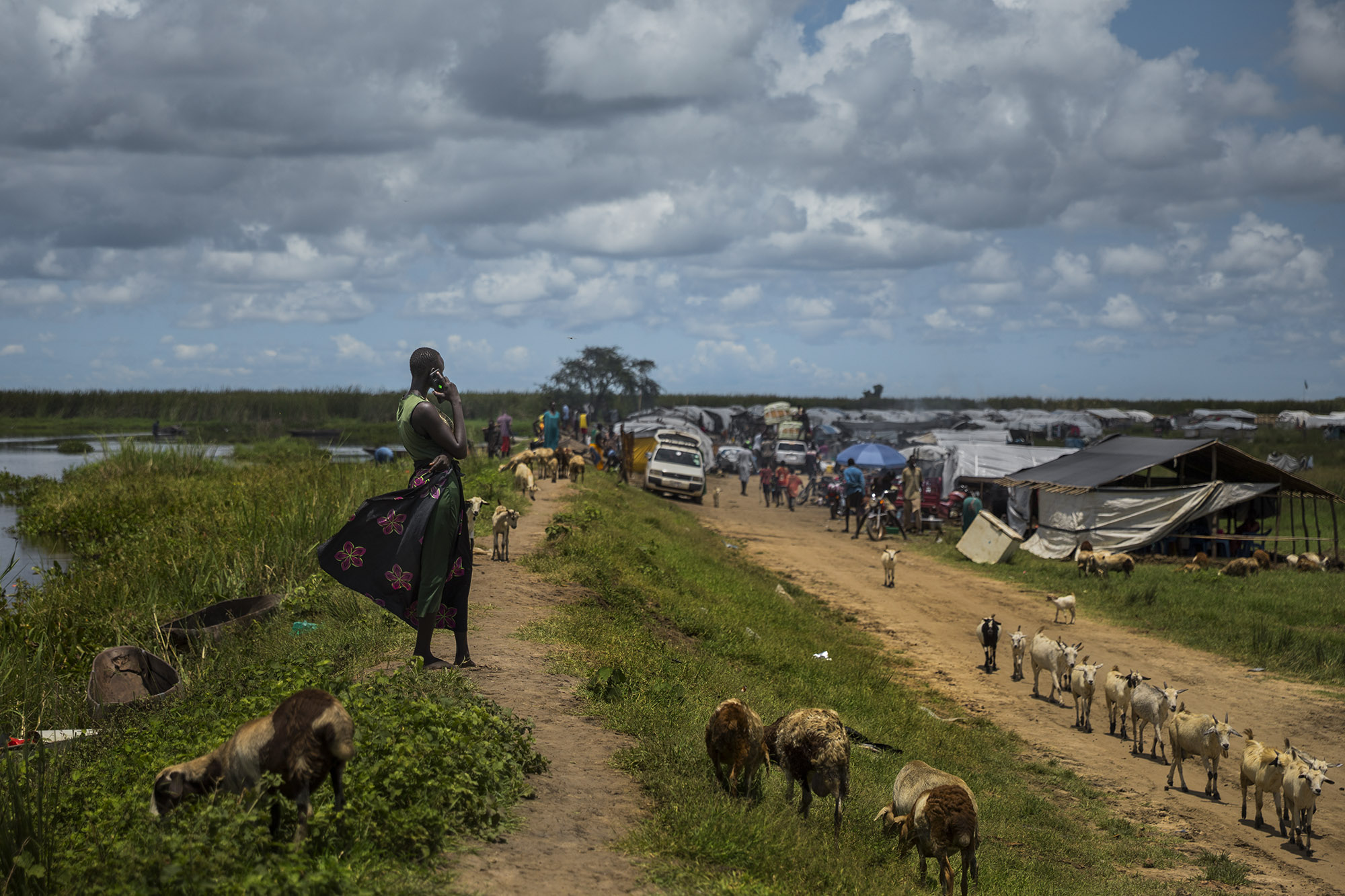
Settlement for internally displaced people in Jalle, near the city of Bor, Jonglei State, South Sudan. © Santi Palacios/Sonda Internacional
Displacement
Around 1.9 million people are internally displaced within South Sudan as a result of violence and extreme weather events. This internal crisis is compounded by complex regional dynamics: the country is also hosting more than 600,000 refugees fleeing violence in neighboring countries. The combination of protracted displacement, limited resources and extreme weather significantly increases protection needs.
A few kilometres from Bor lies Jalle, a settlement that has grown rapidly as a result of floods that submerged entire villages. There, in a tin-roofed house on the edge of a grassy plot, lives 60-year-old Aguek Monyror Deng, who recalls how the place used to be a small village before thousands of people arrived in search of dry land beside the dyke that holds back the water.
Among them was 45-year-old Yar Anyieth Nhial, who arrived in Jalle with her family after floodwaters destroyed her home once again, as had happened in 2020 and 2021. Sitting under a tree with her daughter-in-law to shelter from the sun, she explains that she sleeps in a makeshift shelter measuring barely five square meters with six other people; it is a reflection of the limited options for safe accommodation for displaced families.
Displacement also fuels tensions between communities marked by years of conflict. Deng Aduot, 30, and Biar Makhol, 28, patrol at night, armed and in uniform, to protect the settlement. “We never sleep,” they say. “We protect the most vulnerable.” The strain on the few available resources and recurring insecurity underscore the need for sustained humanitarian support.
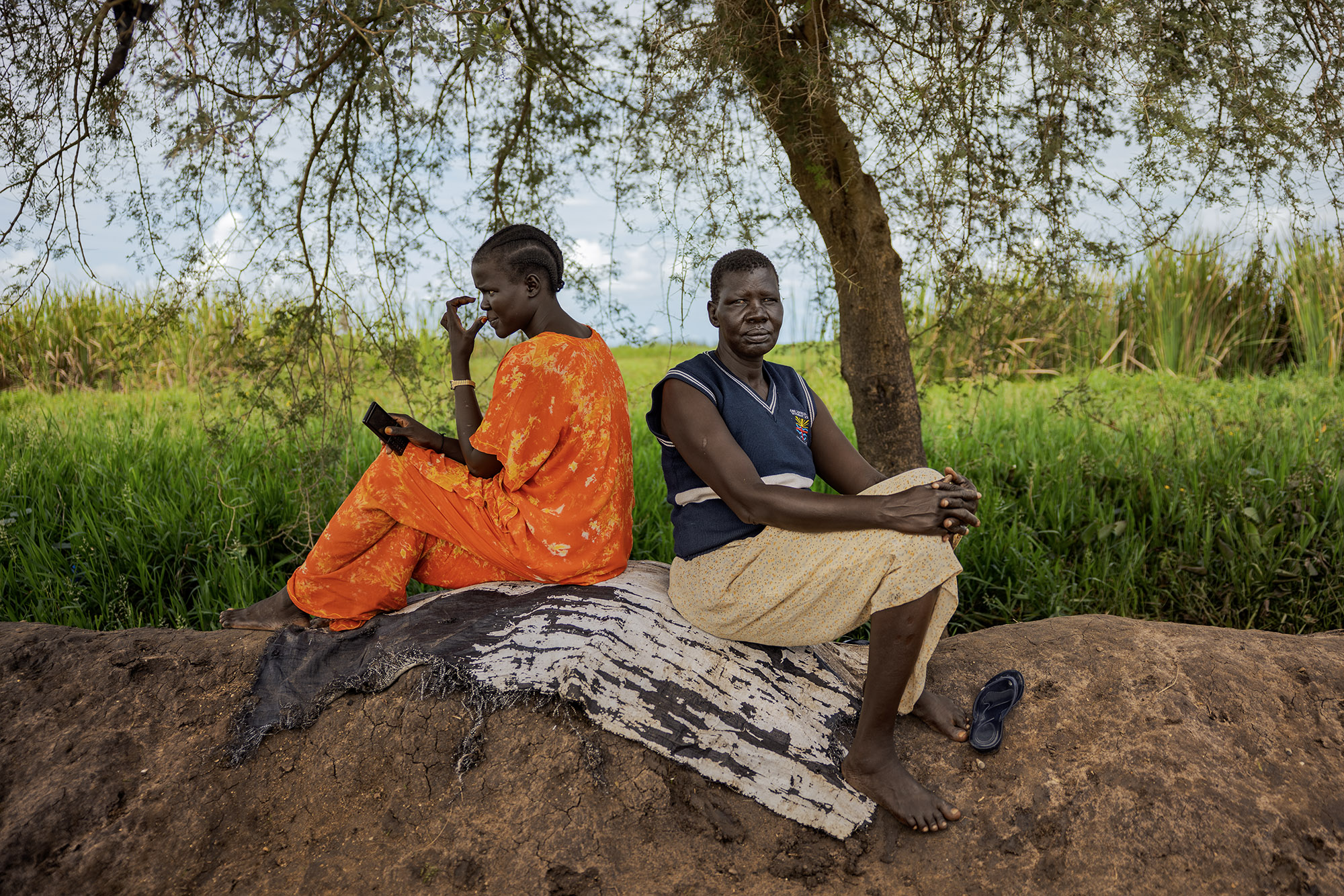
Yar Anyieth Nhial, 45 (right), and her daughter-in-law Ajier Deng Kuor, 20, shelter from the intense sun beneath a tree beside the hut where they sleep with six other people at a settlement for internally displaced people in Jalle, north of the city of Bor, South Sudan. © Santi Palacios/Sonda Internacional
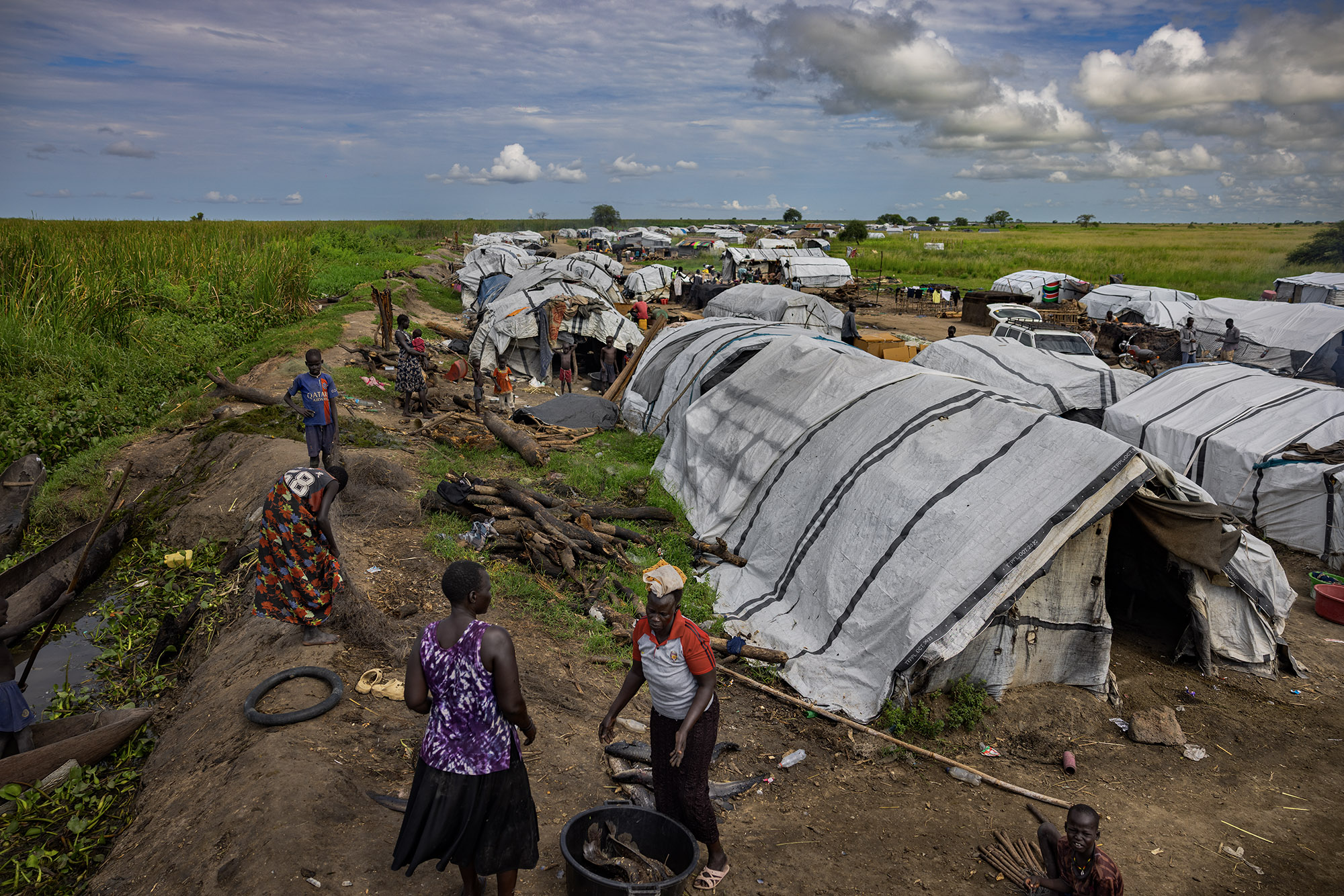
Settlement for internally displaced people in Jalle, near the city of Bor, Jonglei State, South Sudan. © Santi Palacios/Sonda Internacional
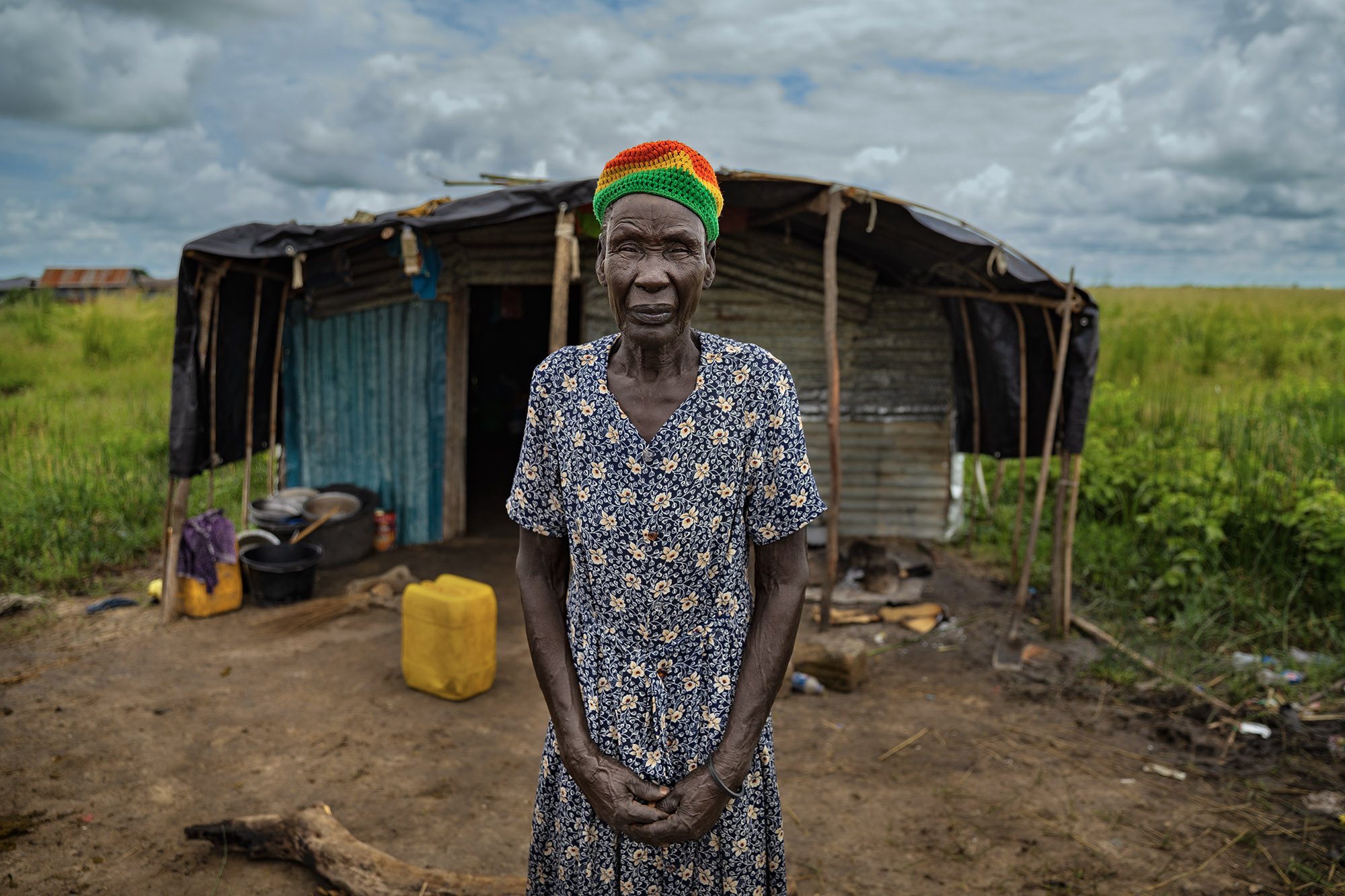
Aguek Monyror Deng, 60, a resident born in the small village that has since become a settlement for internally displaced people, poses for a portrait in front of her home in Jalle, near the city of Bor. © Santi Palacios/Sonda Internacional
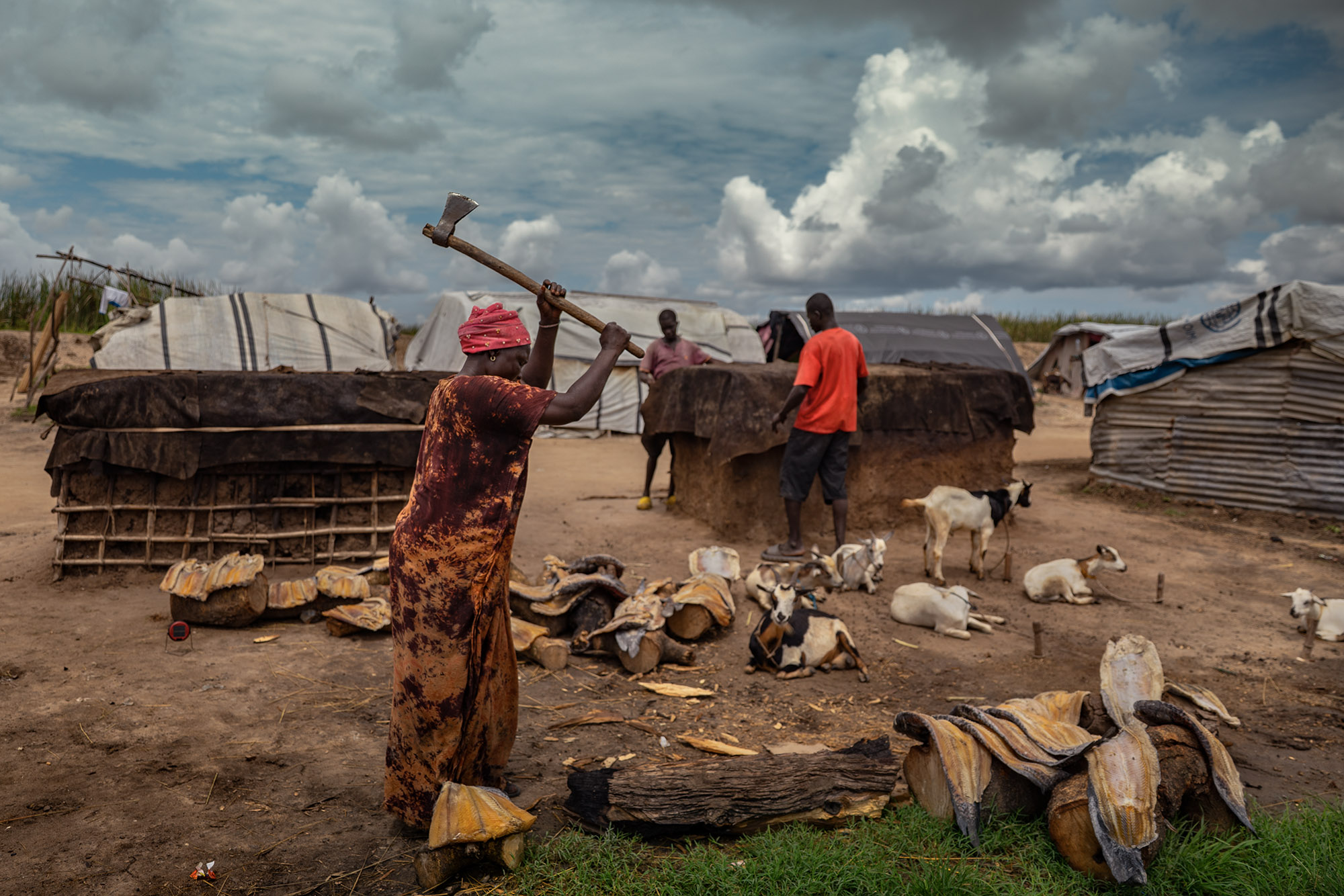
Peace Jennifer, 30, chops firewood at a settlement for internally displaced people in Jalle, near the city of Bor. © Santi Palacios/Sonda Internacional
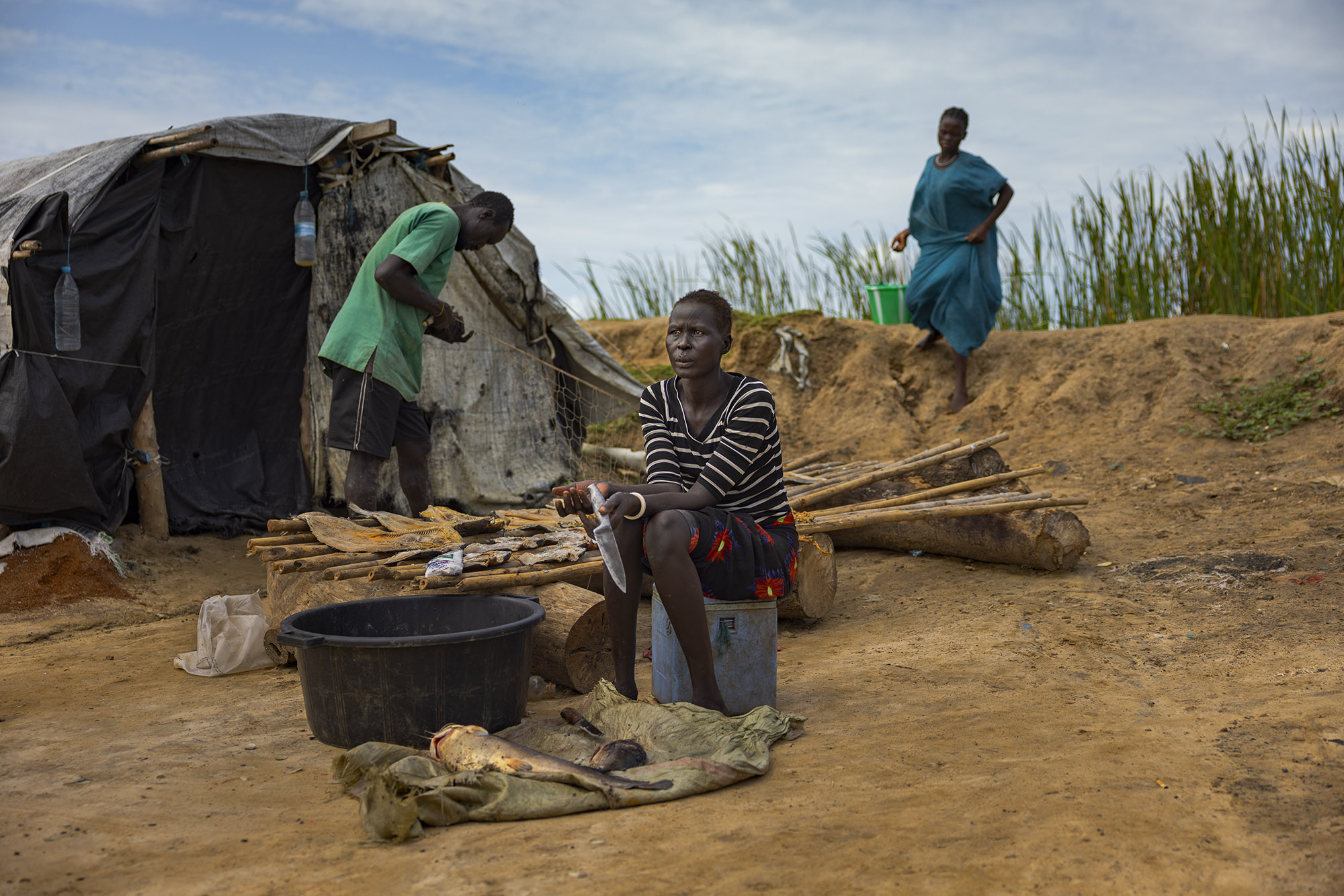
Adout Wuoi Monjoun, a 50-year-old fisherwoman, stands in front of the fragile shelter where she lives with her husband and children in Jalle. © Santi Palacios/Sonda Internacional
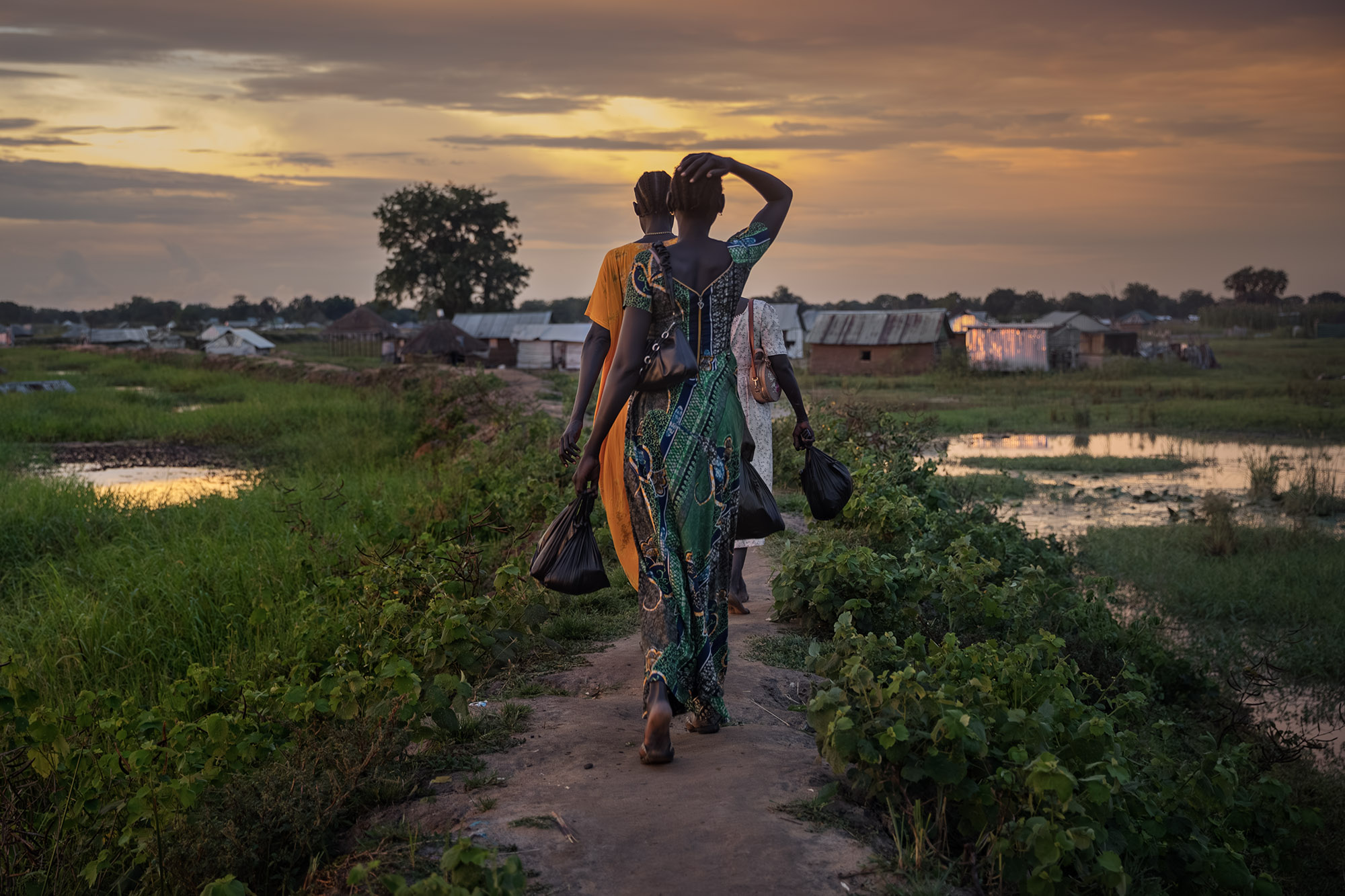
Women walk at dusk along an earthen dyke holding back floodwaters in the community of Achiengdiir, in the city of Bor. © Santi Palacios/Sonda Internacional
Climate frontiers
The consequences of climate change threaten millions of displaced people across the globe. These are populations who have fled war, persecution, and violence, only to end up in some of the areas most affected by extreme weather. Despite having contributed very little to global emissions, displaced communities, and often host communities, are on the front lines of the climate emergency.
The data is conclusive: of the approximately 117 million refugees and displaced people worldwide, 90 million—three out of every four—are at risk from extreme weather events. Most are in fragile countries, often in remote areas and without the resources needed to cope with the floods, droughts, storms, hurricanes, or cyclones that are becoming increasingly severe each year.
Even when it is not the direct cause of forced displacement, climate change acts as a risk multiplier, further exacerbating the vulnerability of those who have fled their homes. Entire families face the dilemma of being forced to escape a second time due to climate disasters, which make their struggle to survive even more difficult. Those who have nowhere else to flee need urgent answers to a crisis that is no longer just environmental: it is human.
This photo essay is part of Climate Boundaries, an exhibition created by Santi Palacios for UNHCR. A visual journey through Honduras, South Sudan and Bangladesh, three countries where the climate emergency is hitting displaced communities particularly hard.
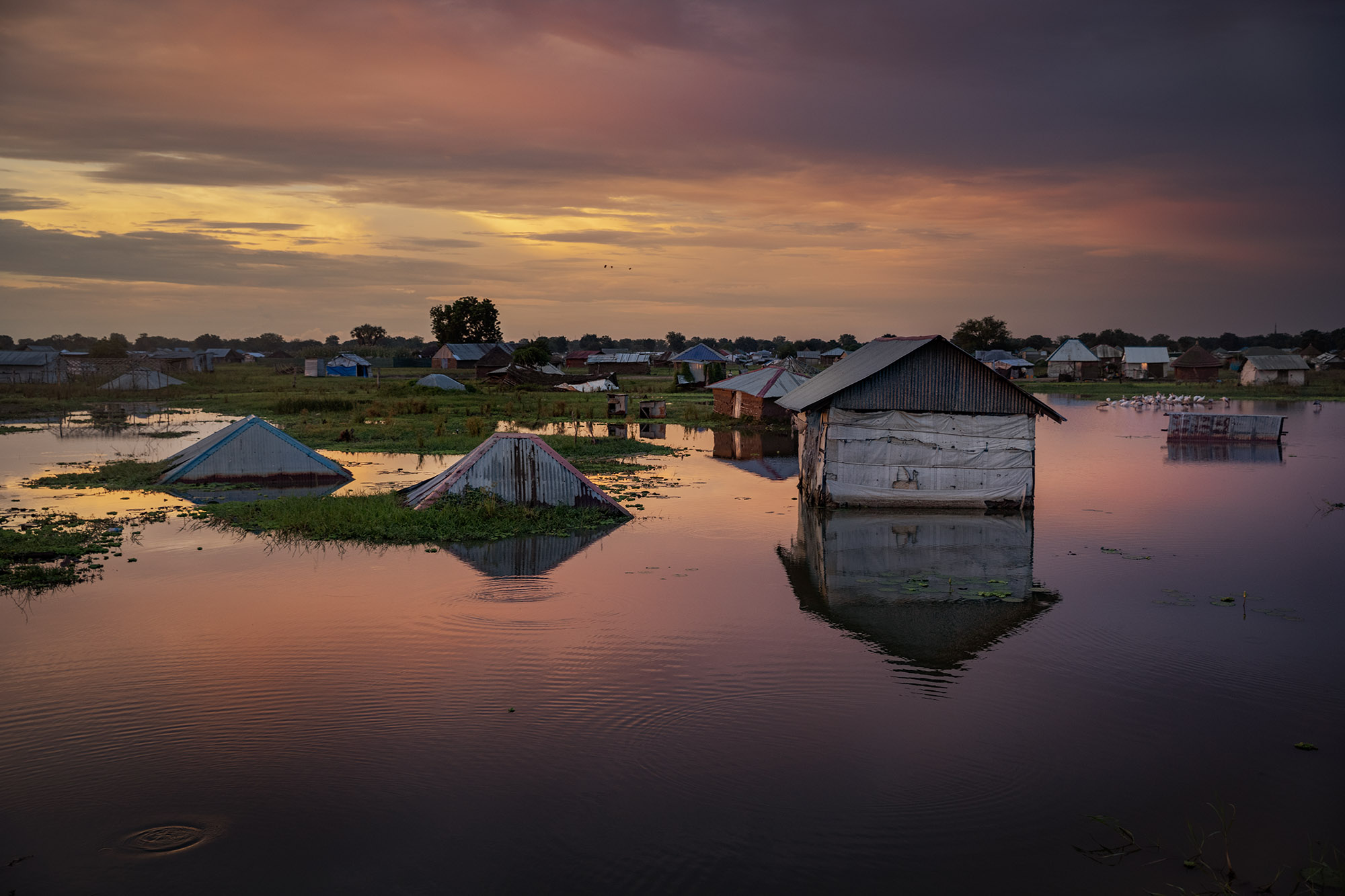
Hundreds of houses and shelters remain partially or completely submerged in the community of Achiengdiir, in the city of Bor. Floodwaters from previous years have yet to recede, leaving large parts of the community permanently underwater. © Santi Palacios/Sonda Internacional