



“The fear of water shortages is a recurring theme at every meeting,” said Carlos Soriano, from the Atacama indigenous community in the town of Susques, an area where the province’s only two lithium mines in production are located.
Lithium: Zone of Promise and Sacrifice
Exploitation for the key mineral in batteries consumes water in northern Argentina
Eulalio Barconte inspects the remains of pipes installed for lithium exploration in the Salinas Grandes of Jujuy.
Crowdfunding
We are a non-profit organization
We can only offer publications like this if we receive donations.
Donate now!
17 December 2025
To appreciate the scale of the lithium boom, fuelled by global demand for electric vehicles, one need only glance at the mining cadastre map of the province of Jujuy, Argentina, located in what the market has dubbed “the lithium triangle”. What you see is no longer a territory carved by topography, but a piece of land overlaid with coloured squares and rectangles: reds for mines granted, yellows for mine applications and blues for prospecting and initial exploration of minerals. There are 208 projects in various stages of development for lithium alone. From the satellite, this land has become a mosaic of geometric shapes.
But beneath the geometry lies geography. And beneath the satellites, voices can be heard.
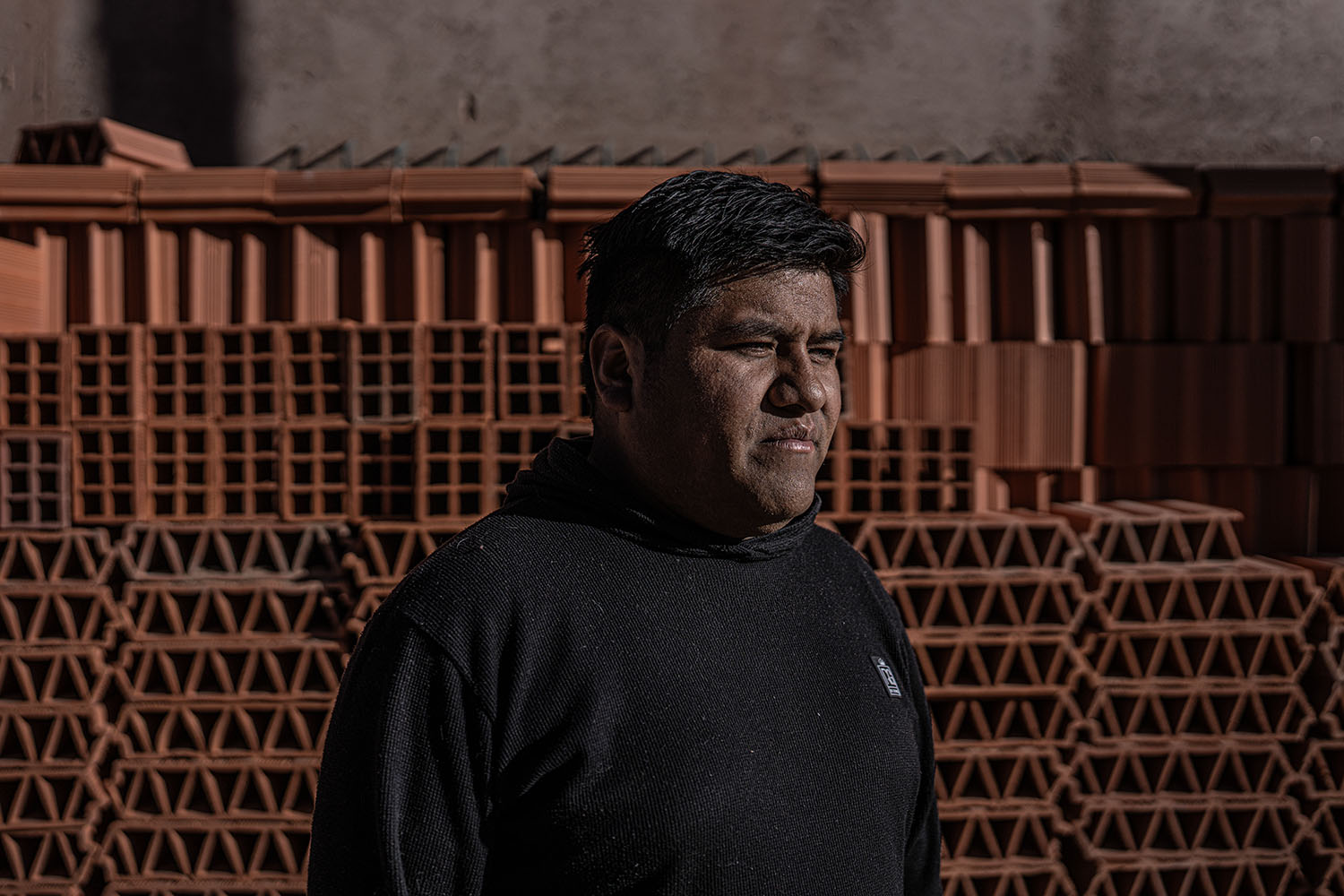
“What will we leave for our descendants if we let the mining companies in? What water will they drink?,” asked Catalina Callata, in Laguna de Guayatayoc, part of the Salinas Grandes basin where the indigenous Kolla communities have been resisting lithium projects on their territory for more than a decade.
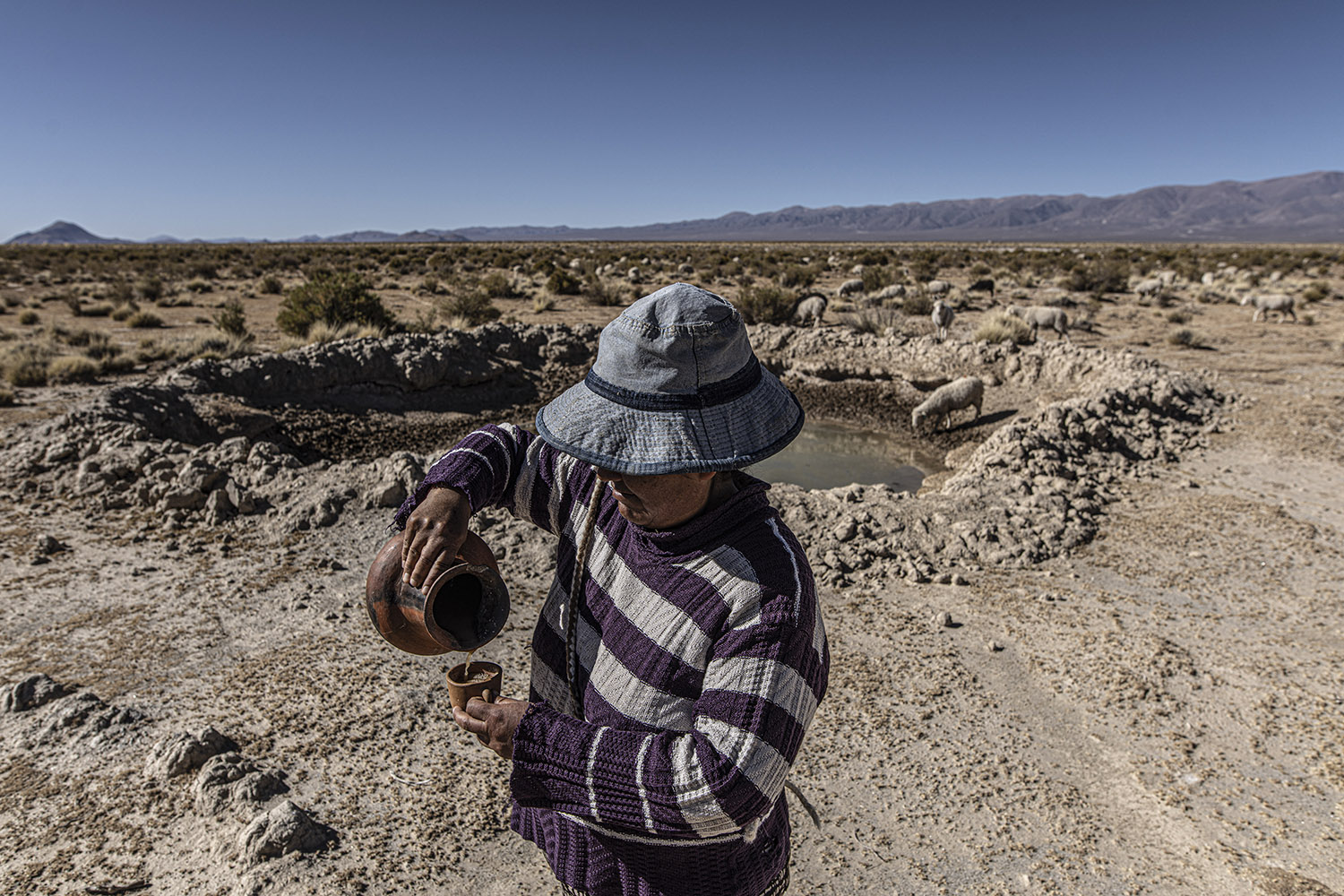
“We are defending the water, brothers,” said Eulalio Barconte, a salt worker in the same region, a few kilometres away.
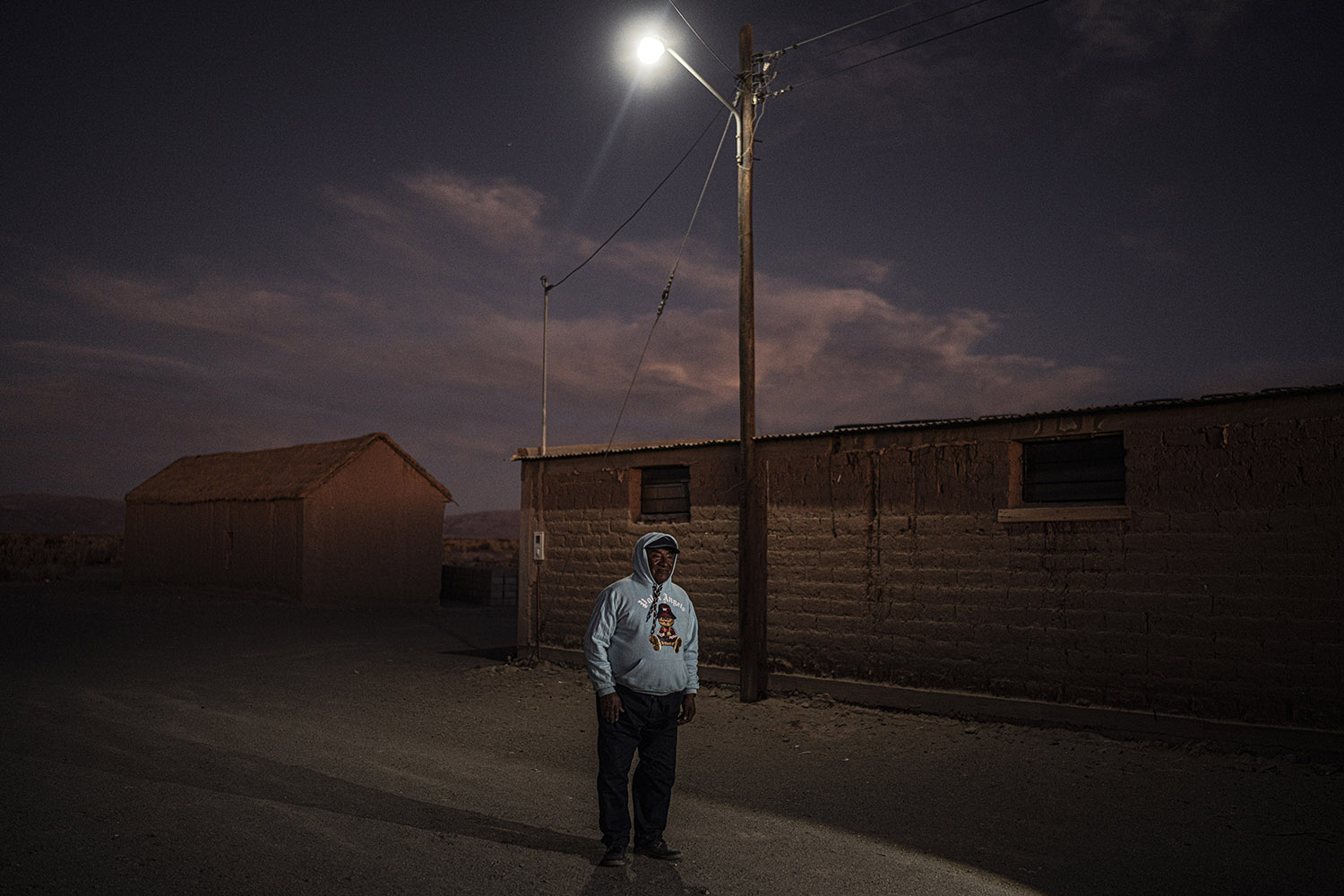
Since the word lithium arrived in the Argentine Puna in 2009, the same fear has been repeated: that water scarcity – typical of the region – will increase due to the high consumption of this mineral by extraction plants using the brine evaporation method. This technique involves pumping millions of litres of salt water (brine) from the subsoil of the salt flats and leaving it to evaporate for months to increase the concentration of lithium contained in it. It is precisely the arid conditions of this area that allow for the method, which is low-cost compared to other alternatives and which some scientists call “water mining”.
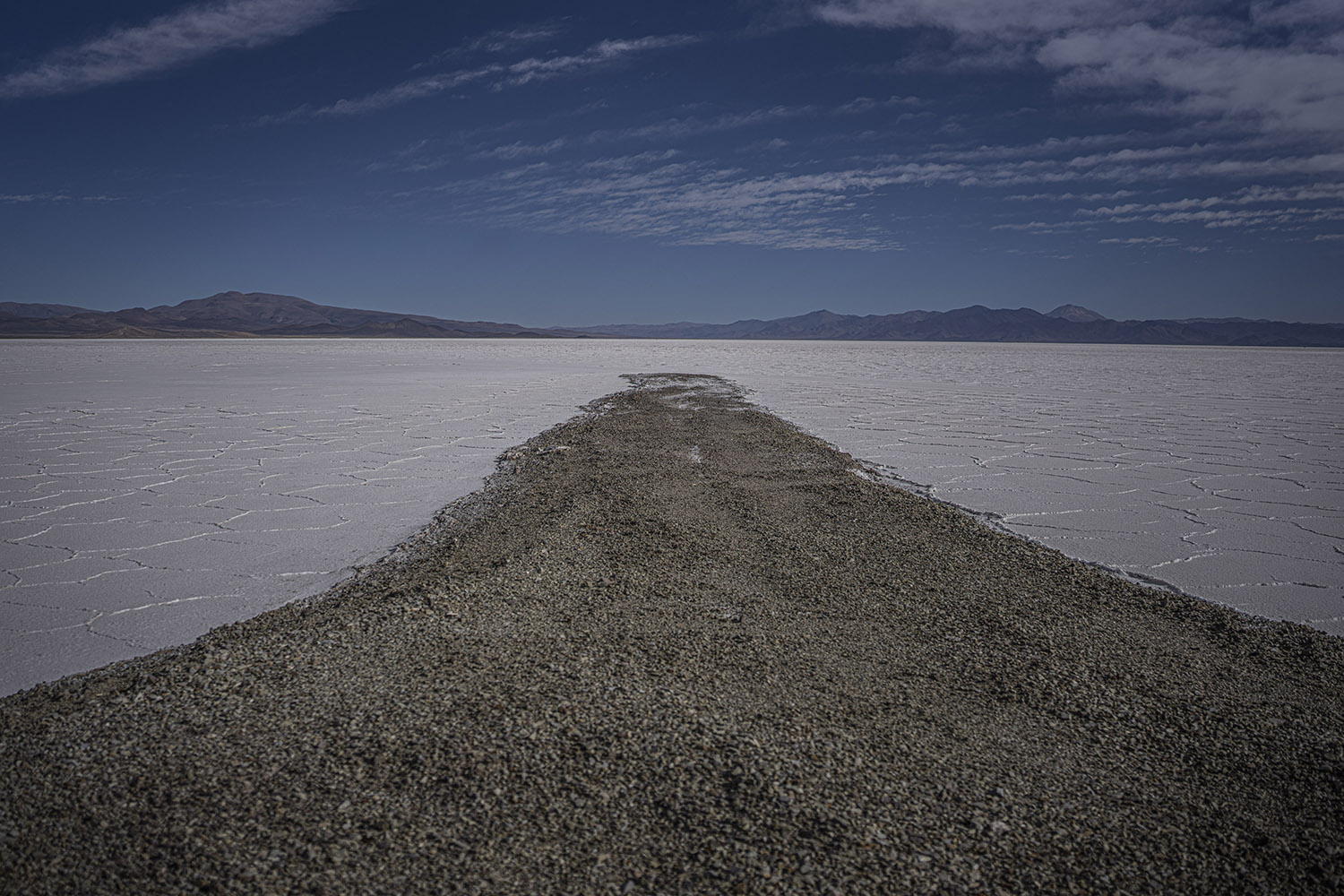
Lithium exploration area in Salinas Grandes of Jujuy, northern Argentina.
Marcos Tinte walks through the Santuario Tres Pozos community in the Cochinoca district of Jujuy province.
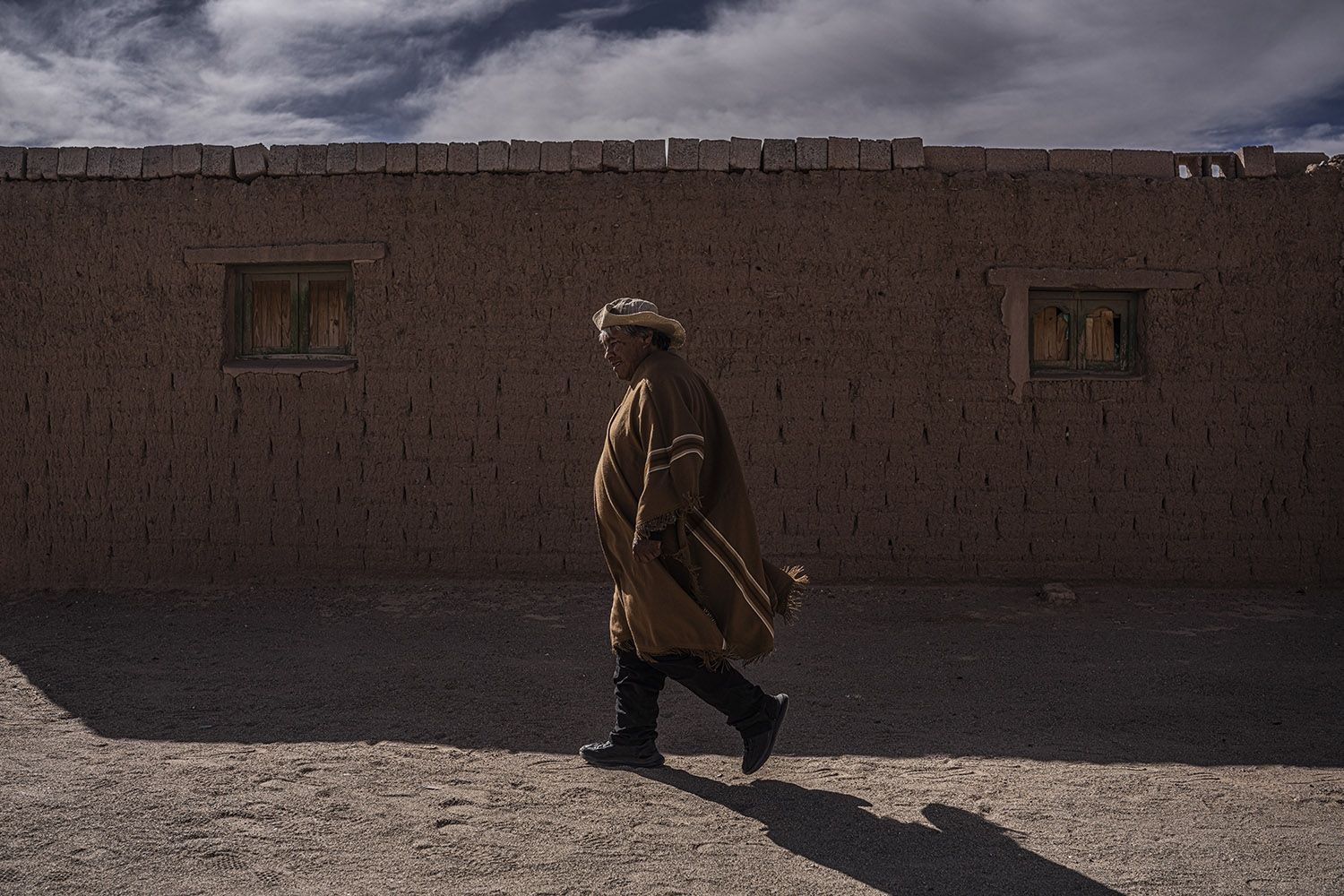
Marcos Tinte walks through the Santuario Tres Pozos community in the Cochinoca district of Jujuy province.
The boom in demand for this mineral is due to a global cause: the energy transition. Lithium carbonate is essential for manufacturing electric vehicle batteries. Based on international commitments to achieve zero emissions, global demand could increase fifteenfold by 2050, according to projections by UN Trade and Development based on data from the International Energy Agency. In the frenzy of the electromobility market led by China, followed by Europe and the United States, this mining has become one of the most profitable businesses in the world, as pointed out by economist Carlos Aramayo, one of Argentina’s most renowned analysts on lithium exploitation and its economic, social and environmental implications. “The profitability is extraordinary: it exceeds the average rate of return of capitalism on a global scale,” said Aramayo, who is also a researcher and professor emeritus at the Faculty of Humanities and Social Sciences at the National University of Jujuy.

In Argentina, this translates into rapidly growing mining activity: in addition to the six lithium mines already in operation, there are nearly sixty projects in various stages of development. With one of the largest reserves on the planet, Argentina has become a key destination for mining corporations, which have arrived to change the economic and political landscape of the country’s north. According to the United States Geological Survey, Argentina was the world’s fifth largest producer of lithium in 2024 and could climb to second place in the next decade. This growth is also driven by the large tax benefits and limited regulations for multinationals put in place under the presidency of Javier Milei.
But the lithium industry not only impacts the ups and downs of the global market, it influences an atmosphere and environment that are inherently global in nature. The lithium reserves in the Argentine salt flats—as well as those in Chile and Bolivia—are part of the Andean wetlands, territories that play an essential role in water regulation and carbon dioxide capture. “Wetlands are our most effective terrestrial ecosystem for addressing the climate crisis,” stated one of the documents of the RAMSAR Convention, the only global treaty that focuses on protecting a specific ecosystem because of its global importance. Paradoxically, one of the greatest threats to preserving this ecological value today is the overexploitation of lithium, driven by the energy transition that seeks to address the very same climate crisis.
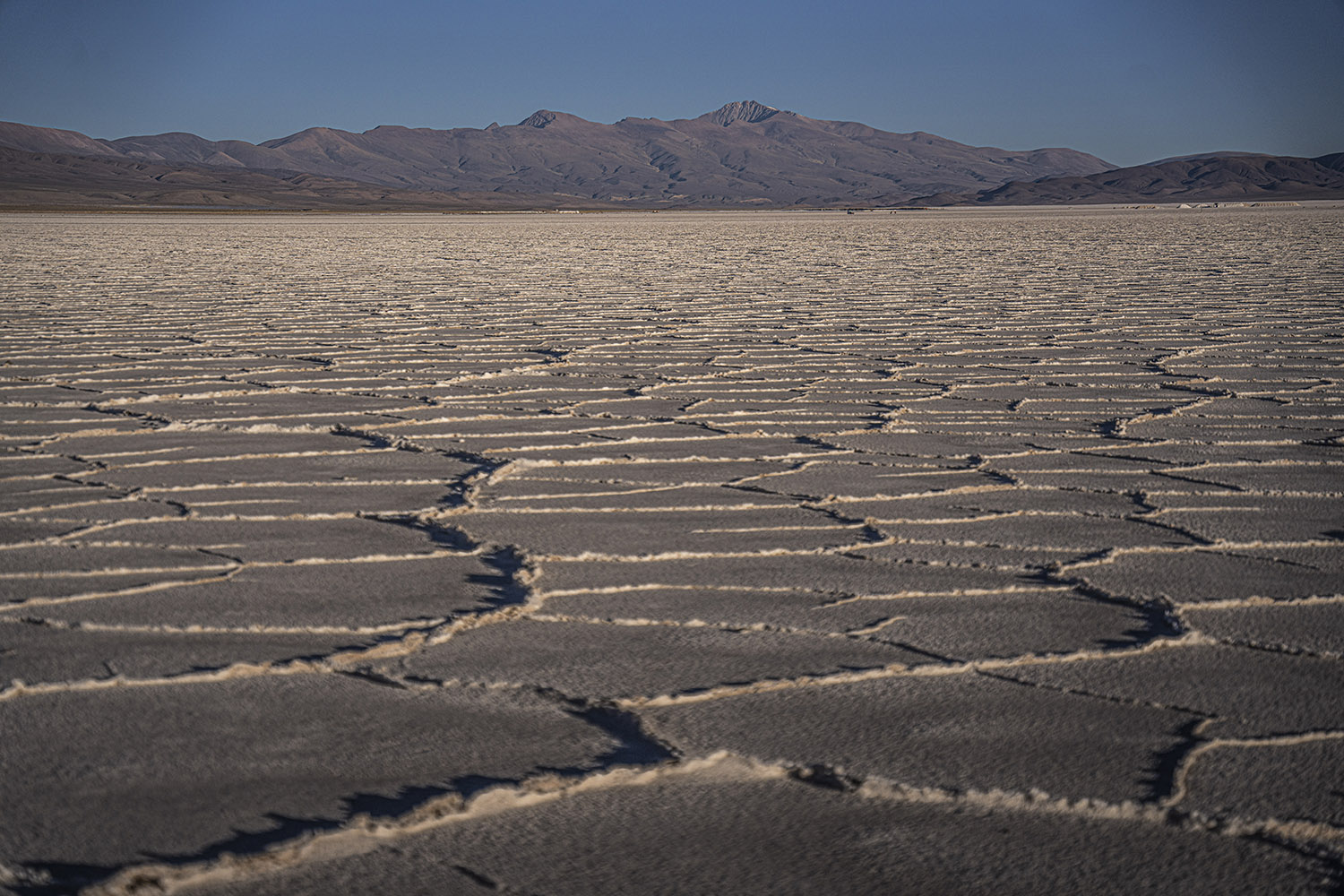
Salinas Grandes de Jujuy, con 12.000 hectáreas de sal pura, reúnen a 33 comunidades que viven de la extracción artesanal de sal. Este paisaje único, símbolo cultural del pueblo Kolla y Atacama, enfrenta hoy la proyección de proyectos de litio que buscan aprovechar su potencial mineral.

Llamas in an enclosure belonging to Virgilia, a breeder at the Tres Pozos Sanctuary Community, next to the Salinas Grandes salt flats.
Between sewers and white gold
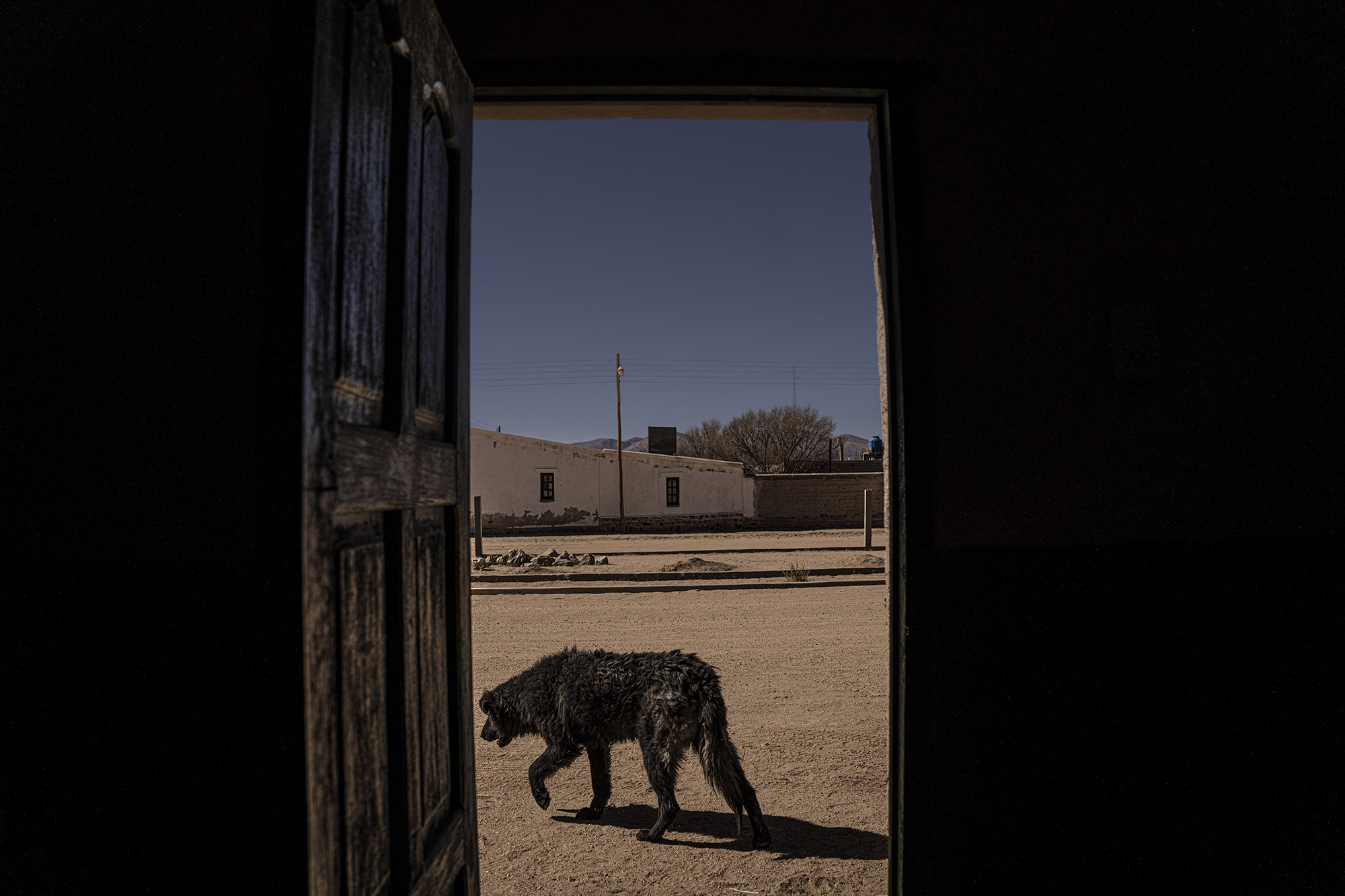
Dawn in Susques, a village 3,600 metres above sea level which, seen from satellite, appears to be in the eye of the mining boom storm. As temperatures hover around ten degrees below zero on this winter morning, brown water runs down the main avenue and skirts the corner of Elísea Nilda Vasquez's guesthouse. The smell of sulphur confirms the problem of untreated sewage that the indigenous Atacameño community of Pórtico de los Andes de Susques, have been denouncing for years.
Parked on that same brown water, a couple of metres away, are the wheels of three 4x4 trucks with a few people inside. Nachito. Logistics and mining services, reads a sign on one of them. It’s changeover time: some miners are returning home after a seven-day shift and others are leaving to work in the Olaroz and Cauchari salt flats, located about 60 kilometres from the village.
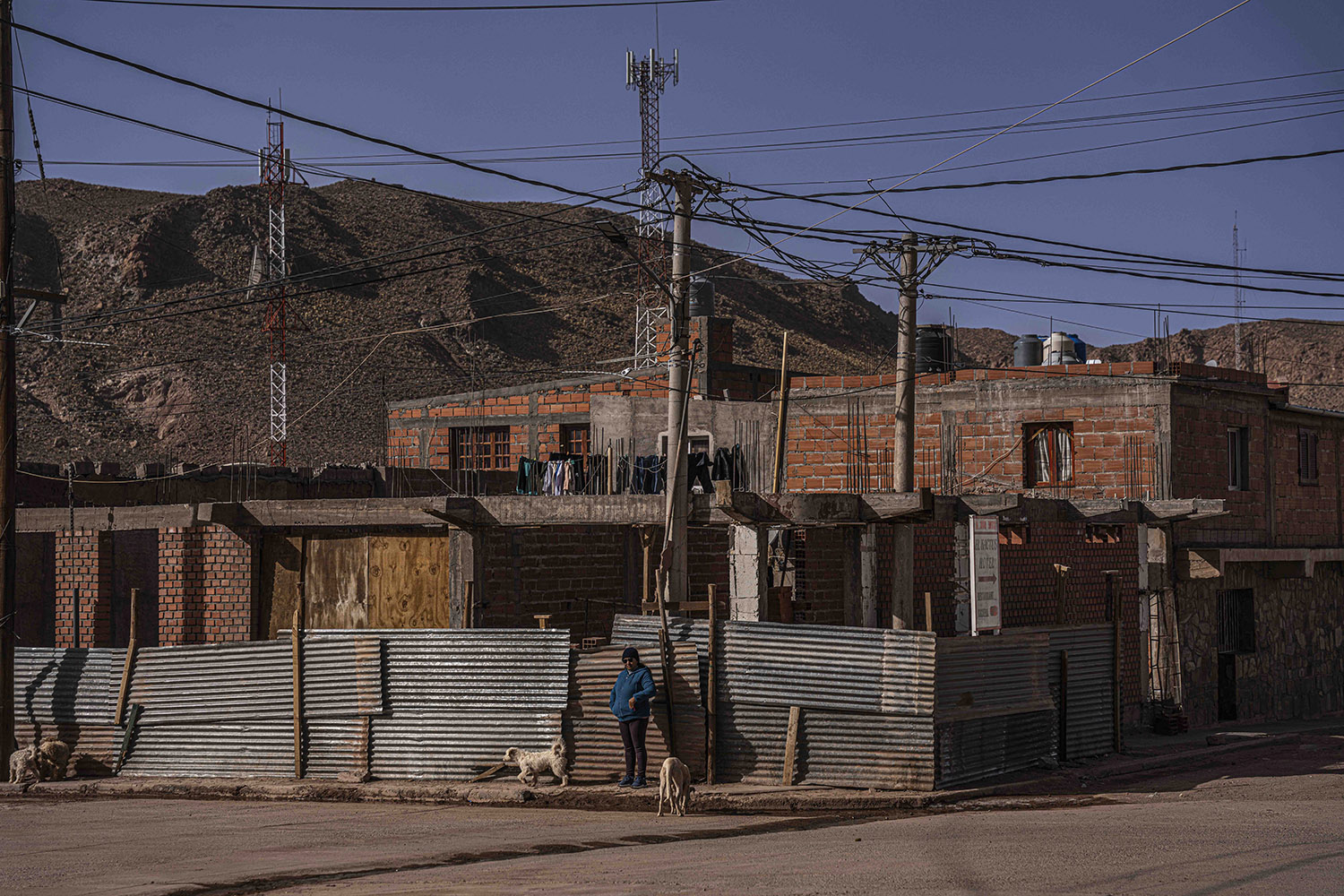
Vans for transporting miners from Susques, Jujuy Province, Argentina.
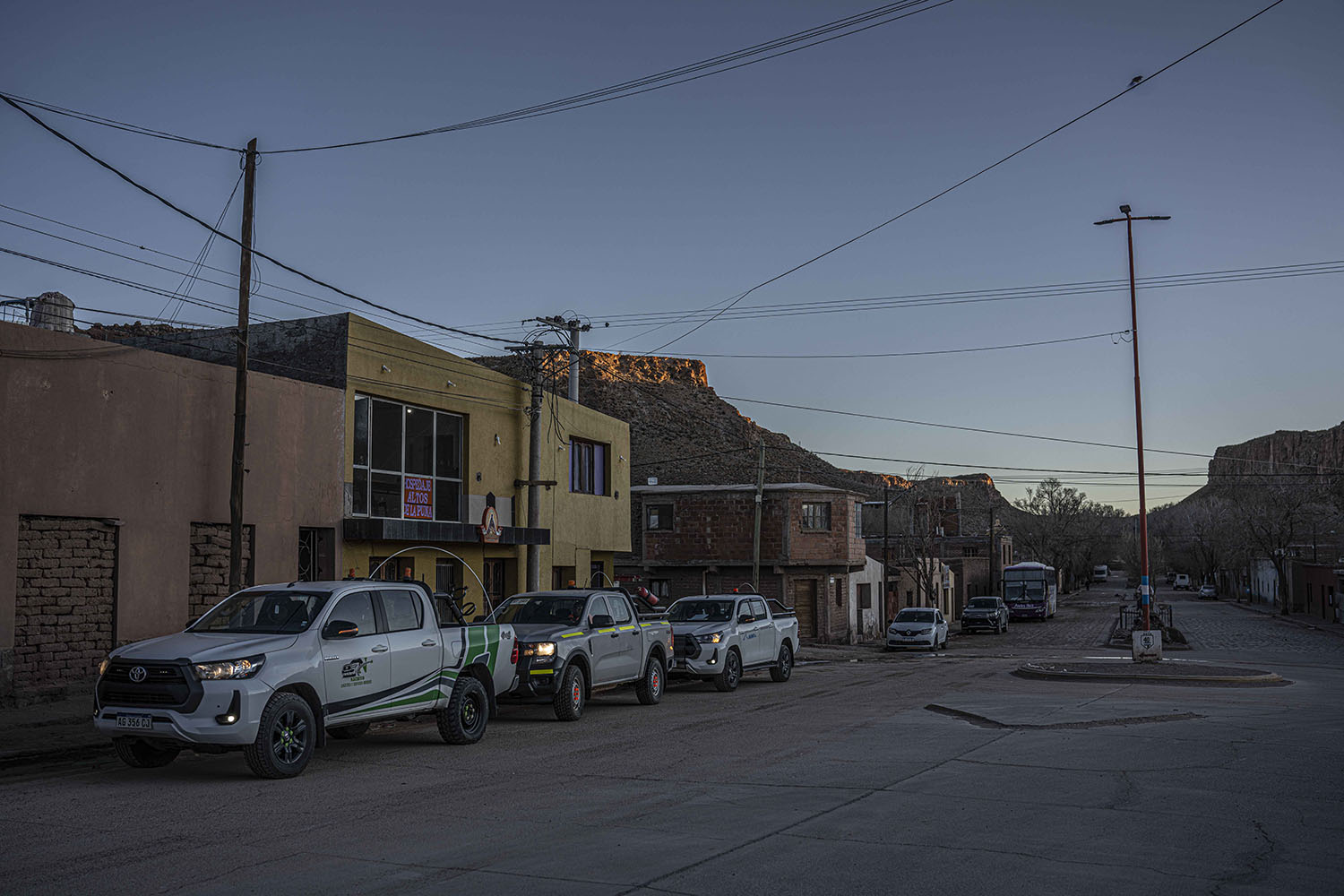
Vans for transporting miners from Susques, Jujuy Province, Argentina.
This is where the only two mining plants currently producing and exporting lithium carbonate, in the province of Jujuy, are located. One of them is Sales de Jujuy, majority-owned by the British company Rio Tinto, one of the largest mining companies in the world. The other is Exar, majority-owned by Ganfeng Lithium, of Chinese origin, and Lithium Argentina, with Canadian capital. In both mines, the company Jujuy Energía y Minería Sociedad del Estado (JEMSE) (Jujuy Energy and Mining State Company), created by the provincial government, holds an 8.5% stake.
Olaroz production comparison
Although each village has its own municipal administration, the ten communities of the Atacameño people in the region are the intermediaries with whom mining companies negotiate to set up operations in their territories, generally with the assistance of the provincial government itself. However, the situation and the benefits they receive from the companies vary greatly, which has created divisions among the communities.
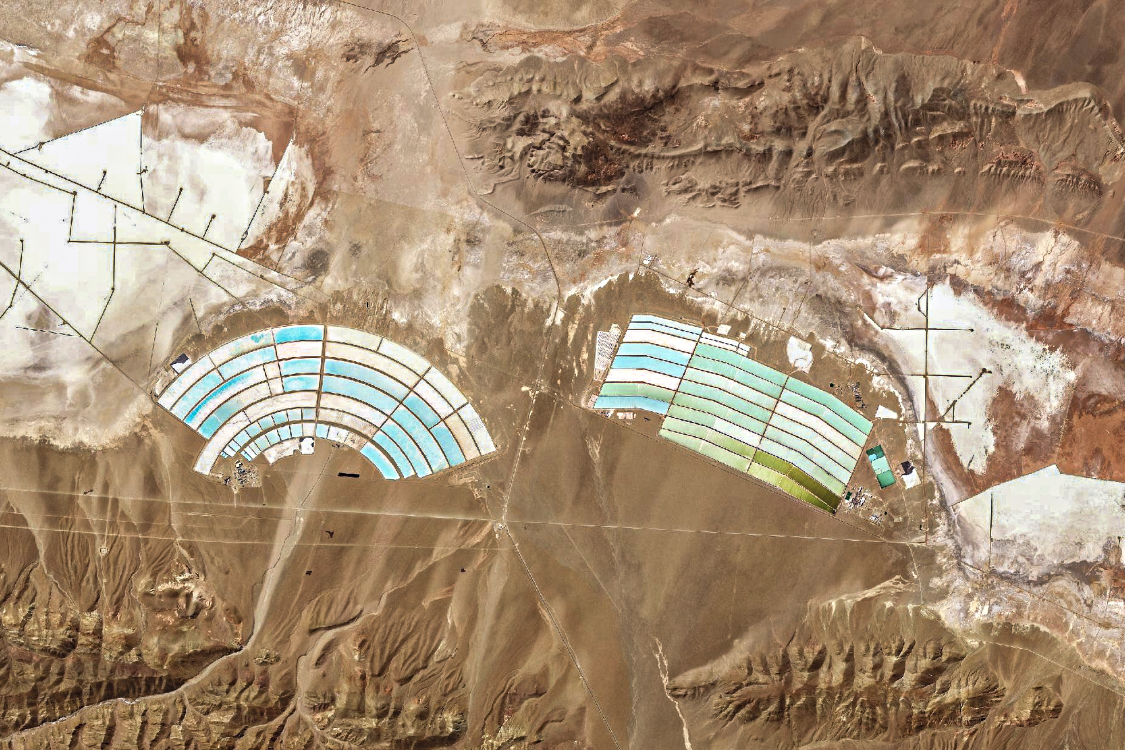
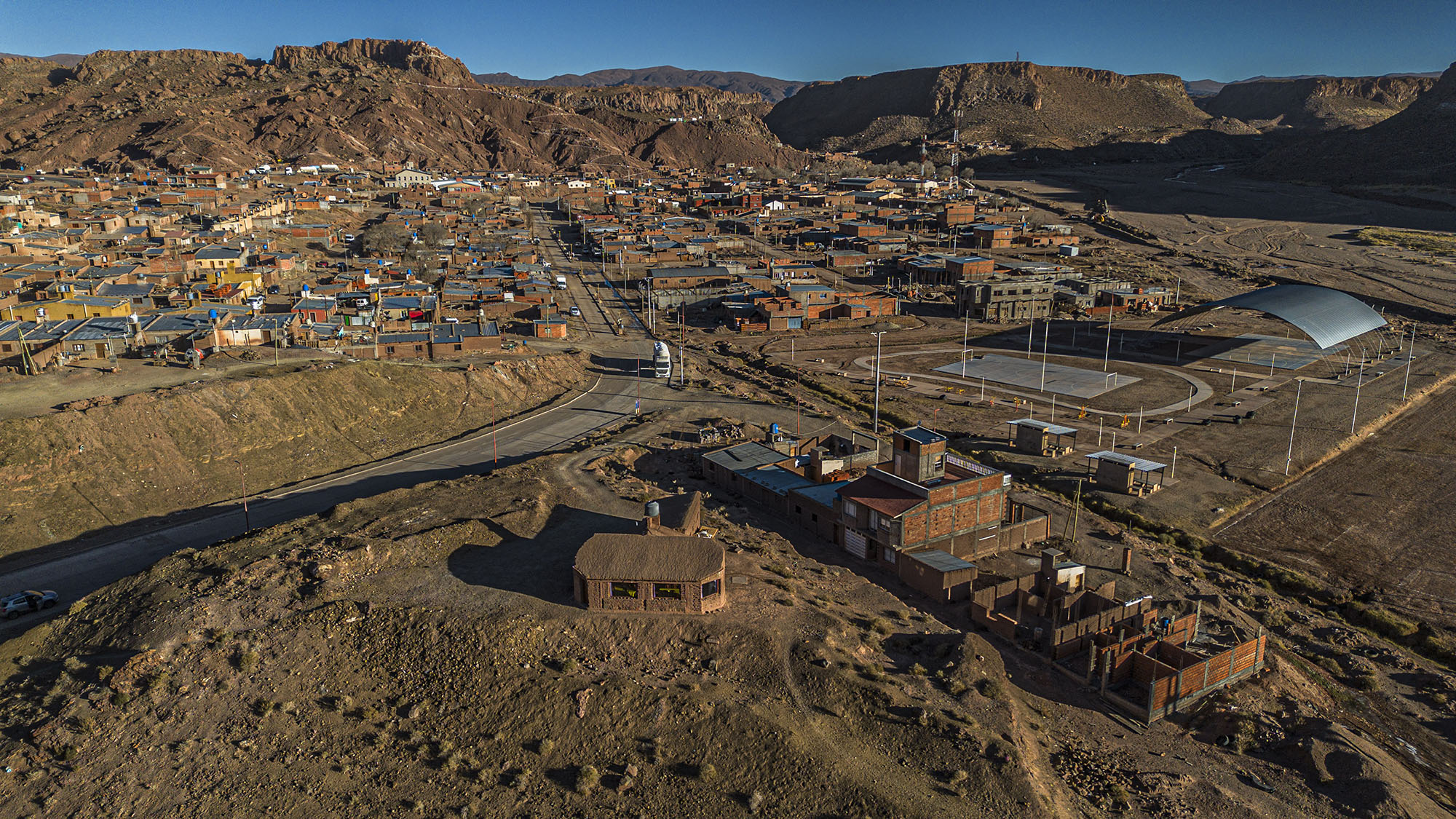
Satellite images, taken in 2009 and 2024, show the facilities of the Exar and Sales de Jujuy mining companies, in the Salar de Olaroz Chico, Jujuy province, Argentina. Credit: Planet Labs.
Satellite images, taken in 2009 and 2024, show the facilities of the Exar and Sales de Jujuy mining companies, in the Salar de Olaroz Chico, Jujuy province, Argentina. Credit: Planet Labs.
The Sales de Jujuy and Exar mines generate approximately US$500 million per year in operating profits, with current production of around 50,000 tonnes of lithium carbonate, according to economist Aramayo.
Brown water continues to run down the street. The trucks, now full, drive off.
Community member Carlos Soriano welcomes us to the office of the Pórtico de los Andes indigenous community in Susques, which he represents. He says that when the mining companies came to ask for authorisation, his village was the last to accept, due to fears they would run out of water. Following this refusal, the companies began to focus on other villages. Now they only have an agreement with the Exar mining company for easement, as a neighbouring community.
“The mining companies agree, but only to a small extent: we are talking about forty thousand dollars a year”, said Carlos, adding that with that amount they were only able to buy one construction machine.
The local labour hired by the corporations is also scarce. Carlos lists the many problems they have in education and health due to a lack of resources and infrastructure.
"Today, the community of Susques should be thriving, it has the two largest mining companies in the world right next door!" he said. But, he complained, the mining royalties paid to the provincial government are not returning to the communities.
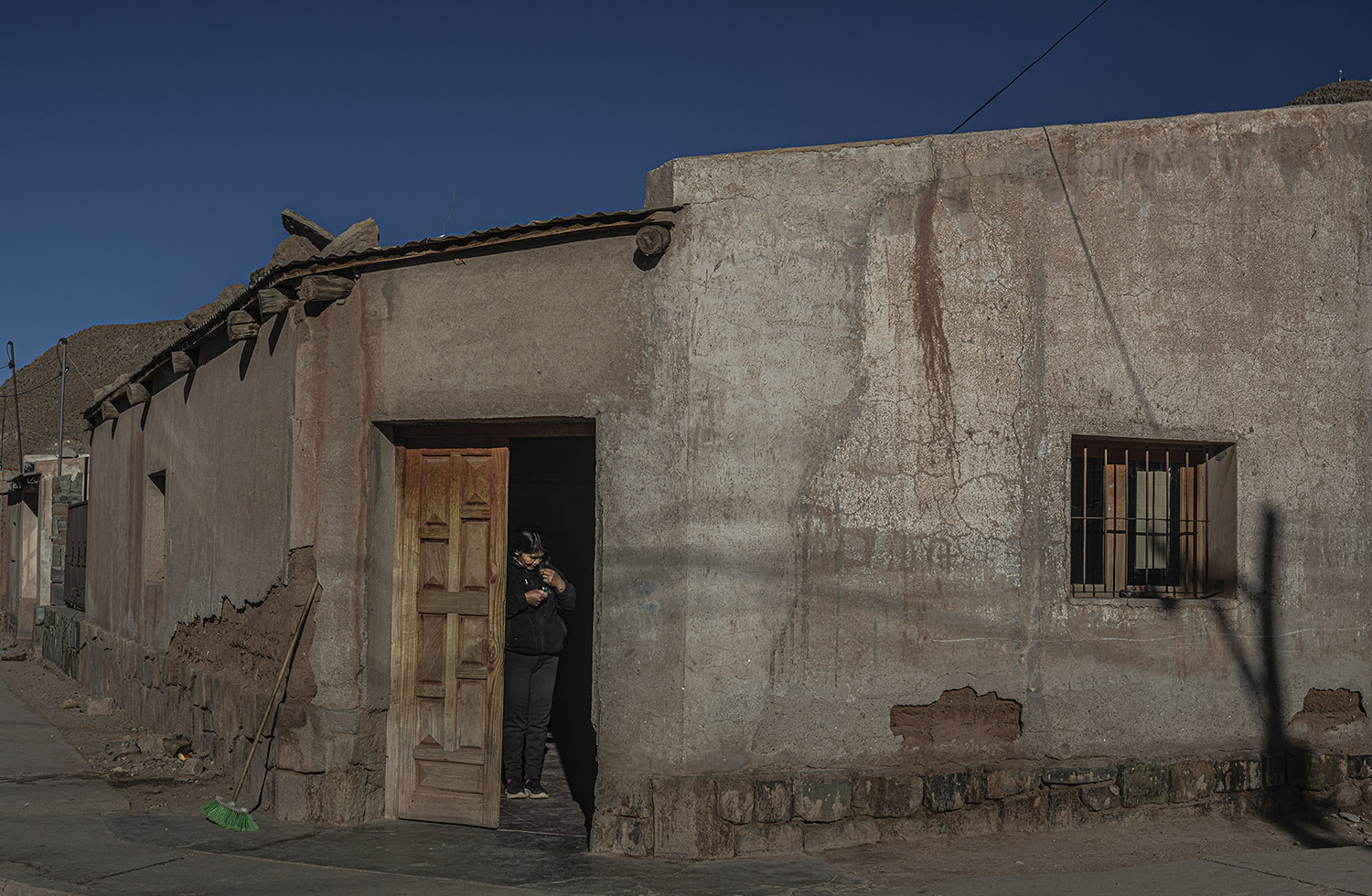
The town of Susques is located 70 kilometres from the Salar de Olaroz Chico salt flat. In this community, part of the population works directly or indirectly in mining.
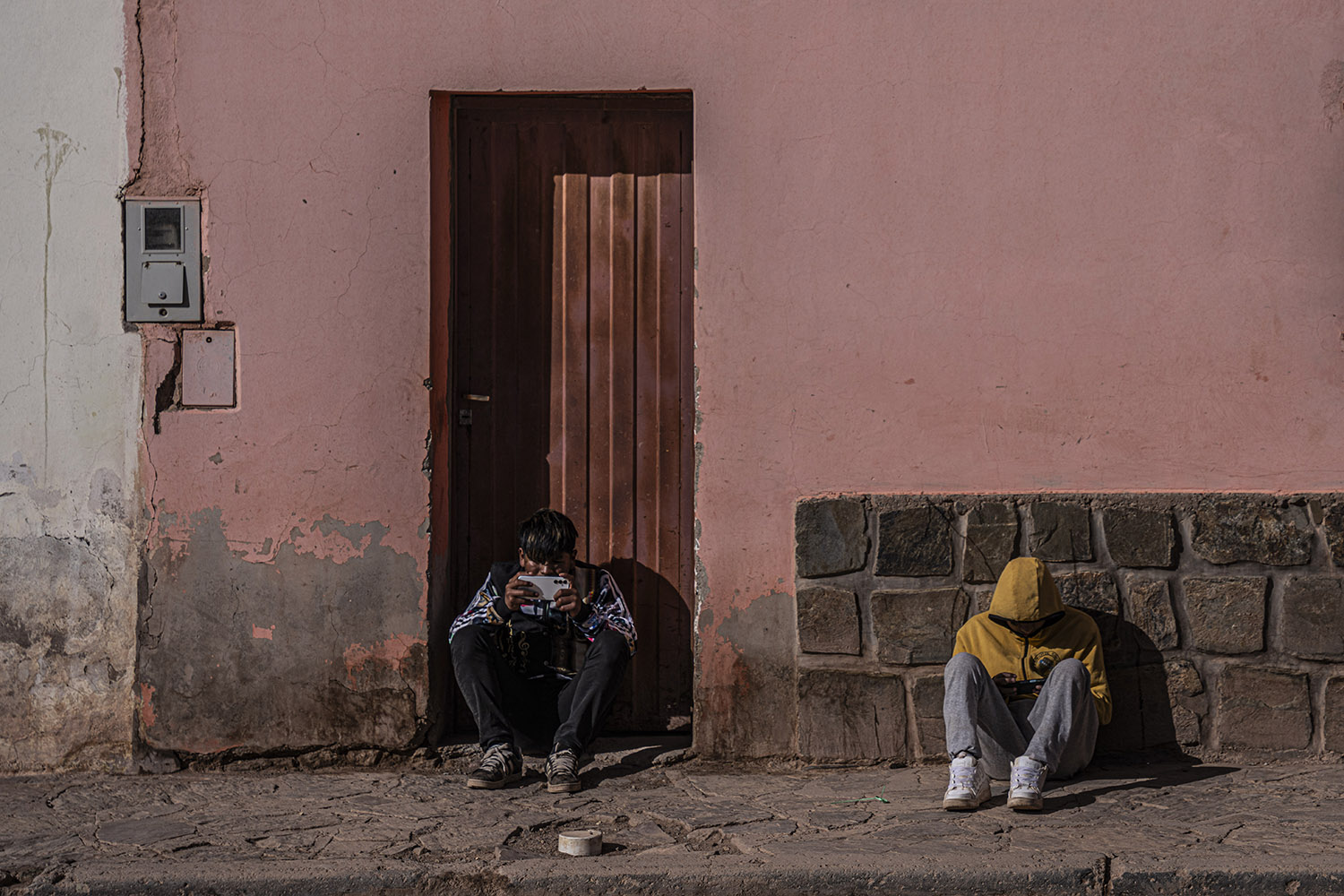
The town of Susques is located 70 kilometres from the Salar de Olaroz Chico salt flat. In this community, part of the population works directly or indirectly in mining.
Economist Aramayo explains that the country's tax law favours companies: "In the case of Jujuy, it’s scandalous: they are paying the government 0.3% in royalties." The Mining Investment Law passed in 1993 allows royalties of up to 3% of companies' profits to be charged. A year later, a constitutional reform granted the provinces ownership of the subsoil: since then, it has been the provincial governments, rather than the national government, that negotiate terms with mining companies. For the economist, this is the biggest obstacle to transforming mining into a fair and sovereign source of income for Argentina: "For a monopoly like Rio Tinto, it is easy to negotiate with weak local governments, which have been permitted to enrich themselves quickly."
In addition to the two mines in operation, the Susques region has a large number of projects in the pipeline. One of them is from the US company Austroid, which, according to Soriano, already has approval to extract lithium from community properties, in addition to an agreement with the company Lítica for the exploration of rare earths.
Community of Tusaquillas next to Guayatayoc Lagoon, part of the Salinas Grandes basin.
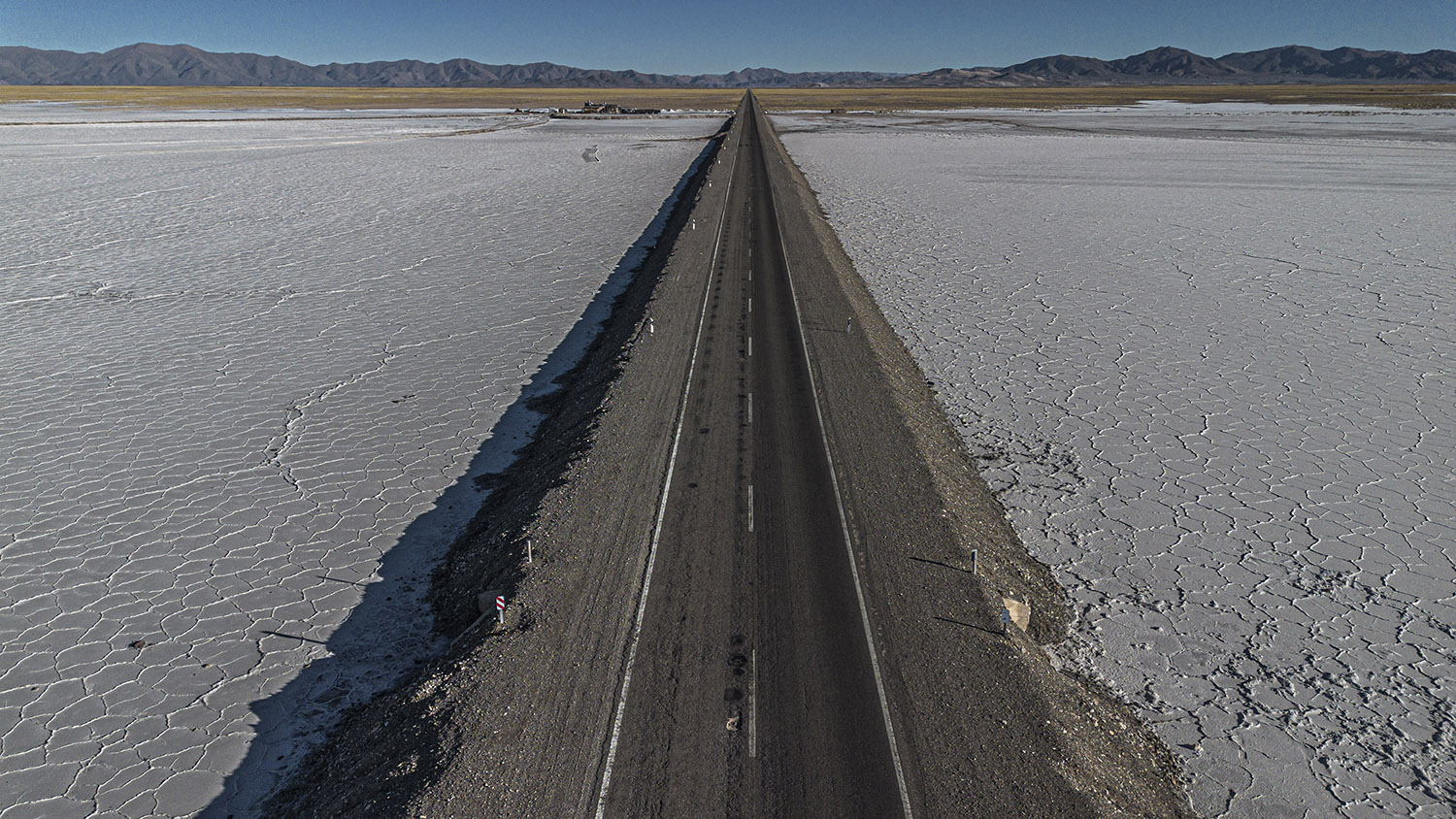
Salinas Grandes of Jujuy.
Between water and batteries
The two plants belonging to the mining companies Exar and Sales de Jujuy are located in the Cauchari and Olaroz salt flats, on the road between the towns of Olaroz and Susques. We travel along it with Elísea, treasurer of the indigenous community of Susques.

View of the brine evaporation pools at the Sales de Jujuy plant.
Sales de Jujuy was the first lithium mine to start production in Jujuy and the second to do so in Argentina, in 2015. A large blue sign welcomes visitors to the site, displaying the names and logos of Toyota and Allkem, although the latter ceased to exist after merging with Livent to form Arcadium Lithium, which was bought a year ago by the British company Rio Tinto. Today, this firm is the majority owner of Sales de Jujuy, with 66.5% of the shares, while Toyota Tsusho holds 25% of the shares and participates as a commercial agent through its core business in the global automotive industry. The remaining 8.5% of the shares belong to the state-owned company JEMSE.
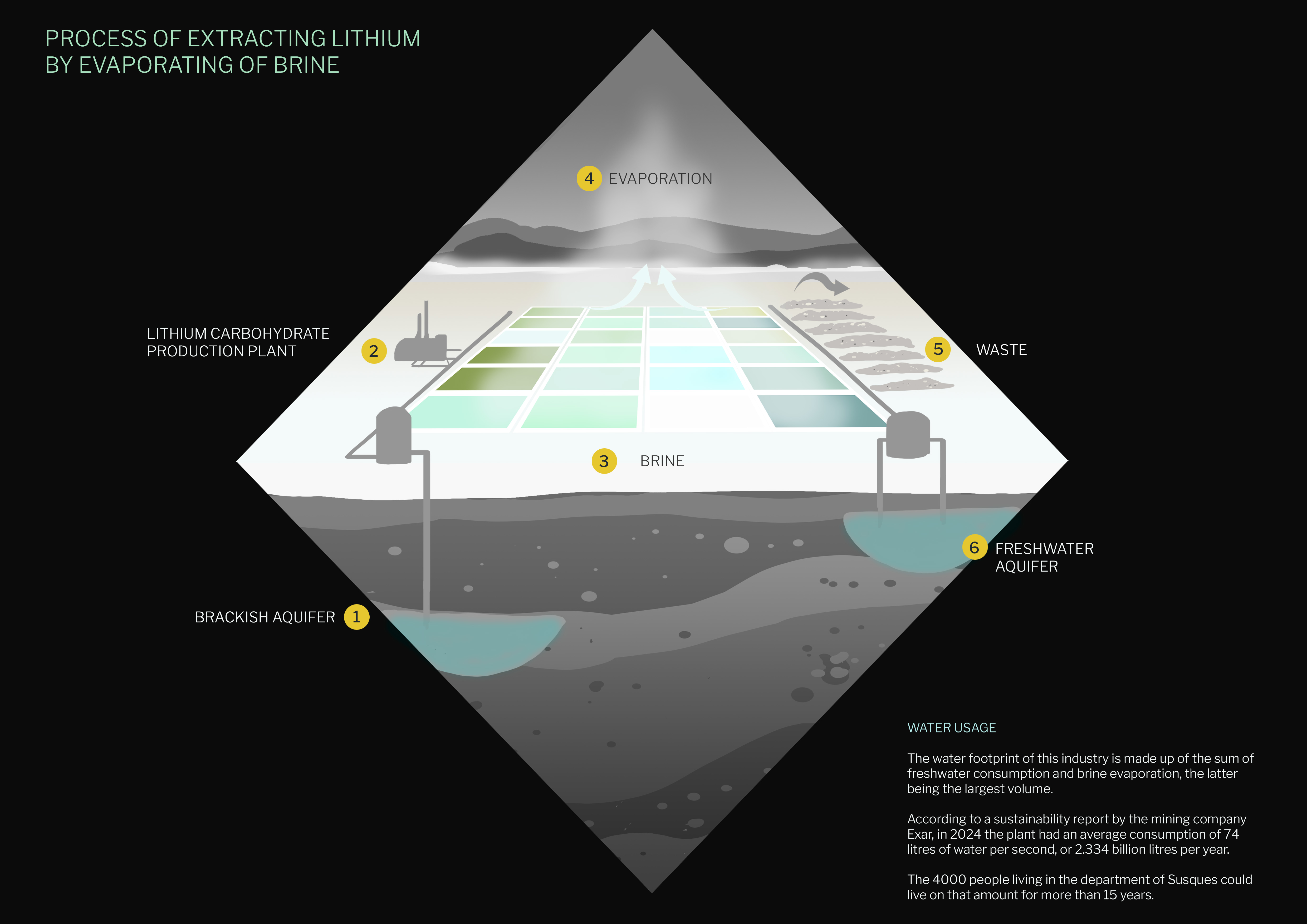
Process graphic
We are content to observe from afar, as the company responded negatively to our formal request for visits or press interviews.
From the car, we can see the blue of the large evaporation ponds, which according to Sales de Jujuy number 70 and cover 1,500 hectares. Elísea points to the other side of the road, between the mountains opposite the plants, and recalls that before, you could see the white of the frozen water there.
"That was from the springs, where natural water comes out of the ground, and the meadows are the green grass that grows around them, which over the years began to dry up. Vicuñas are no longer seen in this area as they once were."
According to a report by mining company Exar, in 2024 its plant consumed an average of 74 litres of water per second. With what the mine consumes in a year – 2.334 billion litres – the 4,000 people living in the department of Susques could live for more than 15 years. The companies claim that this is "industrial water", but Walter Díaz Paz, a natural resources and environmental engineer at the Argentine National Scientific and Technical Research Council (CONICET), clarifies it’s actually freshwater that local communities use for human and/or animal consumption and represents their only source of supply. For this reason, one of the greatest concerns of the indigenous peoples is related to the water they need for raising llamas and sheep, an ancestral activity carried out by most families in the region.

Elísea Nilda Vasquez. As a teenager, she began working on her family’s llama farm in the community of Susques. Today, her daughter Carina continues the legacy of caring for the animals.
In addition, this extraction method involves pumping around 1,700 litres per second of brine from the subsoil, the evaporation of which represents the largest water footprint of lithium plants estimated by Díaz, as brine is a vital component of the hydrological cycle of this ecosystem.
In view of these impacts, there are other methods to prevent evaporation. One of them is direct electrochemical extraction, developed in Argentina by Ernesto Calvo, PhD in Chemical Sciences together with the National University of Buenos Aires, and patented under the name of the CONICET. This method allows the mineral to be drawn faster and use less water, but there are difficulties in scaling it to industrial levels.
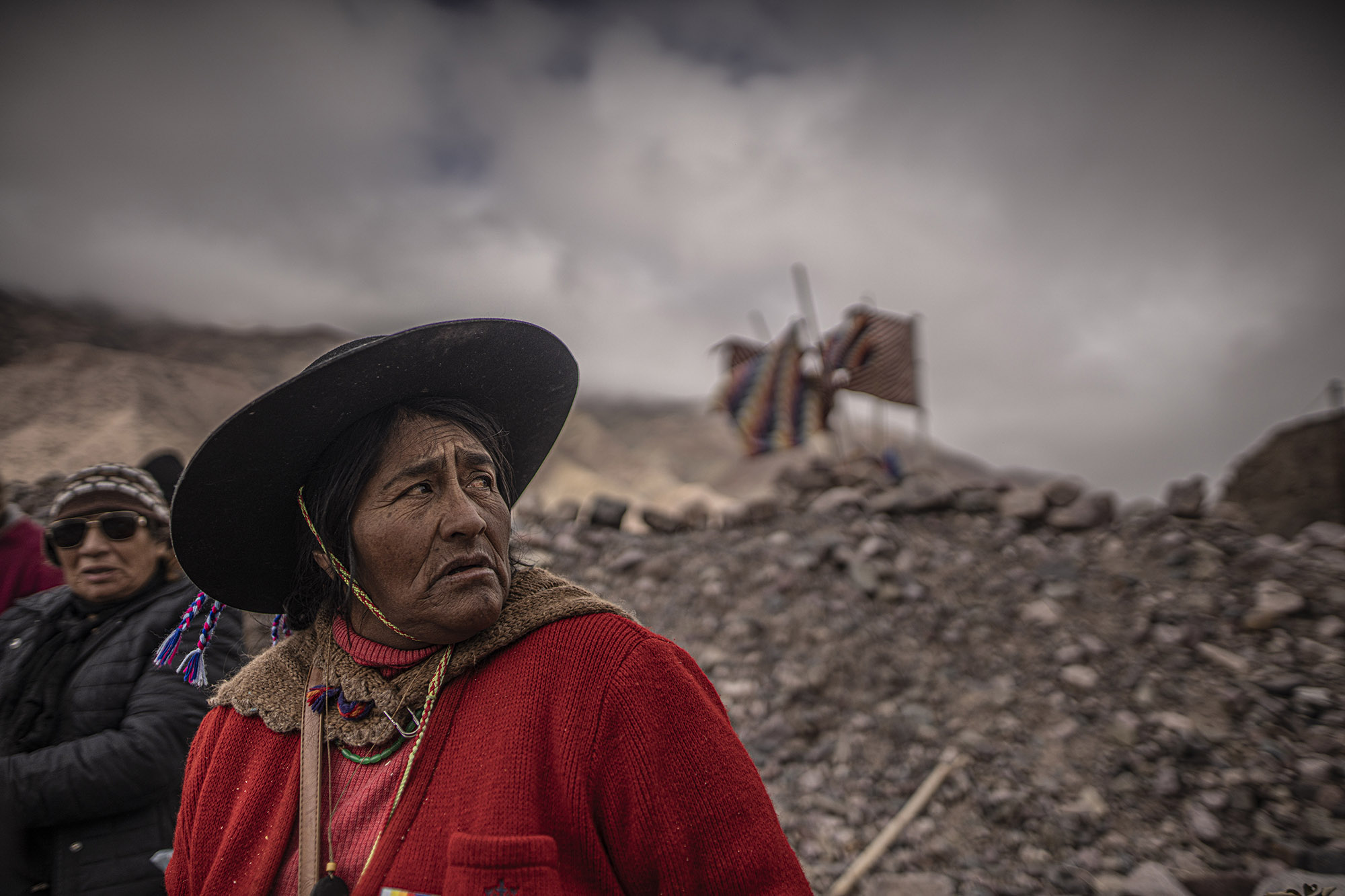
A group of community leaders march from the communities of Quebrada de Humahuaca to the capital San Salvador de Jujuy, in protest of the repression exercised by the provincial government in June 2023.
Other methods of direct lithium extraction are currently used in two plants in Argentina, one of which is owned by ERAMET, a French company and the first European firm to produce lithium carbonate for batteries on an industrial scale.
As we move forward, the wind picks up and a white dust begins to cover everything. According to the treasurer of Susques, it is the lime used in the lithium beds, a concern her community raised with the Government because of the pollution it causes, but their complaints were not responded to. Another concern is waste treatment: Exar states that its plant produced 109 tonnes of hazardous waste in 2024, including lead (vehicle batteries).
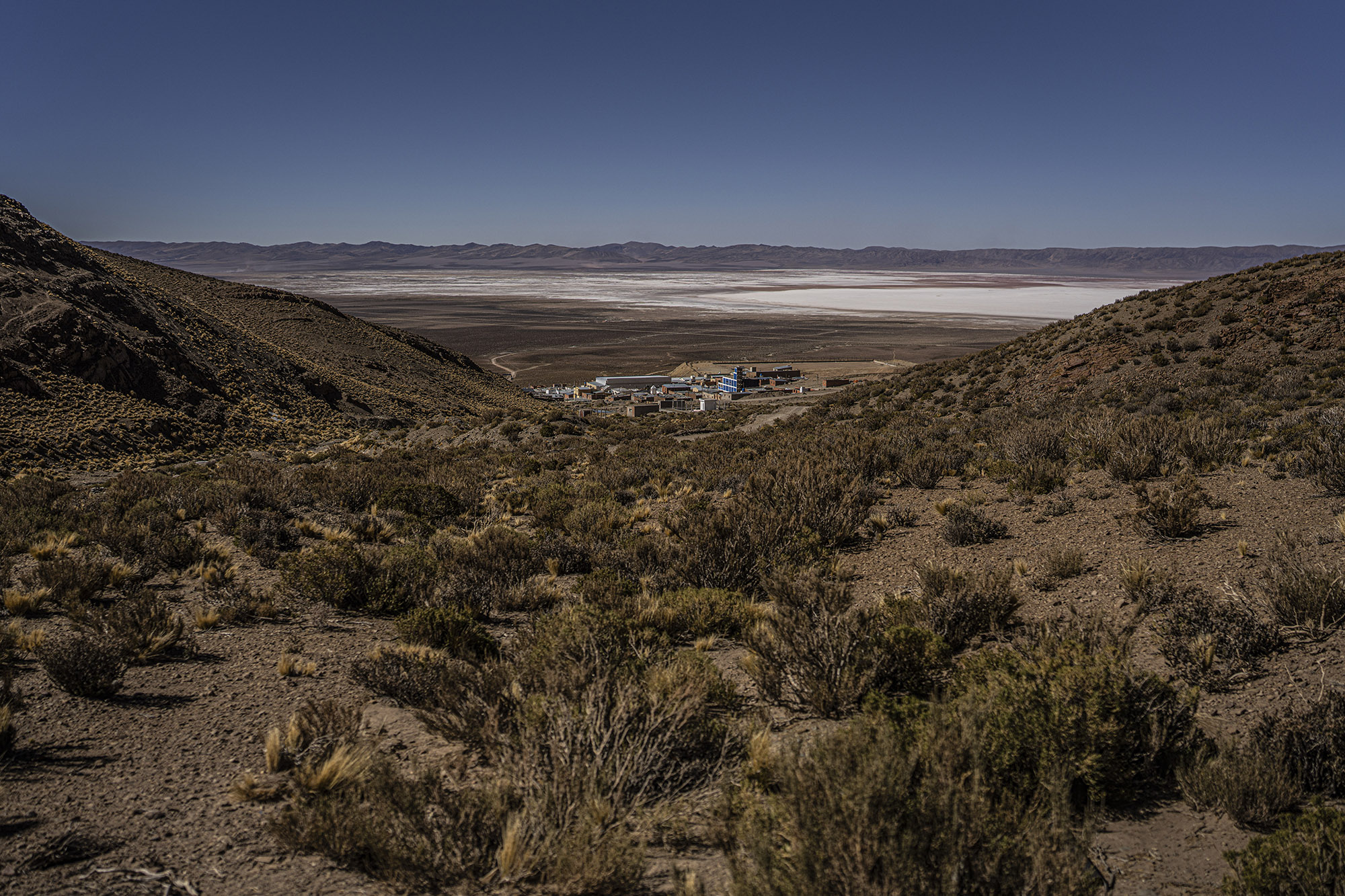
Olaroz community next to the Sales de Jujuy mine. In this community, a large part of the population works directly or indirectly in mining.
Between indigenous peoples and miners
The asphalt road that runs through the mine ends among the houses of the village of Olaroz, located at an altitude of 4,200 metres and just 20 kilometres from the lithium plants. The houses under construction and the parked 4x4 trucks are evidence this indigenous community is undergoing a rapid growth and transformation. But its 150 inhabitants are hard to find: the extreme cold at this time of year leaves the village practically empty and the school closed; and in recent years many have inflated their incomes as suppliers or employees of the mines and have moved to the city.
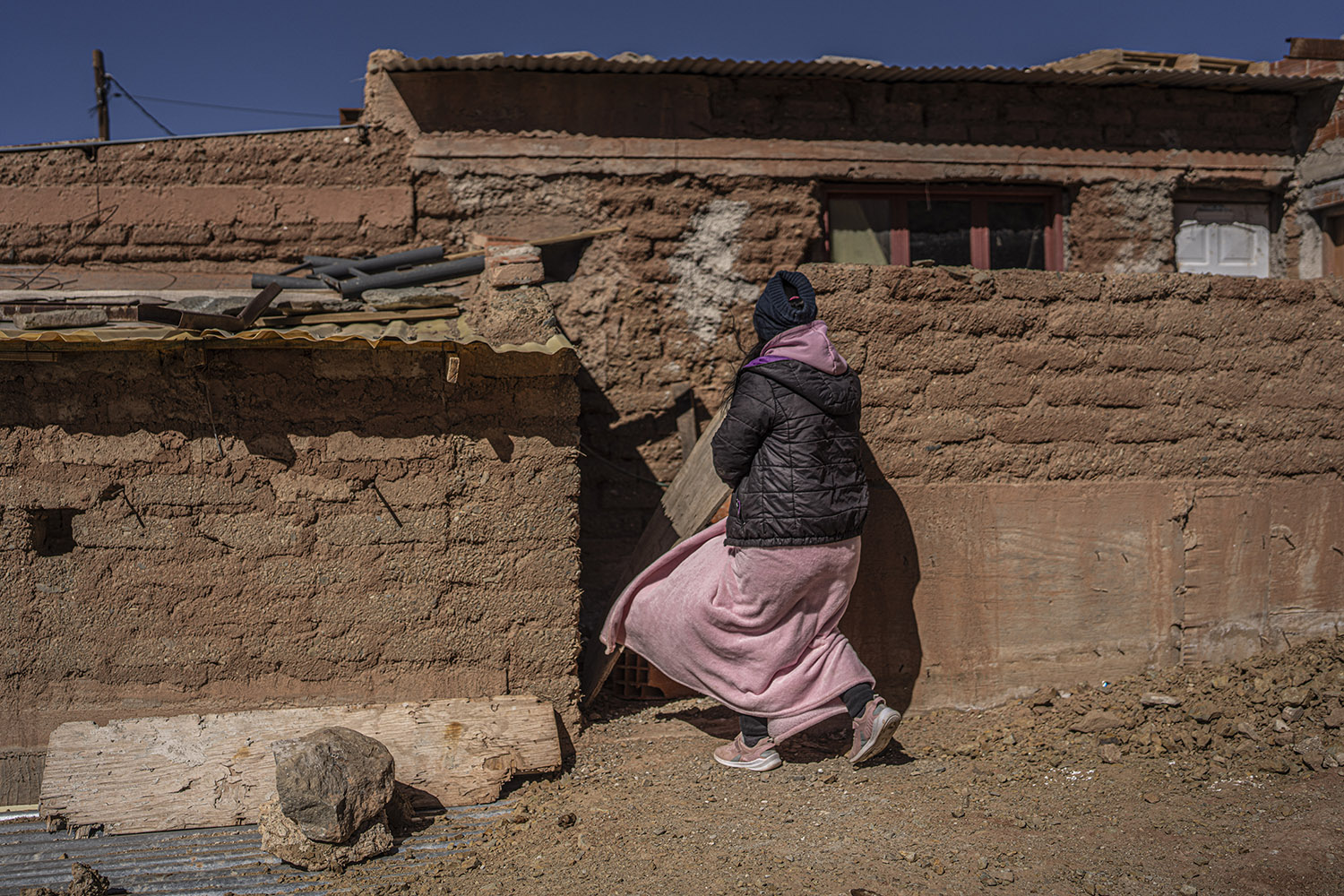
Olaroz community, next to the Sales de Jujuy mine. In this community, a large part of the population works directly or indirectly in mining.
We cross a wide bridge that looks brand new, but where only a trickle of water flows. Directly opposite is the house of Walter Soriano, secretary of the indigenous community, who welcomes us into a spacious dining room with a large television playing pop music videos at full volume.
In addition to being secretary, Walter is a supplier to the lithium mining companies: he has a construction and maintenance company. He was also previously employed by them, and his sister, his only family, currently works there.
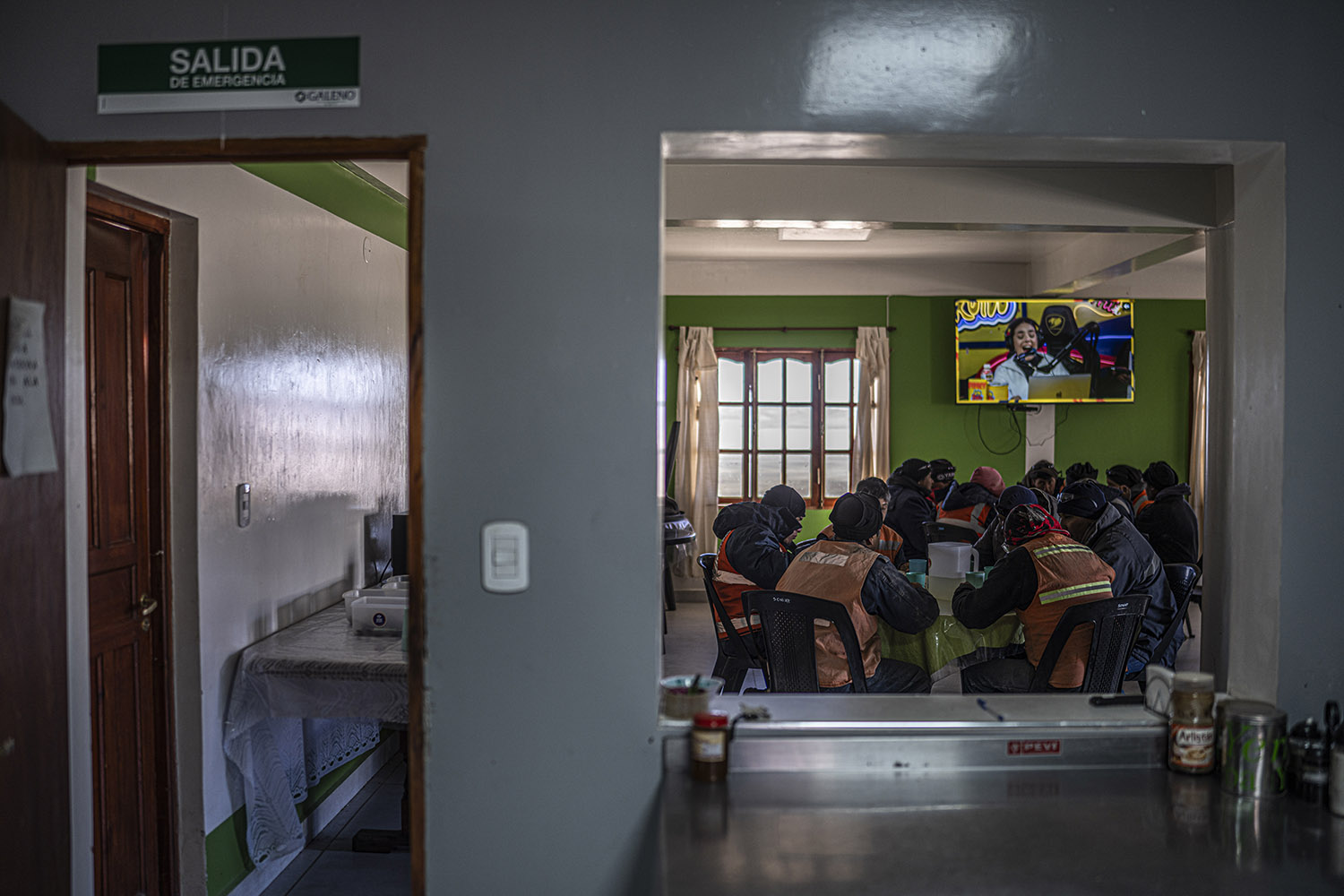
A group of workers have lunch in the dining room of the Olaroz community.

A group of workers have lunch in the dining room of the Olaroz community.
Since its origin, Olaroz has been mining territory. Its first people worked in a gold mine, which ceased to be profitable. It was around 2010 that lithium mining companies arrived to seek approval from the communities, most of which initially refused. In Olaroz, however, they defended the projects because lithium is different, said Walter, a "new form of mining".
"We have grown a lot. Fifteen years ago, it was different, and today we have a totally different outlook. It was difficult for us to forge ties at first, because this idea of [both] mining growing and the community growing was new to us.”
The mining companies call this slogan "shared value", an area from which they engage in dialogue with the community commission. We work hand in hand, says the secretary, as he begins to list the benefits that mining has brought: labour, hiring local suppliers, vaccination campaigns, buildings such as the technical school, an artificial turf pitch, a music room, support for festivals or ritual events. As for the provincial government, he said they have a good relationship and that some projects are carried out by all three parties: a little bit from the community, the mining industry, and the government.
Regarding the consequences of this industry on the environment, Walter says there’s certainly been an impact on the water. But he explains there have always been periods of drought in this area, forcing residents to take their livestock up to the hills where there are meadows, water reservoirs and vegetation in the Puna.
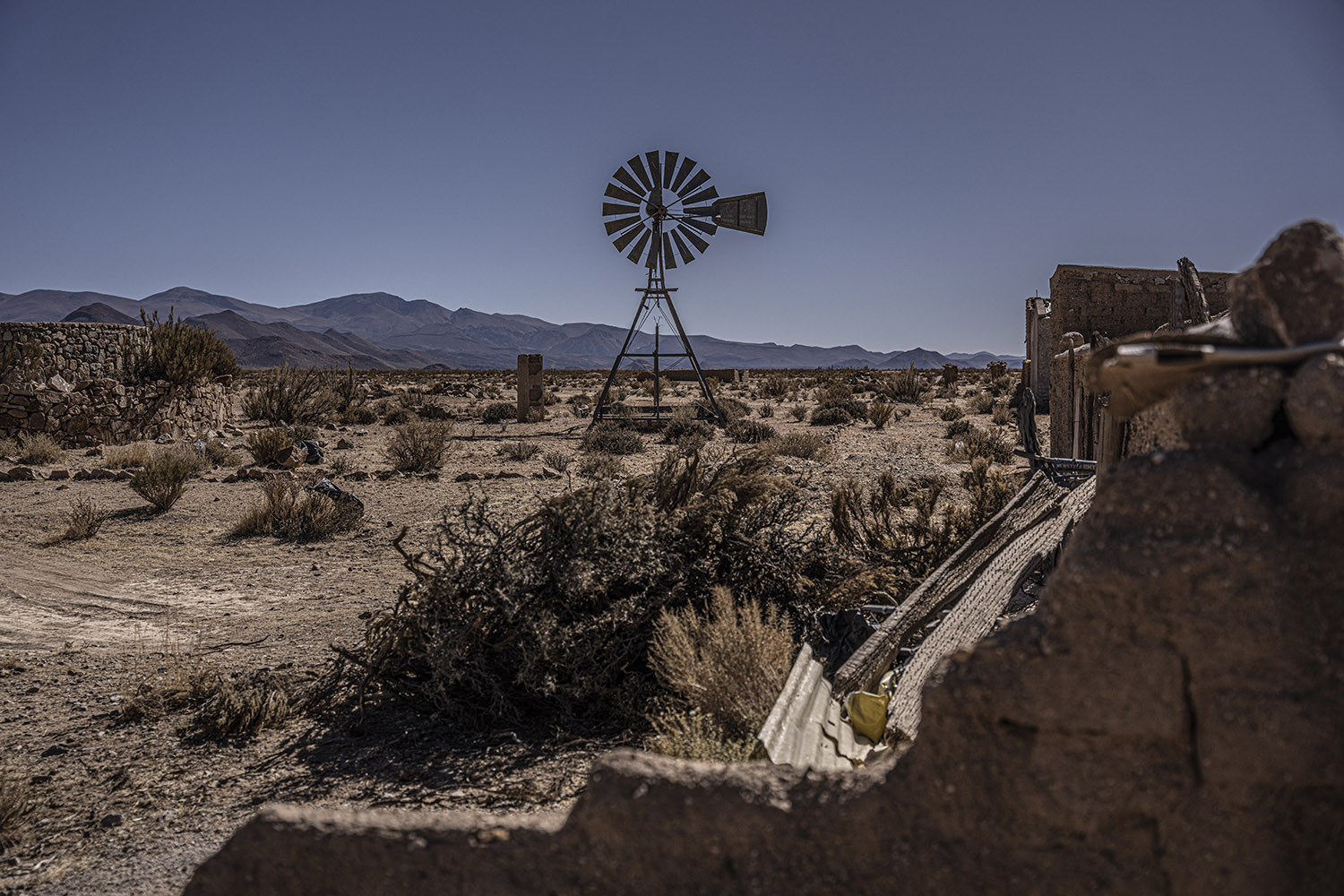
Windmill in the community of Tusaquillas, next to Guayatayoc Lagoon.
About twenty workers wearing orange vests enter the room and casually take their seats at the two round tables in the dining room. A waiter approaches to serve them, while Walter remains focused on the conversation.
"We have many requests. It's not just two mining companies, there are several; some are in the exploration stage, others in the exploitation stage. With lithium, we are now feeling the drop in price, because we are growing as local suppliers. Hopefully, it will pick up again..." he said.
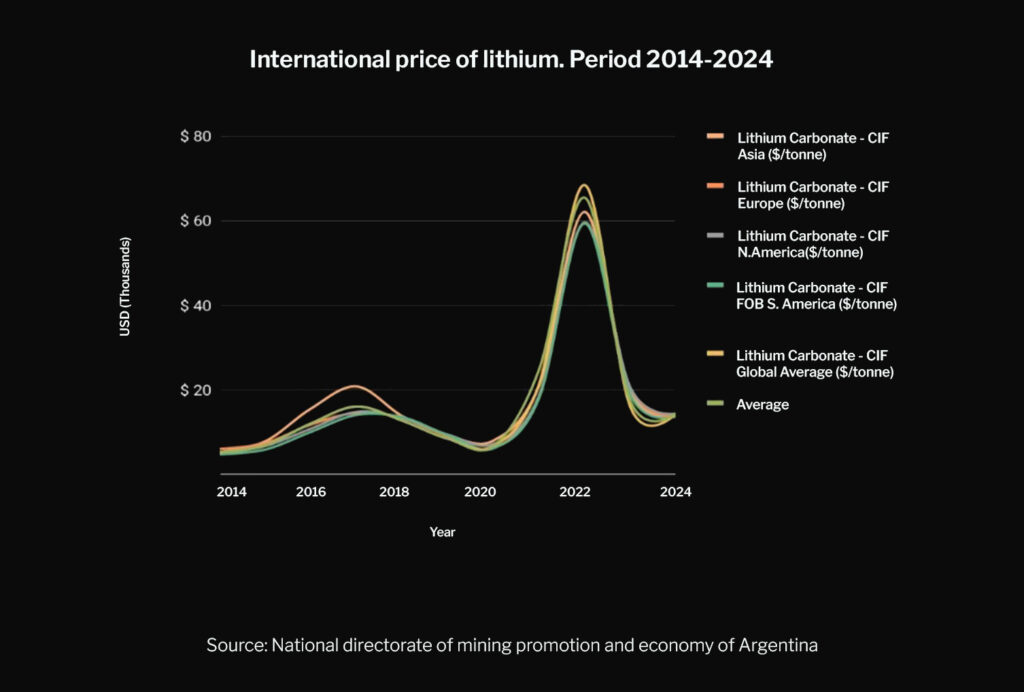
Although the price has fallen in recent years, according to Aramayo, the lithium business is likely to continue growing due to China and Europe's plans to convert their vehicle fleets to electric. In fact, he adds, the European Union appears to have a clear influence and focus on this region as well as a presence in communities.
The murmurs and scrapes of chairs being moved has subsided, and only the metallic sound of cutlery remains. The workers eat in silence.
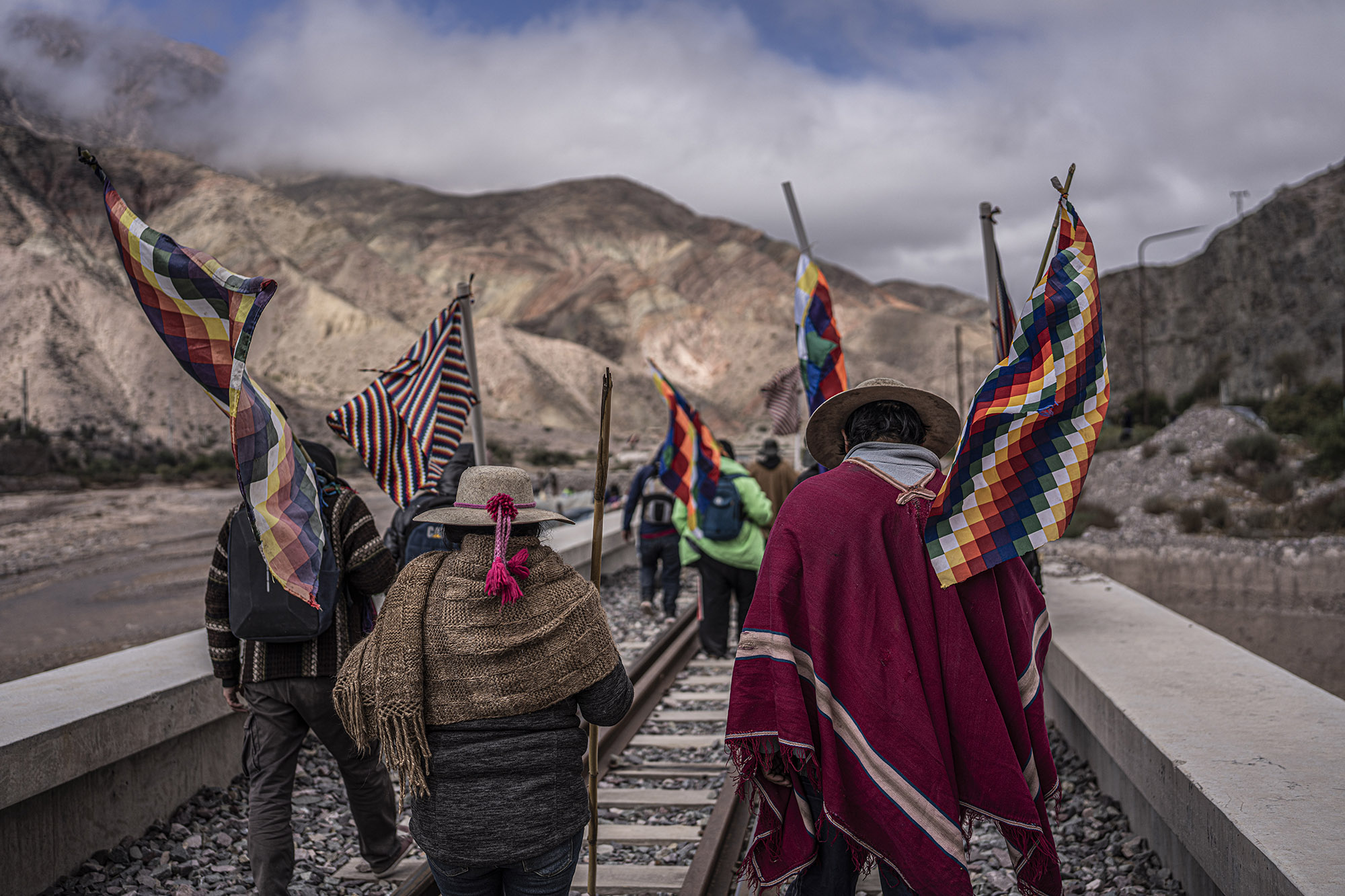
A group of community leaders march from the communities of Quebrada de Humahuaca to the capital San Salvador de Jujuy, in protest of the repression exercised by the provincial government in June 2023.
Lunch between communities
The members of the Board of the 33 Communities of the Salinas Grandes Basin and Laguna de Guayatayoc also have lunch in an old hall, with lively conversation at every table. They have gathered in the village of Santuario Tres Pozos to hold their monthly assembly. We are in the other large region of the Jujuy puna, threatened by lithium projects and whose indigenous people are resisting mining in their territory.
At one of the tables, Ofelia Cañari, from the Cerro Bayo community, talks about Gerardo Morales, the former governor of Jujuy who promoted lithium mining and a reform of the provincial constitution approved in 2023 with fierce repression, after almost two months of a roadblock at the entrance to the salt flats. The level of police violence was such that it made headlines around the world: Amnesty International reported that there were hundreds of injuries, arbitrary detentions and violations of the human rights of the population.
A group of community leaders march from the communities of Quebrada de Humahuaca to the capital San Salvador de Jujuy, in protest of the repression exercised by the provincial government in June 2023.
The reform is directly related to lithium interests in these territories: among other things, it establishes that public lands inhabited by indigenous communities that have not yet been legally handed over to their rightful owners belong to the provincial government and are to be used for productive purposes.
This reform violates Convention 169 of the International Labour Organisation (ILO), which defends the rights of indigenous peoples to be consulted and participate before laws affecting them are adopted or projects on their lands are authorised. Alicia Chalabe, the communities' lawyer, says, to date, these rights have not been fulfilled, and it is the provincial government that ends up setting the conditions for approving mining projects.
“We set up the roadblock in Purmamarca to demand recognition of our communal lands. But we realised that the governor’s real concern was that the lime wasn’t reaching the bunk camps in Olaroz; as we had blocked the road, there was no way to transport it. And that’s when the reprisals began,” said Ofelia, referring to the lorries that travel from a quarry to the plants with the lime they need to extract and purify the lithium.
Ofelia Cañari, a member of the Board of the 33 Communities of the Salinas Grandes Basin and Guayatayoc Lagoon.
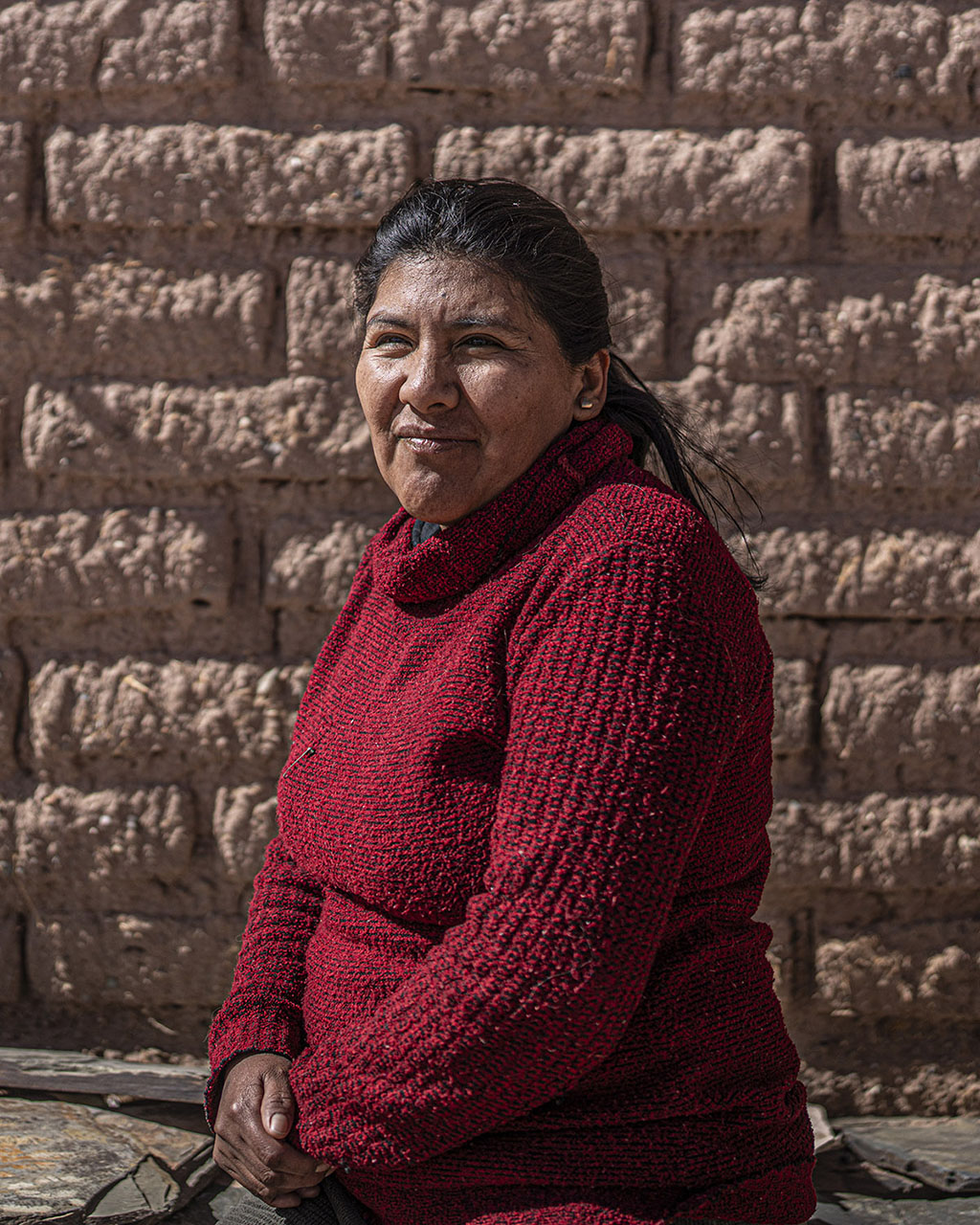
When communities began to organise in 2010 in response to the advance of mining companies, they didn’t even know what lithium was.
“They came trying to convince us, always dividing us. But they were not as strong as they are now that they have entered, because they do business with leaders and community members, who, for signing, are given a lot of money, trucks, material things.”
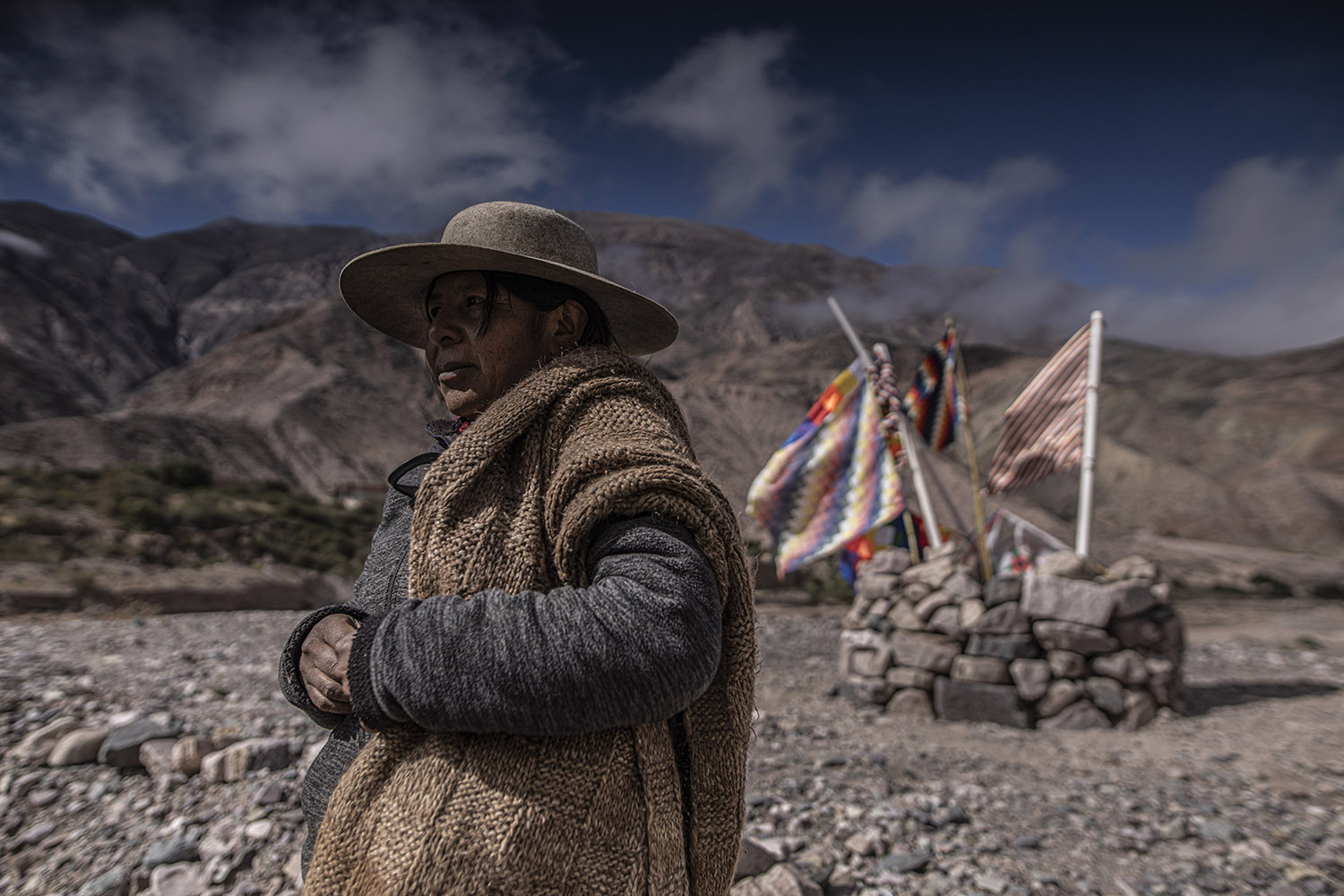
A group of community leaders march from the communities of Quebrada de Humahuaca to the capital San Salvador de Jujuy, in protest at the repression exercised by the provincial government in June 2023.
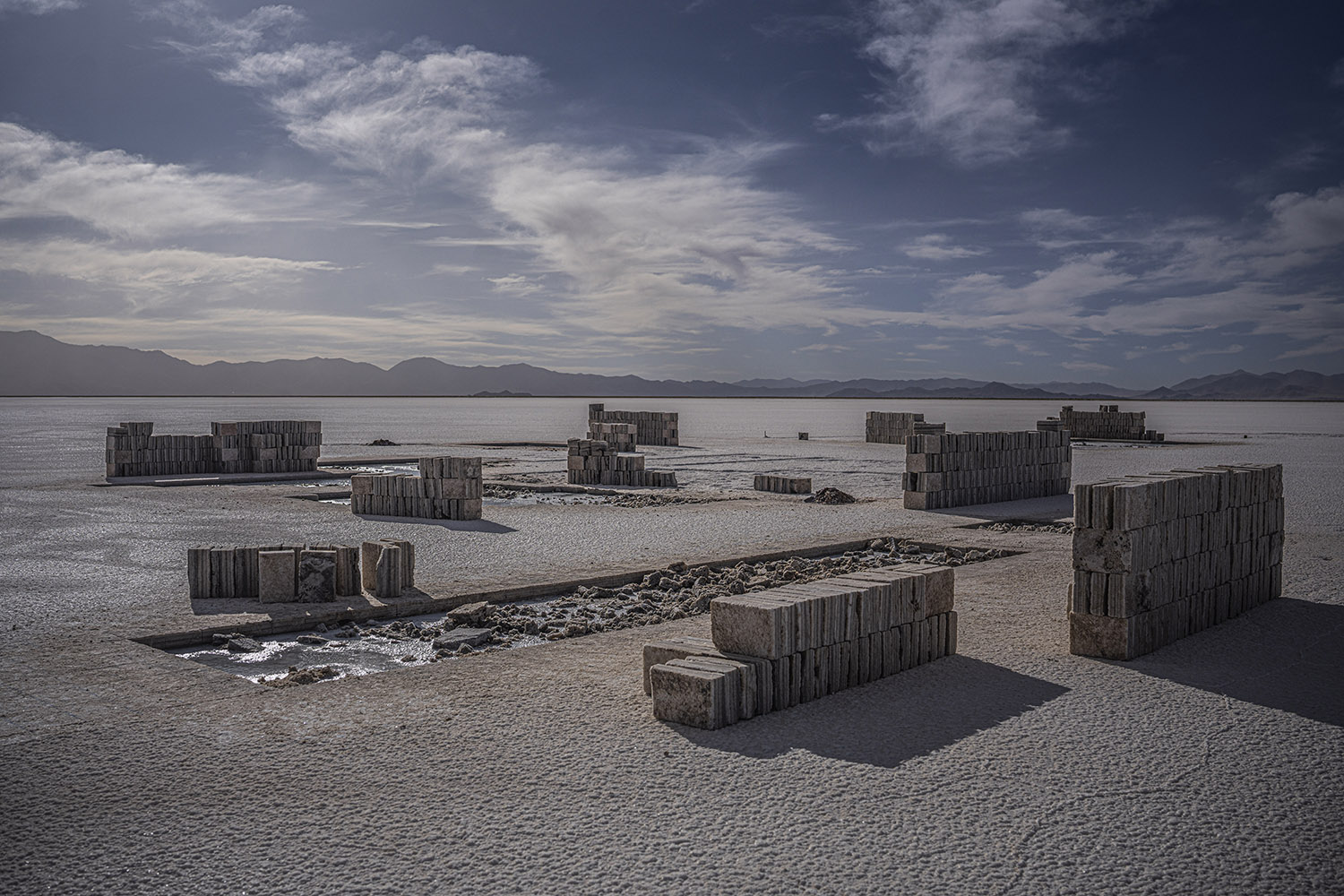
Salinas Grandes of Jujuy.
Work between salt
Raising llamas and sheep has always been the main activity for families living in Salinas Grandes, whether for their own food, for sale, or for the production of handcrafted textiles, which they are able to market through tourism ventures in their communities.

Virgilia lives in the Tres Pozos Sanctuary Community, next to the Salinas Grandes salt flats, where she breeds llamas.
In addition to livestock farming and tourism as livelihoods, there is also salt extraction, a commodity that abounds in these salt flats, where the white soil is traced by other miners: the workers of the salt cooperative managed by the communities of Santuario Tres Pozos, Pozo Colorado and San Miguel de Colorado. Eulalio Barconte, one of its workers and founders, appears in his blue overalls to welcome us, and just behind him is the last truck they have loaded, with 28 tonnes of salt that will travel to Paraguay.
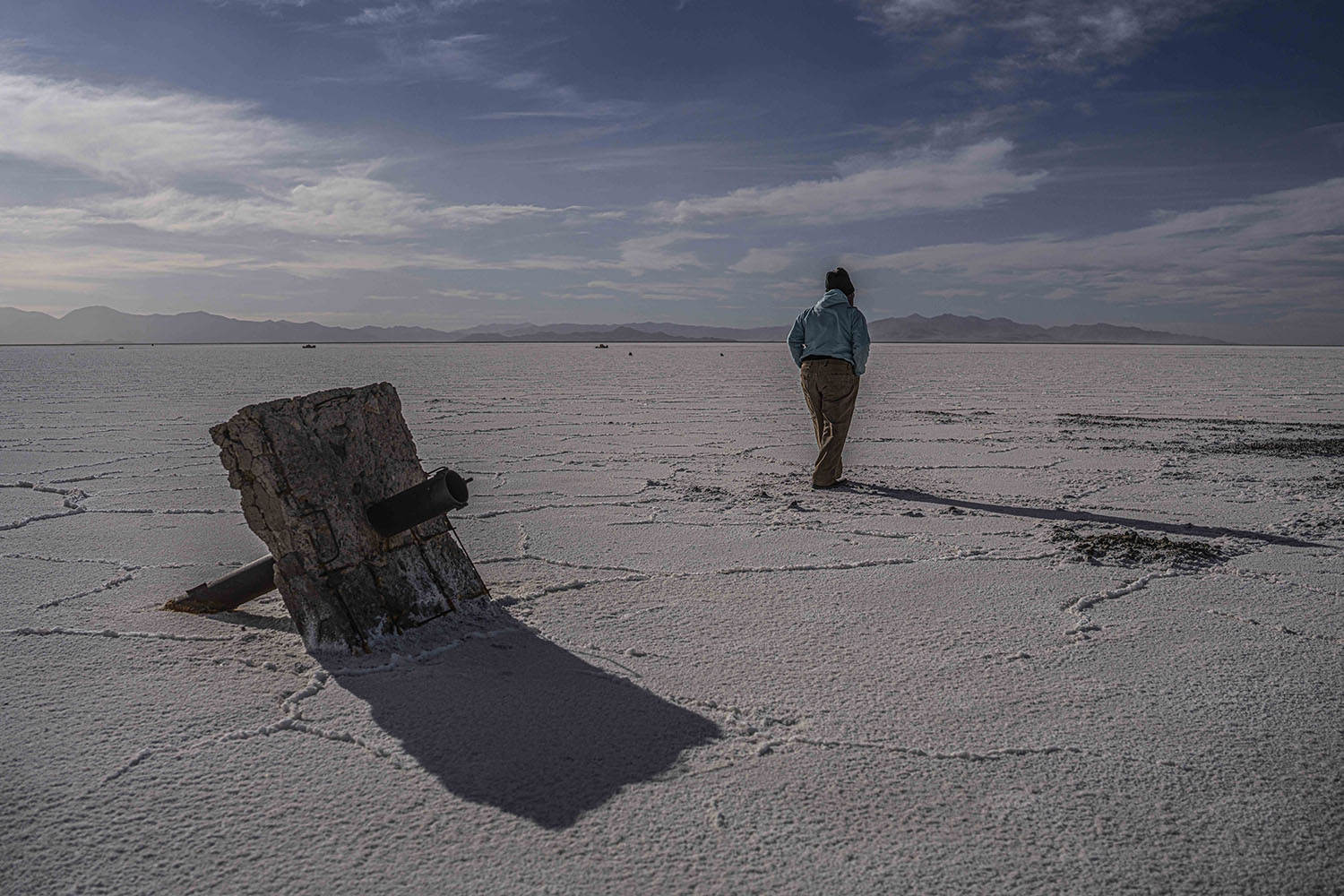
Eulalio Barconte walks among the remains of pipes installed for lithium exploration in the Salinas Grandes salt flats of Jujuy.
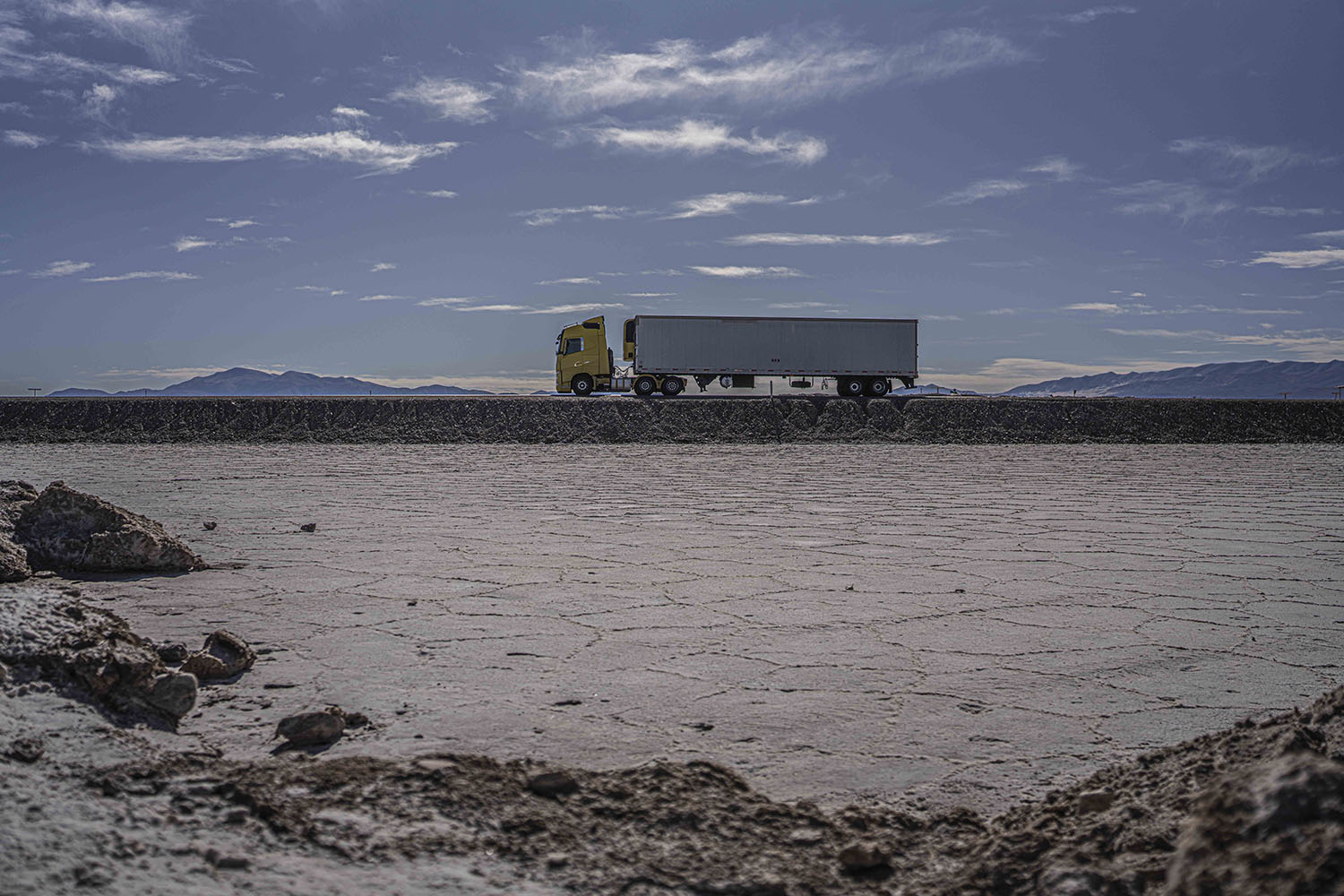
Trucks frequently cross the Salinas Grandes carrying lime (calcium oxide), used to remove impurities during lithium processing at the mining plants in Susques
Eulalio remembers it was in the 1980s when his father-in-law, Simón Chávez, had the idea of forming this cooperative so people from the communities could work and would not have to leave.
"At that time, there was no lithium, there was nothing," said Eulalio, recounting how the first entrepreneurs who appeared in the area with an interest in the mineral were driven away.
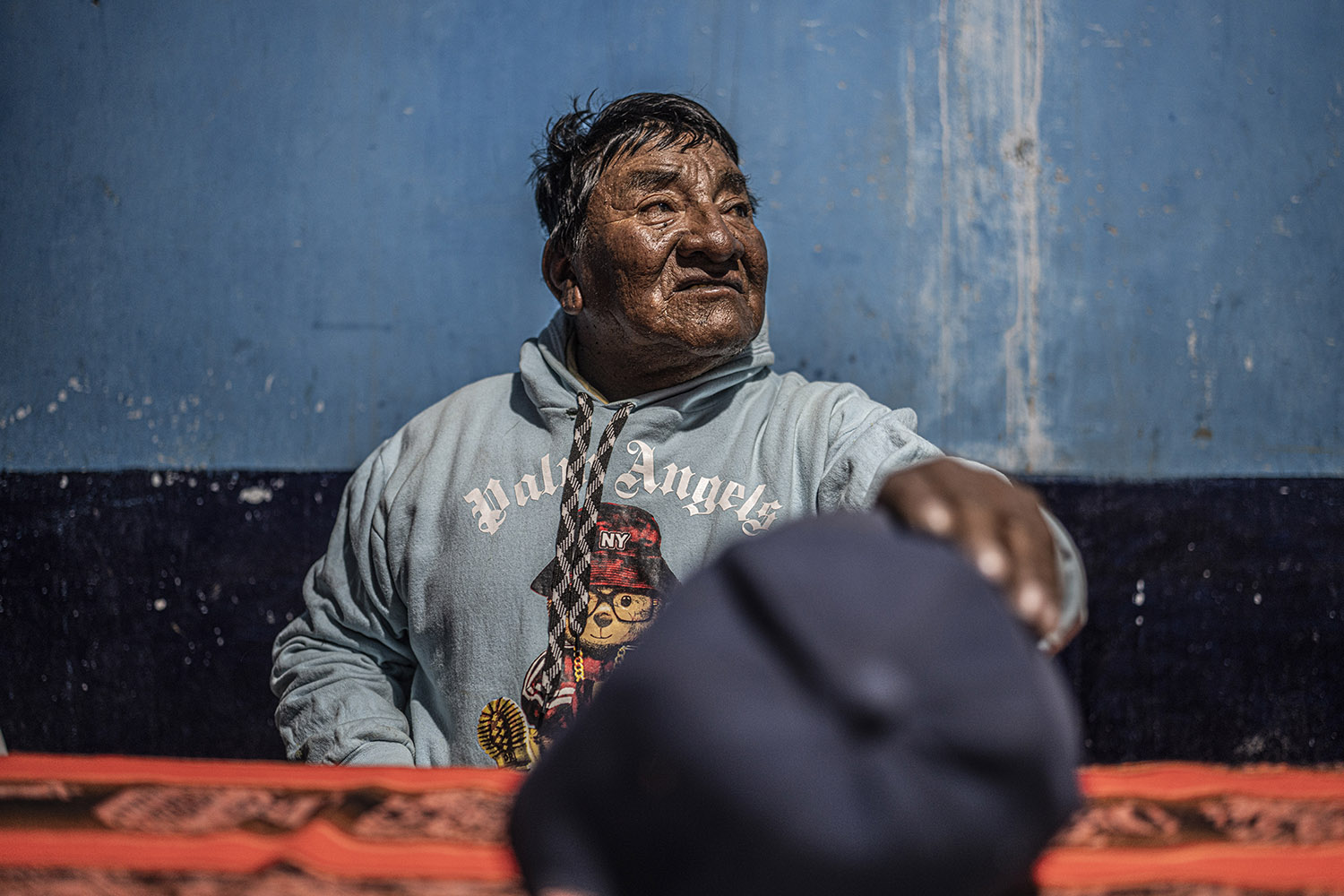
Eulalio Barconte, resident of the Tres Pozos Sanctuary Community.
According to Chalabe, who has been legally representing these communities for 15 years, there are now hundreds of lithium mining applications (the minimum unit for starting projects in a given sector) between Salinas Grandes and Laguna de Guayatayoc. In response, they are pursuing various legal claims against the provincial government and companies to enforce the refusal of those who live in these territories.
A few metres from the cooperative, at the Parador Turístico, is one of Eulalio's ten daughters. It is another venture created by the communities so they don’t have to leave or accept mining due to a lack of work. This tourist stop, Vicenta said, started eight years ago, and before that, almost no tourists came to the salt flats. Now, there is constant movement.
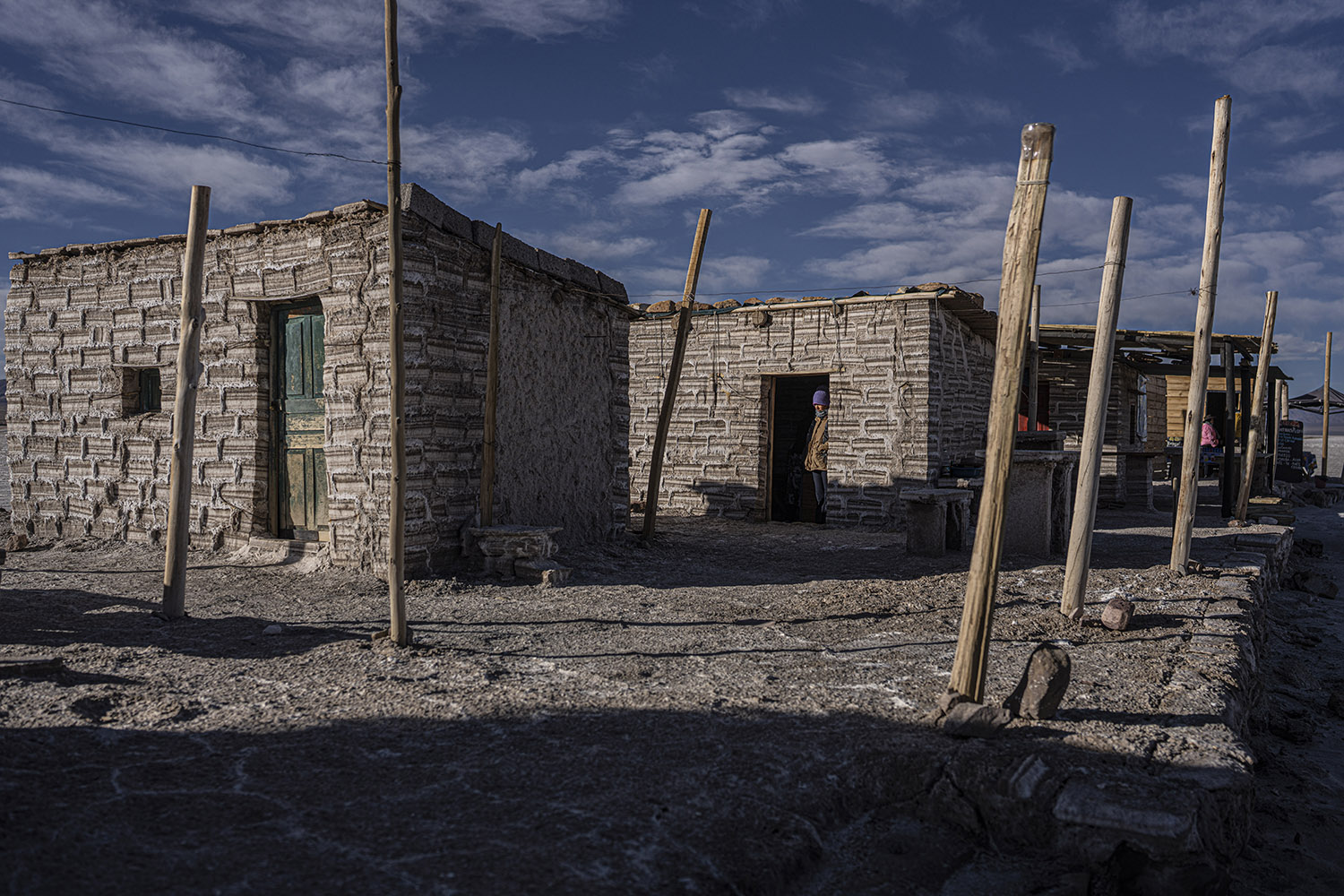
Tourist stop in Salinas Grandes of Jujuy.
Vicenta only comes once a week because she lives in the countryside, where she looks after her 40 llamas. She is from Rinconadillas, one of the communities in Salinas Grandes that is currently at odds with the rest for having agreed to the installation of a lithium mine on its territory in 2024. It was not the only one. After a decade of rejection, in recent years three mining companies have obtained approval to begin exploration in the area. All of them are oil companies: the first was Pan American Energy, which obtained support from the community of Lipán; another is Pluspetrol, with agreements with the communities of Sauzalito and Quera; and finally, the Tecpetrol mine in Rinconadillas.

Vicenta Alancay, together with other women from the community, runs food stalls for tourists in Salinas Grandes de Jujuy
"Mining companies started arriving, but now they are leaving," said Vicenta. "They say they haven't found enough lithium... and two weeks ago they started packing up everything."
The Pan American Energy company is also said to have withdrawn for the same reason, but according to the communities' lawyer, there is no formal confirmation: "For me, these are rumours to move to the centre of the salt flat, a highly disputed area because it is assumed that there will be a higher concentration of lithium there, but they cannot obtain authorisation because it belongs to the salt cooperative."
When Eulalio finishes his work, he accompanies us to see the pipes that a lithium mining company left abandoned in that very disputed area, after the communities took legal action against it, preventing it from setting up in 2010. It was the Exar mining company, which now operates in Olaroz.
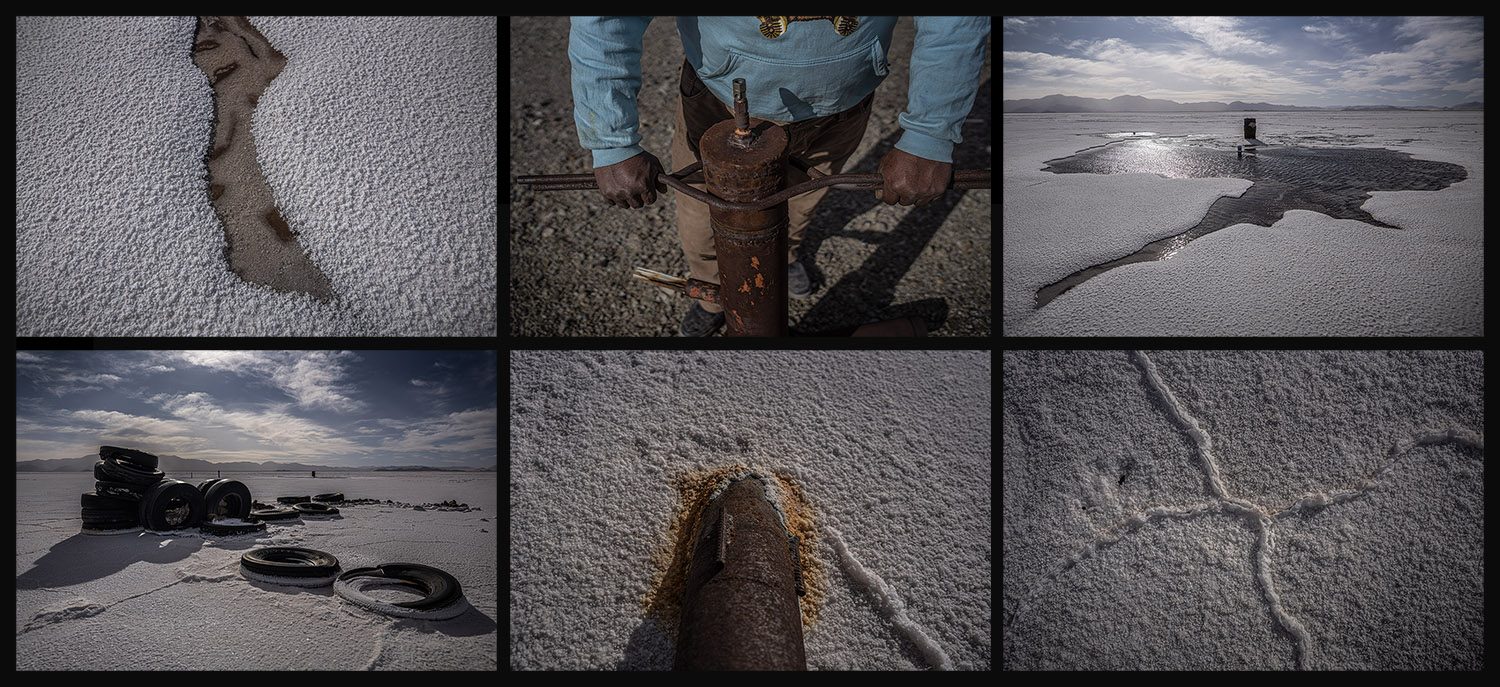
Abandoned lithium exploration facilities in Salinas Grandes, Jujuy.
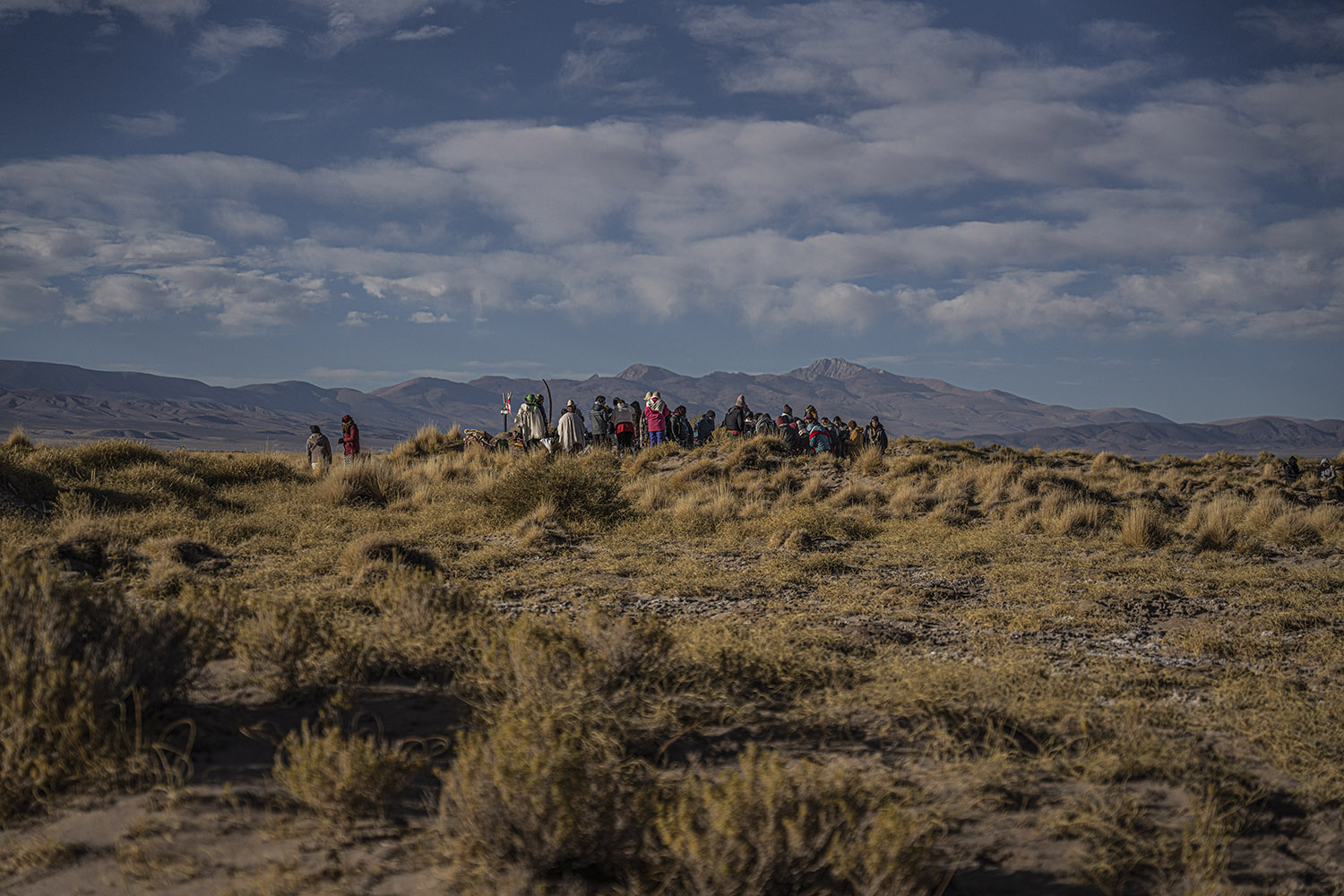
Inti Raymi ritual, in Salinas Grandes, Jujuy.
Sunset between sheep
"Right there, Franco! Come on!" Catalina Callata shouts to her nephew, who is trying to herd sheep in a field belonging to the indigenous community of Tusaquillas, located in the Guayatayoc Lagoon region and part of the Salinas Grandes Community Council.
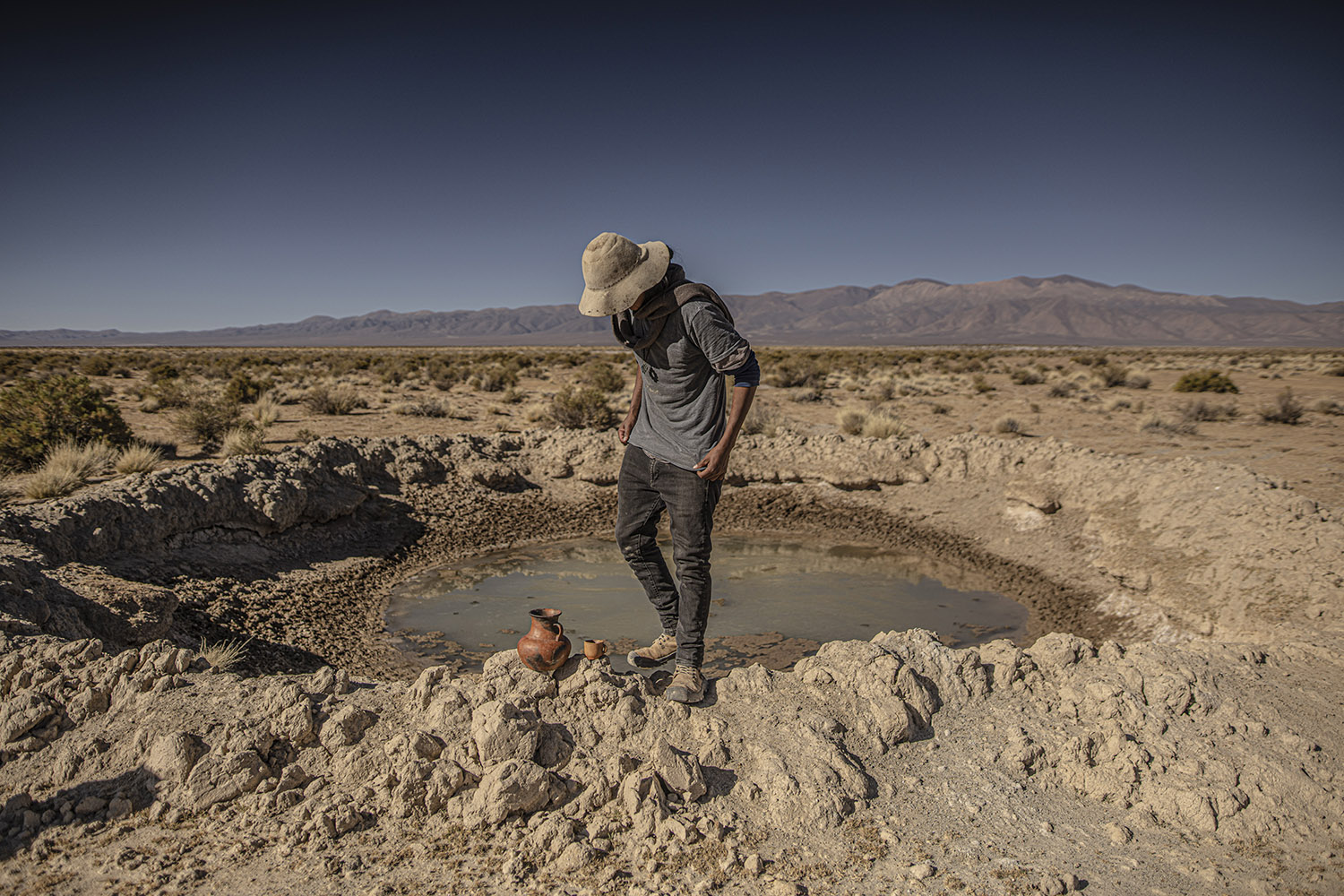
Franco Vedia rests beside a freshwater spring in Laguna de Guayatayoc. He is a member of the Tusaquillas community.
Catalina is treasurer of this Kolla community, which is currently at a critical juncture in the mining conflict: Advantage Lithium Argentina, a company linked to Sales de Jujuy, is attempting to officially begin the exploration phase here.
"All those fields have already been 'scoured', as they say. Last time it was Rinconadillas, a little further away, but now it's all right here," said Catalina, referring to the preliminary explorations that are already beginning in her territory.
For her, the best resistance against the mining companies is to be here, day after day in the countryside, looking after the animals.
"The government doesn't value us, they tell us 'there's no one in the Puna...' That's a lie: I have 200 sheep and my llamas up there. We've lived here all our lives," she said, her voice breaking with tears in her eyes.
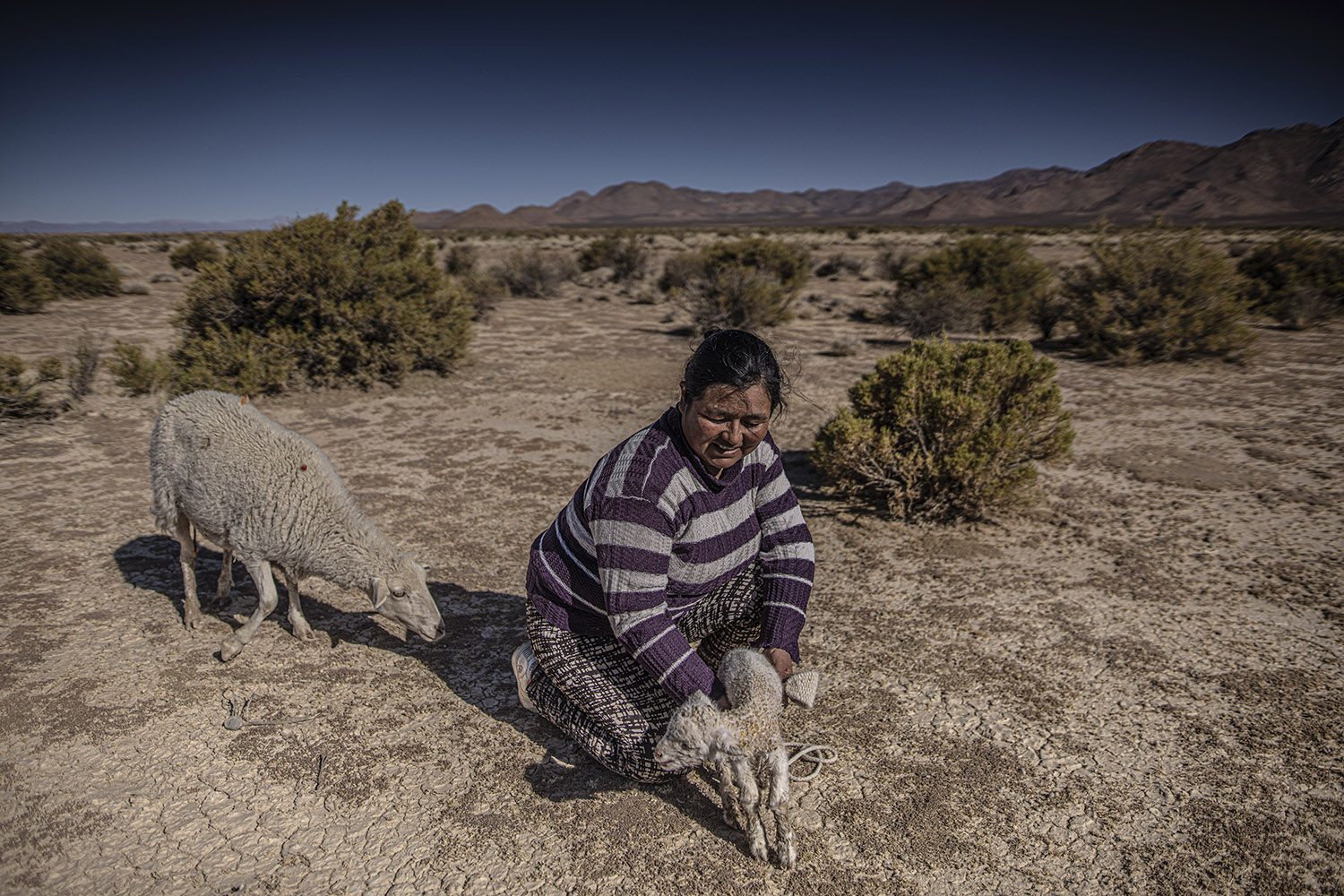
Catalina Callata is a sheep and llama breeder from the community of Tusaquillas.
As part of the fight against mining, the treasurer also attended a meeting in San Pedro de Atacama, which was attended by communities from the three countries that make up the so-called lithium triangle: Chile, Bolivia and Argentina.
“Chile has been working with lithium for 40 years and is now seeing the consequences. They have now carried out studies on water levels, but what use are they if everything has already been depleted?”
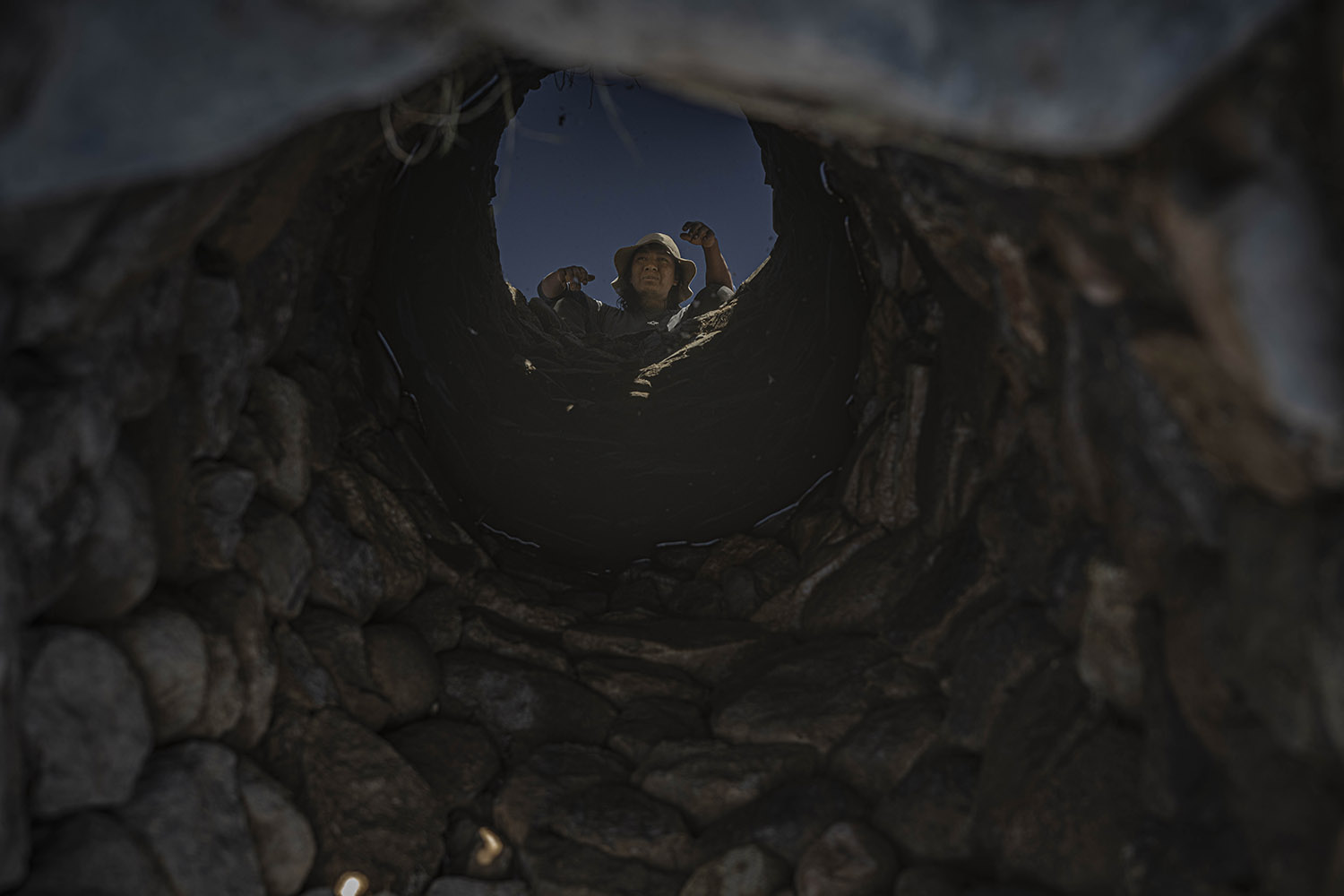
Franco next to the only freshwater well on his farm in the community of Tusaquillas.
Among the studies mentioned by Catalina, one stands out: research carried out by the Department of Geology at the University of Chile, which concludes that brine extraction is causing the Salar de Atacama to sink at a rate of between 1-2 cm per year. Another study showed that groundwater levels have fallen by more than 10 metres in the last 15 years.
On this side of the mountain range, here in Tusaquillas, fresh water is very close to the ground we walk on: with a well built just three metres deep, Franco Vedia and his family obtain the water they use for cooking and for their animals.
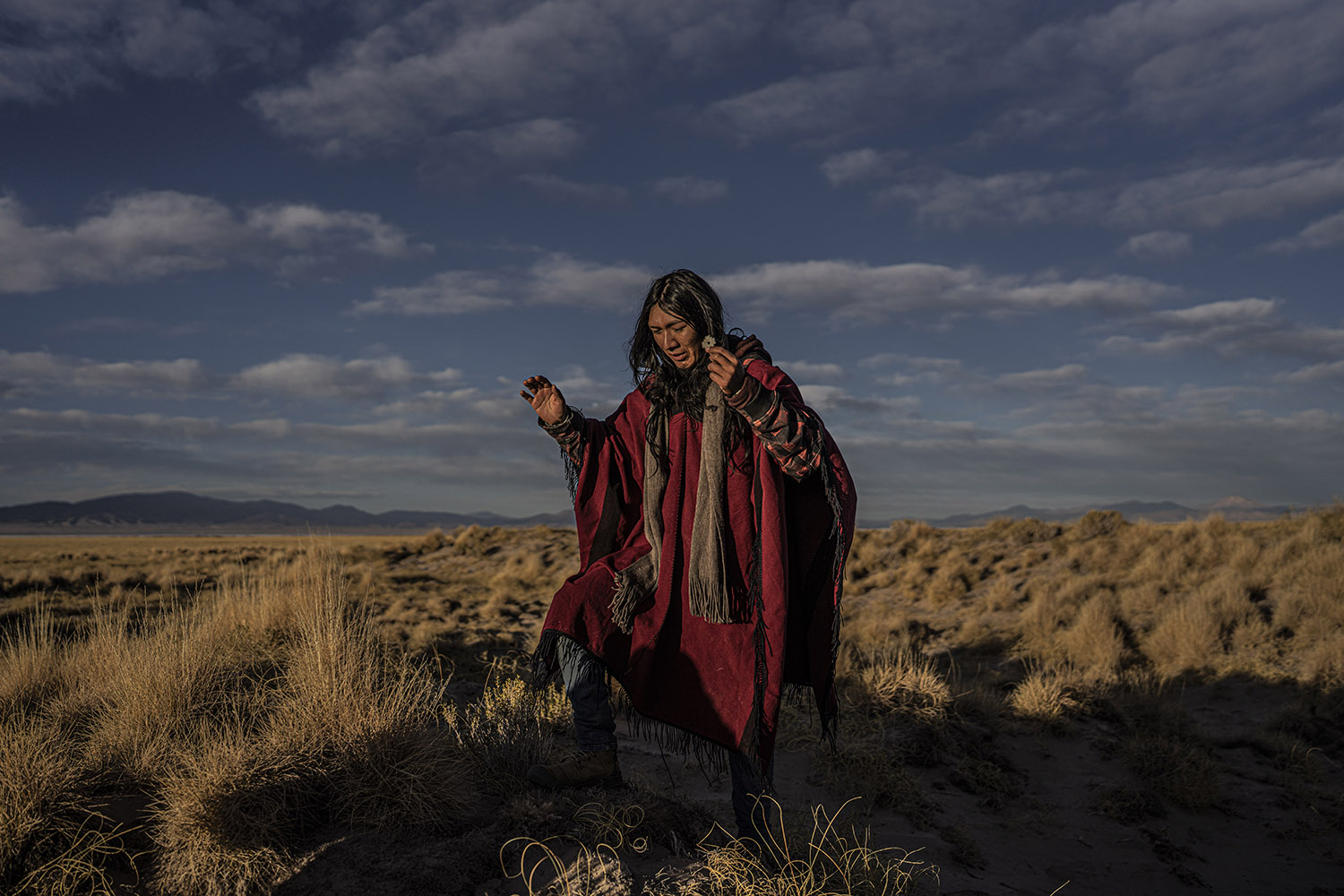
Franco Vedia during a Inti Raymi ritual, in Salinas Grandes of Jujuy.
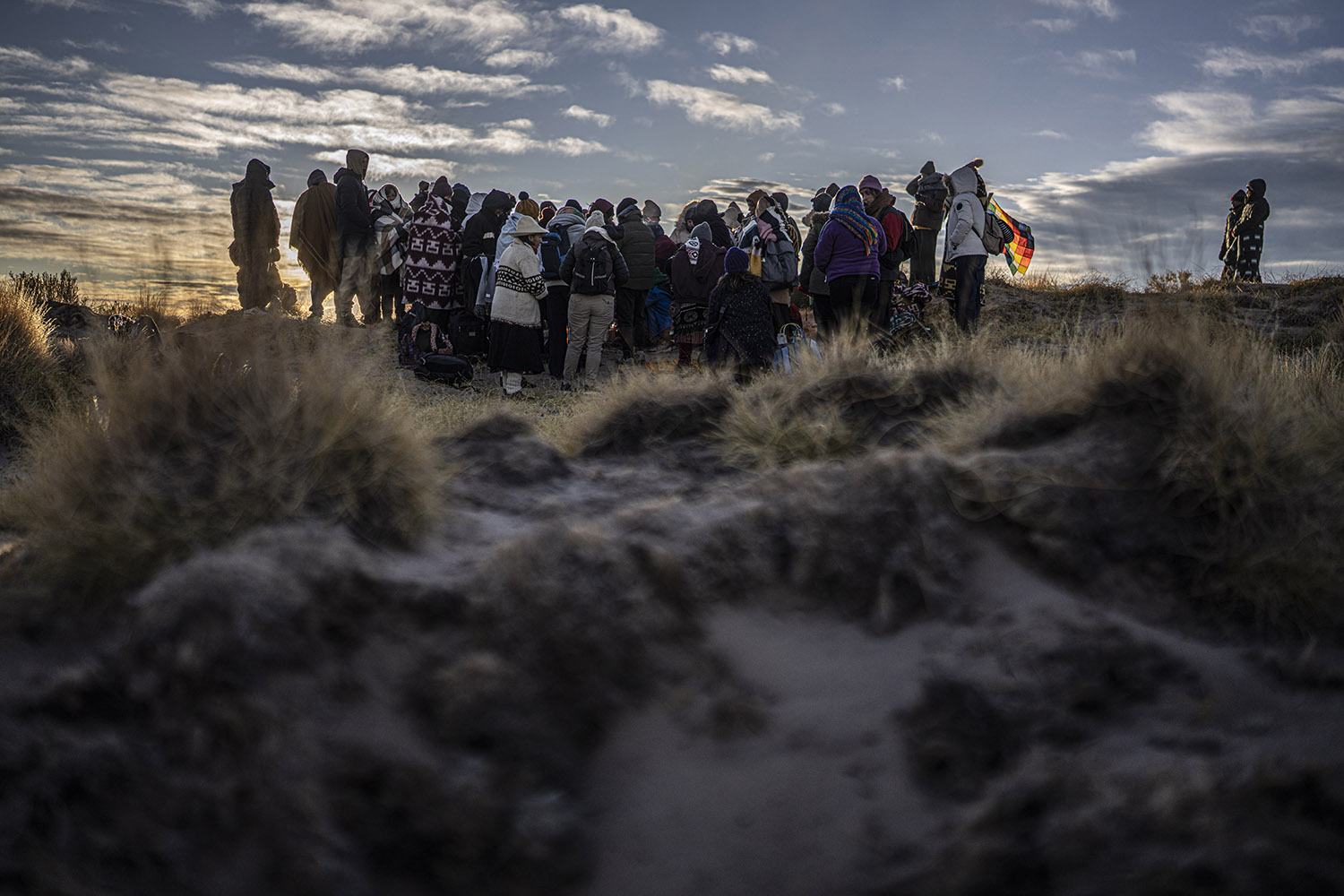
At seven in the evening, the light hides beneath the horizon of the salt flats. It is the 21st of June: the longest night, the winter solstice in the southern hemisphere, and the new year in this part of the world. That is why, at dawn, the indigenous communities of the puna will come out to welcome the first rays of sunlight in the Inti Raymi, a Quechua expression that means the Festival of the Sun.
A ritual that is repeated every year to give thanks and ask for the fertility of the land and the protection of the territory.
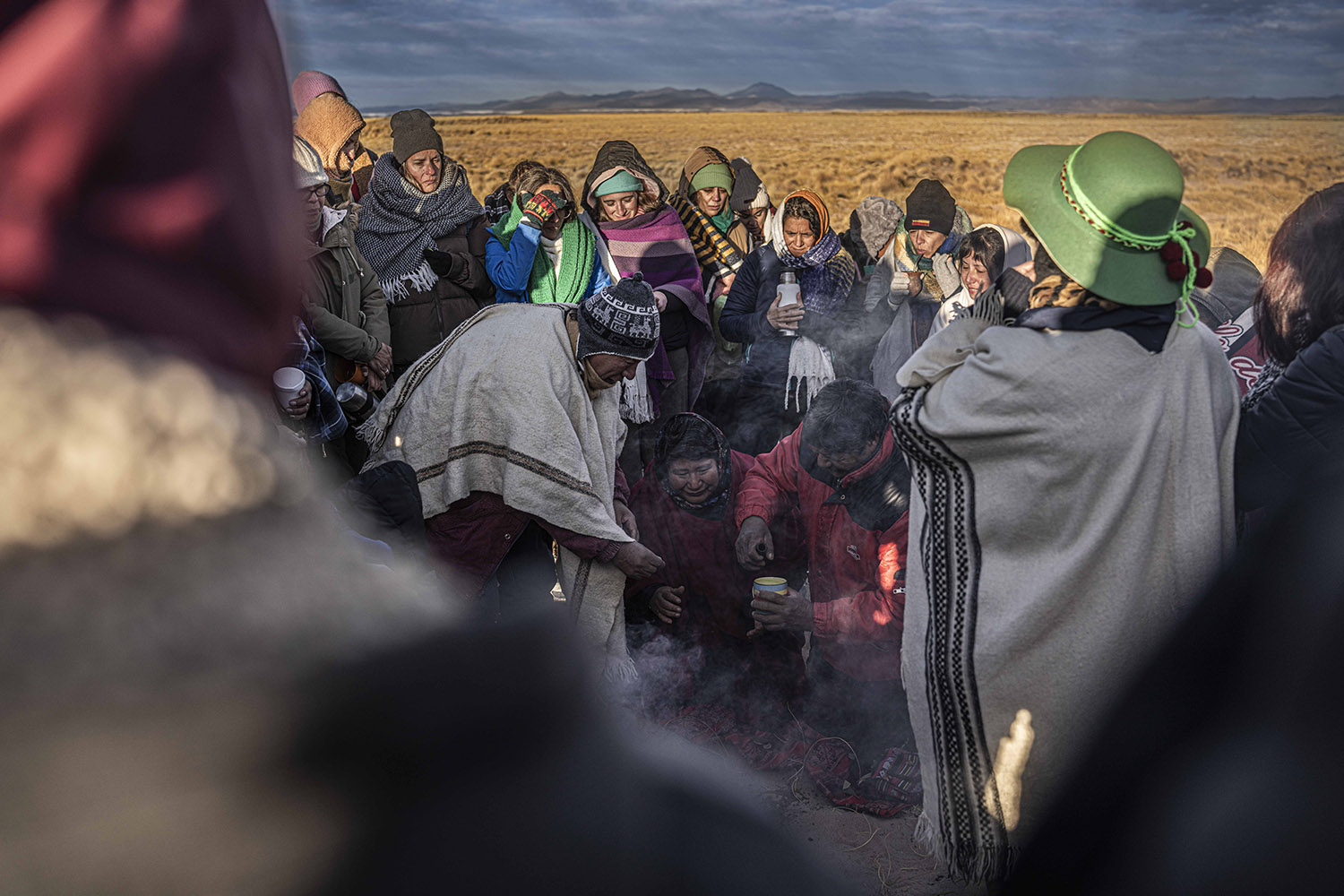
The Inti Raymi ritual, in Salinas Grandes of Jujuy.
A reminder of the cyclical processes of life, and also of the inevitable connection between different geographical areas of the same planet; the shared challenge of a climate crisis that threatens winters and summers in this great ecosystem called Earth.
The eco-social sacrifices imposed by the lithium boom, which originated in an attempt by countries in the Global North to respond to this climate challenge, make it clear that any ecological transition requires going beyond market rules and geopolitical divides to build comprehensive solutions focused both on ecosystems and on those who know and inhabit them.
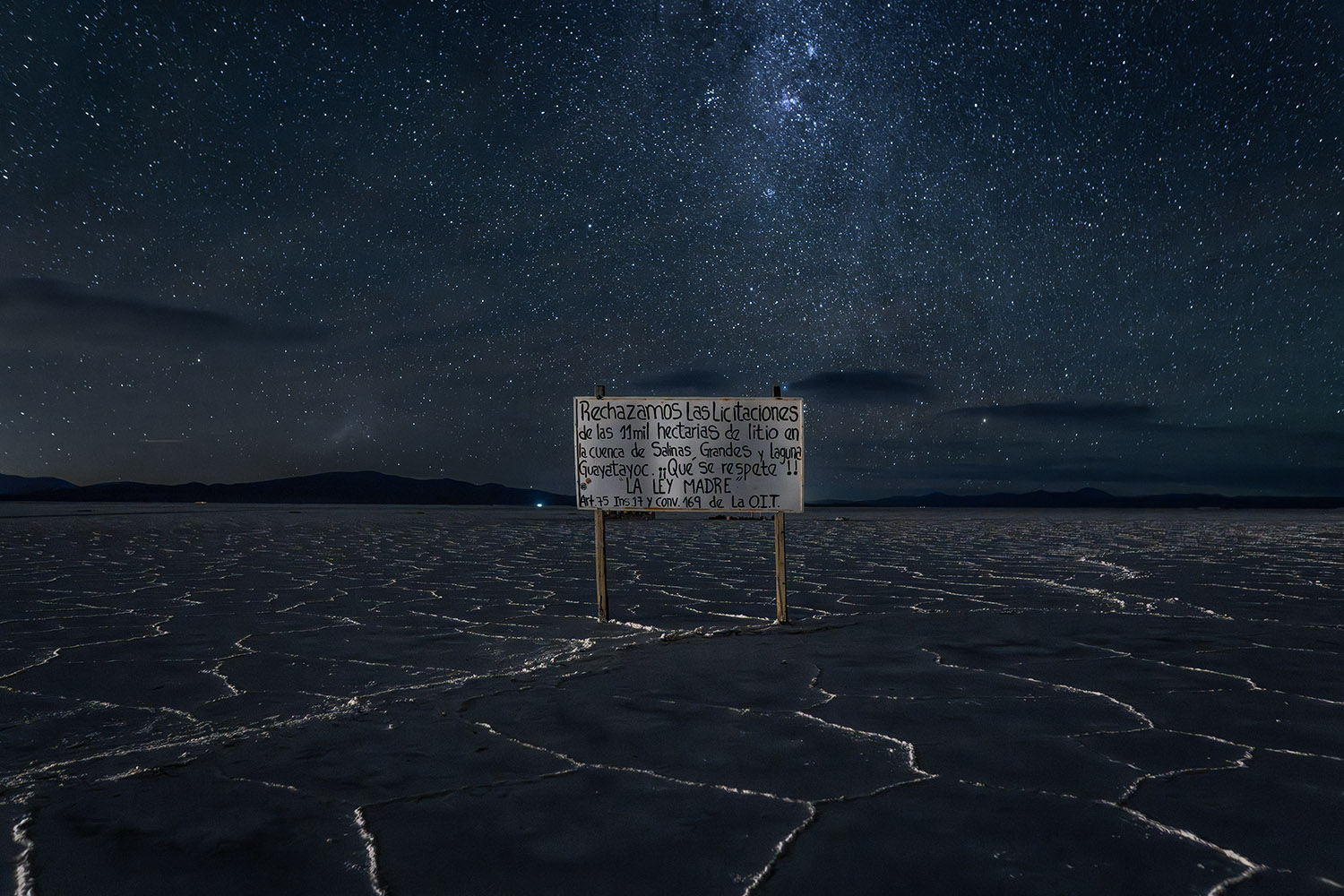
Salinas Grandes of Jujuy.